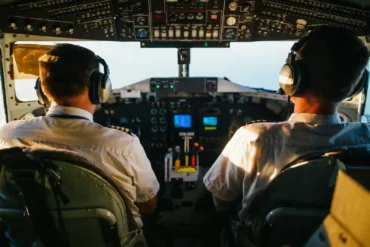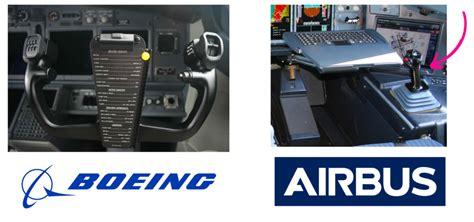
Modern airliners may look remarkably similar from the passenger cabin, but behind the cockpit door, Airbus and Boeing represent two radically different interpretations of how humans should interact with machines at 40,000 feet. Their disagreement is not merely about buttons, screens, or the shape of the controls. It is a decades-long philosophical battle over authority, automation, pilot instinct, and the limits of computer intervention in aviation safety.
The divergence became especially visible during the rise of digital fly-by-wire technology in the late twentieth century. Airbus embraced the idea that computers should actively protect the aircraft from dangerous pilot inputs, even if it means denying commands issued by the crew. Boeing took the opposite approach, believing that pilots must always retain ultimate authority, regardless of what the onboard systems think is safe.
That single philosophical split transformed everything from cockpit layout to emergency procedures, pilot training methods, automation behavior, and even the physical sensation of flying the aircraft. Today, the Airbus sidestick and Boeing yoke symbolize two competing visions of aviation itself: one prioritizing software-driven protection, the other preserving tactile human command.
For pilots transitioning between the two manufacturers, the difference can feel less like switching airplanes and more like learning a new language with entirely different grammar.
The Historical Origins Of Airbus And Boeing Cockpit Design
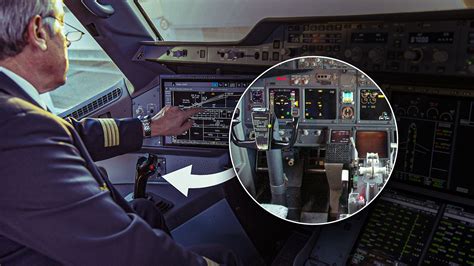
Before the digital revolution reshaped aviation, commercial aircraft operated primarily through mechanical and hydraulic linkages. Pilots physically moved control surfaces through cables, pulleys, and hydraulic boosters. The cockpit experience was intensely tactile. Every vibration, aerodynamic force, and trim imbalance traveled directly into the pilot’s hands.
Boeing grew within this traditional environment. Aircraft such as the 707, 727, 737, and 747 were built around the belief that pilots should physically feel the airplane. The yoke was not simply a steering device; it was an extension of the aircraft’s aerodynamic behavior.
Airbus entered the commercial aviation market later and with fewer legacy traditions to preserve. By the 1980s, advancing computer technology allowed engineers to rethink how pilots interacted with aircraft entirely. When Airbus launched the A320 program, it became the first major commercial jetliner with a fully digital fly-by-wire system and computer-enforced flight envelope protection.
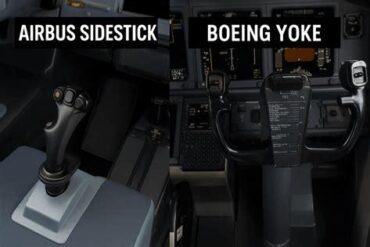
The decision shocked parts of the aviation industry. Airbus removed the traditional control yoke and replaced it with a small sidestick mounted beside each pilot. Instead of directly commanding control surfaces, pilots now issued requests to computers, which interpreted those commands according to programmed flight laws.
Boeing watched carefully. The company recognized the efficiency advantages of fly-by-wire systems but hesitated to abandon its pilot-centered philosophy. When Boeing eventually introduced fly-by-wire on the 777, it deliberately engineered the aircraft to preserve the sensation of conventional flying despite its digital architecture.
That cautious approach explains why a Boeing cockpit still feels familiar to pilots trained decades ago, while an Airbus cockpit often feels like stepping into a software-controlled ecosystem.
Airbus Believes Computers Should Prevent Pilot Mistakes
At the core of Airbus philosophy lies a powerful assumption: humans make errors, especially under stress, fatigue, or spatial disorientation. Therefore, the aircraft itself should act as a protective barrier against dangerous inputs.
This philosophy manifests through Airbus flight envelope protections. Under Normal Law, Airbus computers continuously monitor aircraft attitude, speed, angle of attack, bank angle, and load factor. If a pilot attempts to exceed safe aerodynamic limits, the system simply refuses the command.
An Airbus pilot cannot intentionally stall the aircraft during standard operations because the computers prevent excessive angle of attack. Overspeed protection limits acceleration. Excessive banking is automatically corrected. Pitch protections stop dangerous nose-up attitudes.
In practical terms, Airbus treats pilot inputs as requests rather than absolute commands.
If a pilot aggressively pulls back on the sidestick during a high-speed descent, the aircraft does not blindly obey. Instead, the computers calculate whether the maneuver would exceed structural or aerodynamic limits. If necessary, the system overrides the pilot.
This approach dramatically reduces the likelihood of classic pilot-induced accidents caused by overcontrol, stall entry, or spatial disorientation. Airbus engineers viewed these protections as the natural evolution of aviation safety.
The result is an aircraft that behaves with extraordinary consistency. Many Airbus pilots describe the experience as managing a flight path rather than physically wrestling with an airplane.
Boeing Believes Pilots Must Always Retain Final Authority
Boeing’s philosophy emerges from a fundamentally different belief about human judgment. Boeing engineers argue that no computer system can fully anticipate every emergency scenario. Therefore, pilots must always retain the ability to override automation when necessary.
This belief explains why Boeing aircraft preserve more traditional handling characteristics even in advanced fly-by-wire models.
A Boeing pilot directly commands aircraft behavior rather than requesting it from computers. While digital augmentation exists, the aircraft is designed to obey the pilot unless physical limitations intervene naturally.
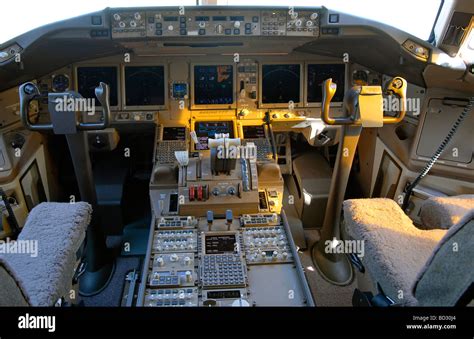
The iconic Boeing control yoke reinforces this philosophy visually and physically. Both pilots can immediately see and feel each other’s inputs because the yokes are mechanically interconnected or electronically back-driven. If the captain pulls back sharply, the first officer’s yoke moves identically.
This creates a shared tactile awareness absent in Airbus sidestick designs.
Boeing also preserves manual trim responsibilities more prominently. Pilots actively manage aircraft balance and speed stability, maintaining a closer physical relationship with the airplane’s aerodynamic state.
The philosophy becomes especially important during unusual emergencies. Boeing assumes that pilots may need to exceed normal operational limits to survive catastrophic situations. Consequently, the aircraft avoids imposing absolute restrictions on crew authority.
Supporters of Boeing’s approach argue that aviation history contains numerous examples where human improvisation succeeded precisely because pilots retained unrestricted control authority.
Why Airbus Uses Sidesticks Instead Of Traditional Yokes
The Airbus sidestick remains one of the most recognizable symbols of the company’s design philosophy. To many pilots accustomed to traditional controls, the small lateral stick initially appears almost too simple for controlling a massive commercial airliner.
Yet the sidestick was carefully engineered around fly-by-wire logic.
Because Airbus computers interpret pilot commands electronically, large mechanical control columns became unnecessary. Removing the central yoke opened valuable cockpit space and improved ergonomics dramatically.
Pilots gained unobstructed tray tables, easier instrument visibility, and more comfortable seating arrangements. Long-haul operations became physically less fatiguing because sidestick inputs require minimal arm movement. Adjustable armrests support precise wrist-level control inputs during demanding flight phases.
However, the sidestick introduces a controversial tradeoff.
Unlike Boeing yokes, Airbus sidesticks do not physically move together. One pilot cannot visually observe the exact inputs being made by the other pilot. During dual inputs, the system combines commands mathematically unless one pilot activates the priority takeover button.
This design has occasionally contributed to confusion during high-workload emergencies. Accident investigators have repeatedly emphasized the importance of verbal coordination in Airbus cockpits because physical control cues are largely absent.
Airbus addressed this issue with audio warnings and visual dual-input alerts, but critics argue that electronic alerts cannot fully replace instinctive tactile awareness between crew members.
Still, Airbus maintains that the benefits of reduced workload, improved ergonomics, and advanced automation outweigh the disadvantages.
Boeing Preserved Physical Feedback For A Reason
One of the defining characteristics of Boeing cockpits is movement. The yokes move during autopilot operation. They vibrate in turbulence. They stiffen under aerodynamic loads. They provide continuous tactile feedback about aircraft behavior.
Even after adopting fly-by-wire technology, Boeing engineers invested heavily in preserving these sensations artificially.
The Boeing 777 and 787 use sophisticated actuator systems that recreate the feel of traditional mechanical controls. This decision was not nostalgic stubbornness. It reflected Boeing’s belief that tactile information remains operationally valuable during dynamic flight conditions.
In severe turbulence, a Boeing pilot can physically sense the aircraft reacting through the yoke before fully interpreting the instrument displays. During crosswind approaches, aerodynamic resistance changes are felt directly through the controls.
This sensory connection contributes to what many Boeing pilots describe as “flying the airplane” rather than supervising automation.
The moving yoke also improves crew coordination. Both pilots instantly recognize unintended inputs, autopilot behavior, or aggressive maneuvering by the other pilot.
Critics of Airbus argue that the passive sidestick removes too much physical awareness from the cockpit environment. Airbus supporters counter that modern instrument systems already provide more accurate information than tactile sensations ever could.
The debate remains unresolved because both systems have demonstrated exceptional operational safety.
Airbus And Boeing Handle Automation Very Differently
Automation philosophy extends far beyond the flight controls themselves. Airbus and Boeing organize cockpit information in dramatically different ways.
Airbus emphasizes streamlined information management. Its Electronic Centralised Aircraft Monitoring system filters warnings and presents pilots with prioritized actions sequentially. The cockpit follows a “dark cockpit” philosophy, meaning systems remain visually quiet unless something requires attention.
This approach reduces information overload during routine operations. Pilots focus only on abnormalities demanding immediate action.
Boeing takes a broader information-sharing approach. More system data remains continuously visible, trusting pilots to synthesize information independently. Boeing assumes experienced crews benefit from comprehensive situational awareness rather than filtered automation guidance.
These differences become especially apparent during abnormal events.
In an Airbus cockpit, the aircraft often guides crews step-by-step through failures using centralized electronic procedures. Boeing cockpits rely more heavily on pilot interpretation and checklist discipline.
Neither philosophy is inherently superior. Instead, each reflects different assumptions about human cognitive performance under stress.
Airbus attempts to reduce mental workload by narrowing pilot focus. Boeing assumes pilots should maintain broader system awareness even during emergencies.
Why Airbus And Boeing Feel Completely Different During Manual Flight
To passengers, modern jets may seem equally smooth and automated. Pilots know the reality is far more nuanced.
An Airbus aircraft behaves according to flight path logic. When a pilot inputs a roll command and releases the sidestick, the aircraft maintains the selected bank angle automatically. Pitch inputs command vertical load factors rather than direct elevator positions.
This creates an unusually stable and highly managed flying experience.
A Boeing aircraft behaves more traditionally. Pilots continuously trim and adjust the aircraft manually to maintain desired attitudes and speeds. Control forces change dynamically with aerodynamic conditions.
The distinction becomes obvious during hand-flown approaches in challenging weather.
In a Boeing jet, pilots physically feel gusts, turbulence, and aerodynamic loading through the yoke. In an Airbus, the sidestick remains stationary while computers compensate electronically.
Some pilots prefer Airbus precision and reduced workload. Others prefer Boeing’s tactile immersion and direct feedback.
Interestingly, transitioning pilots often describe Airbus flying as mentally procedural and Boeing flying as physically intuitive.
That difference shapes airline training programs extensively.
Training Differences Between Airbus And Boeing Pilots
Switching between Airbus and Boeing fleets requires more than memorizing cockpit layouts. Pilots must adapt to entirely different automation philosophies and cognitive workflows.
Airbus training emphasizes understanding flight laws, automation modes, and system protections. Pilots learn how the computers interpret commands under various operational states, including degraded modes such as Alternate Law and Direct Law.
Understanding these transitions is critical because Airbus protections can disappear suddenly after certain failures.
Boeing training focuses more heavily on manual aircraft handling, trim management, and tactile awareness. Pilots practice maintaining direct aircraft control authority even during severe system abnormalities.
Both manufacturers place enormous emphasis on automation management because modern accidents increasingly involve confusion about system behavior rather than pure mechanical failures.
The industry even coined the term “automation surprise” to describe moments when pilots misunderstand what their aircraft is actually doing.
A pilot deeply experienced on one philosophy may initially struggle when transitioning to the other. Airbus-trained pilots sometimes need time adapting to Boeing’s more hands-on control environment. Boeing-trained pilots often require adjustment to Airbus automation logic and envelope protections.
The challenge is not intelligence or skill. It is muscle memory, instinct, and cognitive expectation.
The Safety Debate Between Airbus And Boeing Continues
The aviation world has debated Airbus versus Boeing cockpit philosophy for decades, yet neither manufacturer has established clear statistical superiority.
Both companies operate extraordinarily safe aircraft fleets across billions of flight hours worldwide.
However, each philosophy introduces unique vulnerabilities.
Airbus protections can become problematic if faulty sensor data causes computers to misinterpret aircraft conditions. Under degraded laws, pilots may suddenly lose familiar protections and face dramatically altered aircraft behavior.
Boeing’s philosophy preserves pilot authority but also allows crews to make catastrophic control inputs if they become disoriented or misjudge the situation.
Several major accident investigations have highlighted weaknesses associated with both approaches. These incidents fueled ongoing discussions about automation dependency, pilot monitoring, and human-machine trust.
Importantly, modern aviation safety depends far more on training quality, crew resource management, and operational discipline than on whether a cockpit contains a sidestick or yoke.
The aircraft philosophies differ, but the industry’s safety expectations remain identical.
The Future Of Cockpit Design May Combine Both Philosophies
Future commercial aircraft will likely blur the traditional Airbus-Boeing divide.
Next-generation cockpit concepts already experiment with active sidesticks capable of moving together electronically, providing Airbus-style space efficiency alongside Boeing-style tactile feedback. Artificial intelligence systems are becoming increasingly sophisticated in monitoring pilot workload, predicting hazards, and assisting decision-making.
Single-pilot airline operations are also under serious industry evaluation, although substantial regulatory and public resistance remains.
As aviation technology evolves, manufacturers increasingly recognize that neither pure automation dominance nor unrestricted manual authority represents a perfect solution.
The future likely belongs to hybrid systems combining intelligent protections with meaningful human feedback and override capability.
Yet despite all technological advances, one reality remains constant across every cockpit philosophy ever created: aviation safety ultimately depends on disciplined, highly trained crews capable of understanding both the machine and the logic governing it.
Whether gripping a Boeing yoke or resting a hand on an Airbus sidestick, pilots still carry the same responsibility that has defined aviation since the earliest days of flight — making correct decisions when conditions become unpredictable thousands of feet above the ground.