The concept of autopilot in aviation often feels like a modern technological marvel — the product of cutting-edge computers and advanced engineering. Yet, its origins trace back much further than most would expect. In fact, the first functioning airplane autopilot system emerged as early as 1912, just nine years after the Wright brothers’ historic first flight at Kitty Hawk. This remarkable innovation not only redefined the possibilities of controlled flight but also laid the groundwork for one of aviation’s most critical advancements.
The Birth of Autopilot: A Revolutionary Idea
In an era when airplanes were rudimentary wood-and-fabric machines, the notion of a plane flying without constant hands-on control was revolutionary. This groundbreaking leap was credited to Lawrence Sperry, an inventive American engineer. Sperry devised the gyroscopic automatic pilot, a relatively simple yet ingenious device capable of maintaining an aircraft’s pitch, roll, and yaw. Rather than replacing pilots, this system was intended to assist them, enabling aviators to manage other crucial tasks mid-flight, such as navigating routes or monitoring unpredictable weather patterns.
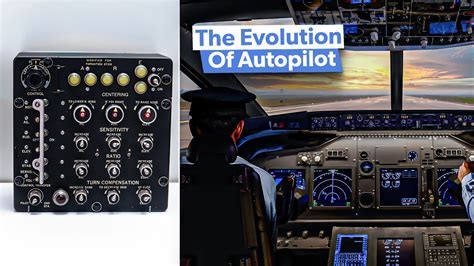
By design, Sperry’s autopilot helped keep the plane balanced and steady, providing a critical safety margin in a time when early aircraft were notoriously unstable. Even more impressively, Sperry’s early system offered limited capabilities for unassisted takeoffs and landings, proving how far ahead of its time this invention truly was.
The Daring 1914 Demonstration That Captivated the World
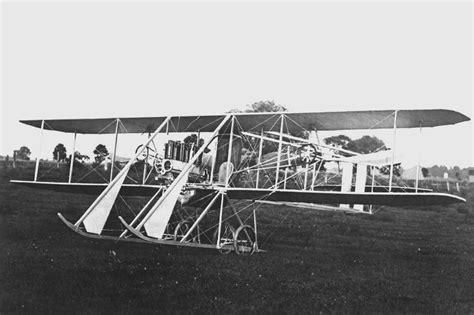
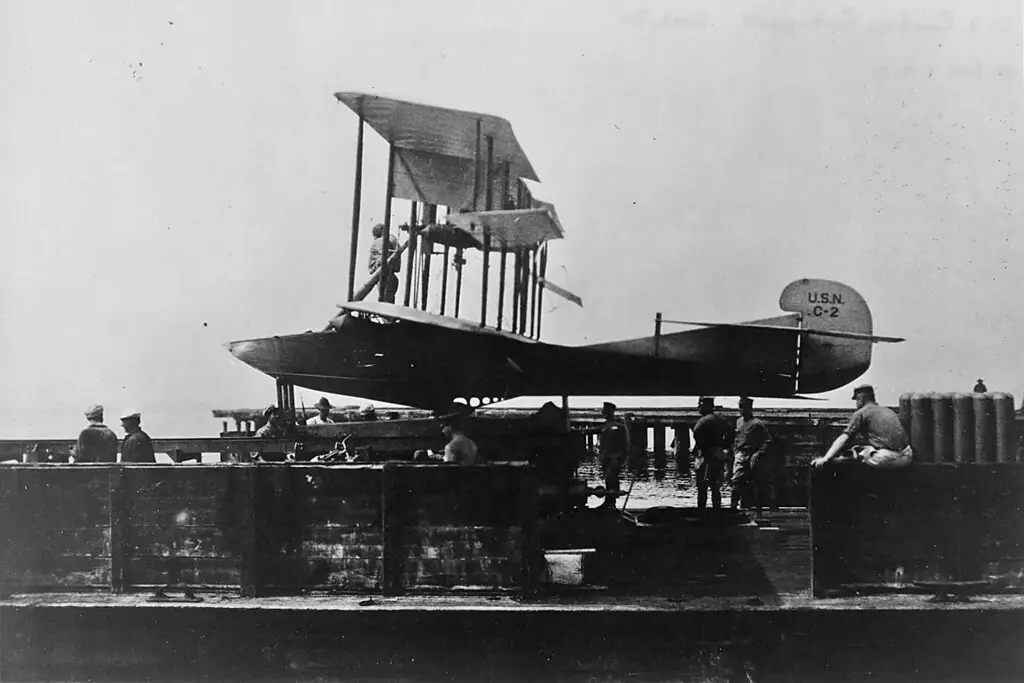
The breakthrough moment came in June 1914 when Sperry, alongside his French mechanic Emil Cachin, demonstrated the new system at the Concours de la Securité en Aéroplane (Airplane Safety Competition) in France. Competing among 56 aircraft, Sperry piloted a Curtiss C-2 biplane equipped with his gyroscopic autopilot. What followed stunned both judges and spectators alike.
During the second pass over the airfield, Cachin boldly climbed out onto one of the plane’s wings. As expected, the aircraft began to bank due to the sudden shift in weight — but remarkably, the autopilot instantly compensated, keeping the biplane steady. On their final pass, Sperry took the spectacle a step further, moving out onto the opposite wing and effectively leaving the plane pilotless. The crowd erupted in amazement. Sperry’s act not only secured first place in the competition but also earned him a handsome 50,000 francs (approximately $10,000) prize.
The Sperry Legacy: Gyroscopes and Navigation Mastery
Lawrence Sperry’s pioneering work didn’t occur in isolation. His father, Elmer A. Sperry, was a legendary inventor in his own right, often referred to as the “father of modern navigation technology.” Elmer’s mastery of gyroscopic devices revolutionized naval operations — from crafting the gyrocompass used by U.S. warships during World War I to developing stabilizers that minimized a ship’s rolling motion. His innovations even extended to the USS Nautilus, the world’s first nuclear-powered submarine.
Together, the Sperrys held over 400 patents spanning aviation, navigation, and maritime systems. Their combined expertise allowed them to adapt the principles of maritime gyro-control to aviation, transforming a once wildly unstable form of transportation into something far safer and more manageable.
From Mechanical Marvel to Digital Precision
The 1912 gyroscopic autopilot was primitive compared to today’s systems, but its basic principles remain embedded in modern flight technology. Over time, autopilot evolved from simple mechanical stabilizers into highly sophisticated, computer-driven fly-by-wire systems. In the 1930s, companies like Sperry Gyroscope Company and Honeywell advanced these concepts, integrating more precise instrumentation and redundancy features. By World War II, autopilot had become essential for military operations, allowing pilots to maintain focus during extended missions while aircraft maintained a stable course.
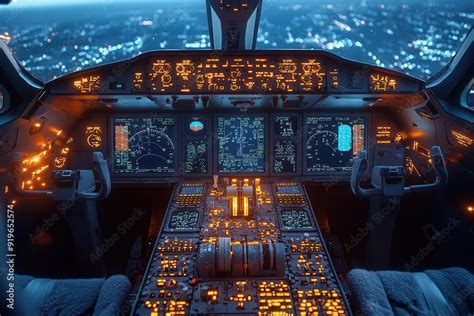
The advent of digital computing in the latter half of the 20th century brought further sophistication. Today’s autopilots can execute entire flights — from takeoff to landing — with minimal pilot intervention, incorporating inputs from GPS, inertial navigation systems, and weather radars. In commercial aviation, these advancements have reduced pilot workload, improved fuel efficiency, and contributed significantly to overall flight safety.
Why Autopilot Was a Game-Changer for Aviation
The introduction of autopilot wasn’t just a convenience; it was a paradigm shift in aviation. Early pilots often endured extreme fatigue from continuously battling unstable controls during long flights. Sperry’s invention provided relief, enabling aviators to focus on navigation, communication, and situational awareness without compromising aircraft stability.
Additionally, autopilot played a key role in expanding the practical limits of aviation. Long-distance flights, which were once dangerous and exhausting, became far more feasible. This innovation directly paved the way for milestones such as Charles Lindbergh’s 1927 transatlantic flight and the development of intercontinental commercial aviation.
How Early Autopilot Systems Worked
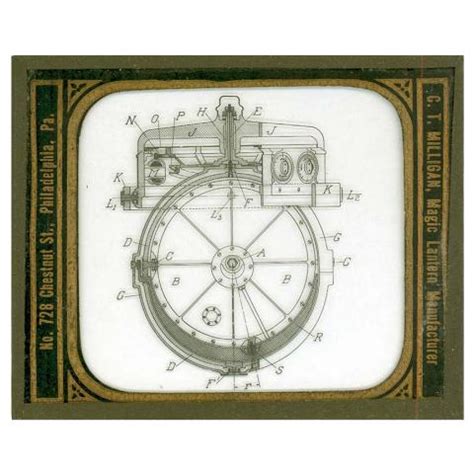
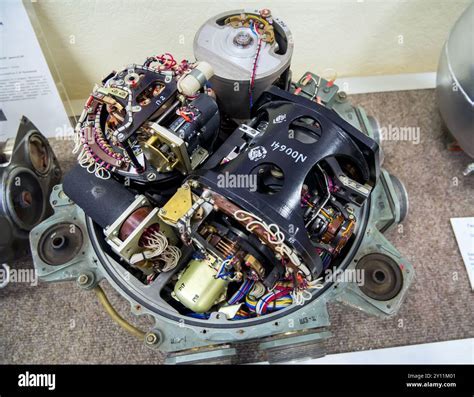
The core of Sperry’s invention relied on the gyroscope, a device capable of detecting changes in orientation. This instrument transmitted corrective signals to control surfaces, automatically adjusting the airplane’s ailerons, elevator, and rudder. While rudimentary by today’s standards, the mechanism was groundbreaking at the time because it automated a process previously handled entirely by pilots.
This early system effectively kept the plane flying straight and level without constant manual input. Pilots could now reorient themselves, check instruments, or even manage emergencies without worrying about sudden loss of control.
Autopilot in Modern Aviation: A Continuation of Sperry’s Vision
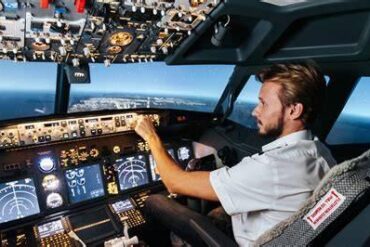
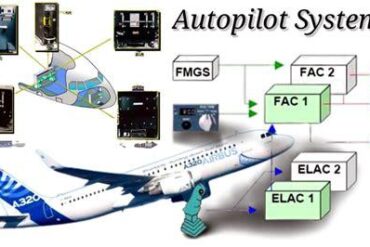
Fast forward to the present, and autopilot has become indispensable in both commercial and military aviation. Modern systems are powered by integrated flight management computers that handle everything from altitude adjustments to navigation along complex flight paths. These systems are layered with multiple redundancies, ensuring reliability even in high-stress environments.
Yet, despite these advancements, the essence of Sperry’s vision remains unchanged: assist the pilot, not replace them. Even the most advanced aircraft still require human oversight, decision-making, and adaptability in unexpected situations.
Conclusion: A Century-Old Innovation That Still Shapes the Sky
When people think of autonomous flight, they often envision sleek, computer-controlled jets soaring through the sky — a symbol of modern engineering. But the reality is that this transformation began over a century ago, in an era when airplanes were fragile experimental craft and aviation was still in its infancy.
Lawrence Sperry’s gyroscopic autopilot was more than just an invention; it was a bold statement about the potential of aviation. It showed the world that human ingenuity could tame even the most unpredictable elements of flight. Today’s autopilot systems — guiding everything from commercial airliners to unmanned drones — are a direct legacy of that pioneering work in 1912. What began as a mechanical stabilizer has evolved into one of aviation’s most critical and enduring technologies.
Autopilot’s invention not only altered how pilots fly but also shaped the trajectory of global aviation, proving that sometimes, the most transformative technologies come from the simplest — and boldest — ideas.