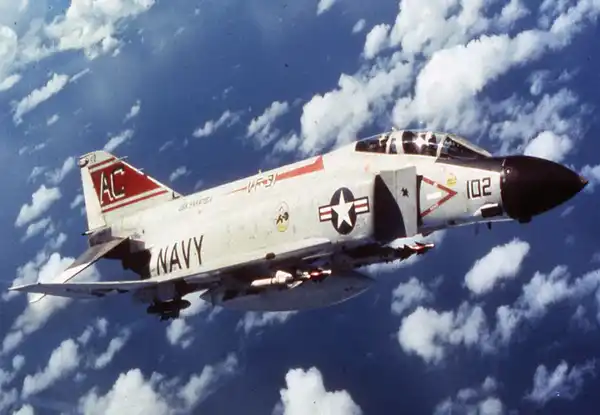
The McDonnell Douglas F-4 Phantom II occupies a unique position in American military aviation history. While the sleek F-14 Tomcat became a cultural icon and the F/A-18 Hornet evolved into the backbone of modern carrier aviation, both aircraft owe much of their operational philosophy to the Phantom. More than simply a powerful Cold War fighter, the F-4 fundamentally reshaped how the U.S. Navy approached aerial warfare, carrier operations, crew coordination, and multirole combat.
Long before advanced stealth fighters and network-centric warfare transformed the battlefield, the Phantom introduced ideas that would redefine naval aviation for decades. It challenged conventional thinking, exposed dangerous shortcomings in doctrine, and ultimately forced the Navy to evolve into the world’s premier carrier-based air combat force.
By the time the F-14 entered fleet service and later the F/A-18 became America’s versatile strike fighter, many of the tactical lessons, operational concepts, and technological priorities had already been forged in the crucible of the F-4 Phantom’s combat experience.
The Birth of a New Era in Carrier Aviation
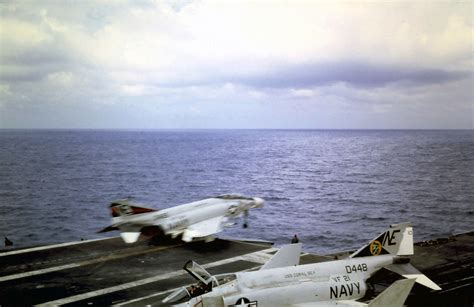
When the F-4 Phantom II entered U.S. Navy service in the early 1960s, it represented a dramatic departure from previous carrier fighters. Earlier naval aircraft emphasized maneuverability and traditional gun-based dogfighting. The Phantom instead prioritized raw engine power, speed, radar capability, missile technology, and operational flexibility.
Powered by two General Electric J79 turbojet engines, the aircraft could exceed Mach 2 while carrying an unprecedented payload of missiles, bombs, reconnaissance equipment, or electronic warfare systems. Instead of being optimized for one mission, the Phantom could perform nearly every combat role required by a carrier air wing.
This philosophy fundamentally altered naval planning. Rather than deploying separate aircraft for fleet defense, strike missions, reconnaissance, and tactical support, commanders increasingly relied on one adaptable platform capable of switching roles even during a single sortie.
The Phantom became less of a specialized fighter and more of a combat system that could adapt to changing battlefield requirements—a concept that would later define both the Hornet and the F-35C.
Why the F-4 Was Unlike Any Fighter Before It
The Phantom’s appearance reflected its unconventional philosophy. It was enormous by fighter standards, weighing significantly more than many contemporaries while featuring thick wings, large air intakes, and powerful twin engines.
Instead of sacrificing size for agility, engineers accepted reduced maneuverability in exchange for tremendous speed, range, payload capacity, and radar performance.
These characteristics made the Phantom exceptionally capable in several areas:
- Fleet air defense
- Long-range interception
- Ground attack
- Reconnaissance
- Suppression of enemy air defenses
- Nuclear strike missions
Rather than excelling in only one discipline, the aircraft proved that flexibility could become a decisive combat advantage.
The Missile Revolution Changed Naval Air Combat
Perhaps the most controversial aspect of the Phantom was its original lack of an internal gun.
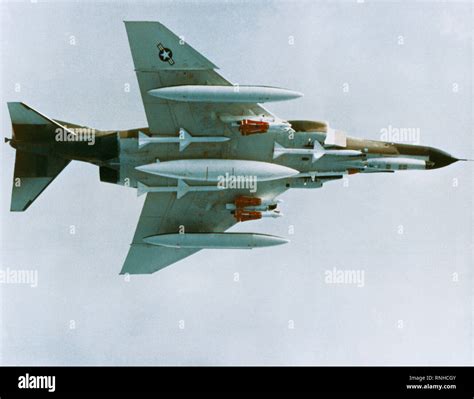
At the time, military planners believed guided missiles would completely replace traditional aerial dogfighting. Radar-guided AIM-7 Sparrow missiles and infrared AIM-9 Sidewinders appeared capable of destroying enemy aircraft long before visual contact.
The F-4 became the physical embodiment of this new “missileer” philosophy.
Its large radar allowed crews to detect targets farther away than previous fighters, while sophisticated fire-control systems supported beyond-visual-range engagements that seemed destined to dominate future wars.
Although Vietnam would expose flaws in this assumption, the Phantom permanently shifted naval aviation toward long-range air combat concepts.
Those same principles later became central to the F-14 Tomcat’s employment of the massive AIM-54 Phoenix missile and remain embedded in modern beyond-visual-range doctrine today.
Vietnam Revealed the Limits of Technology Alone
Combat over Vietnam delivered an unexpected reality check.
American pilots encountered highly maneuverable Soviet-built MiG fighters under restrictive rules of engagement that often required visual identification before firing missiles. Combined with the unreliable performance of early missile technology, these conditions produced disappointing kill ratios.
The Navy’s impressive air superiority record from World War II and Korea deteriorated dramatically during the early years of Vietnam.
Initially, critics blamed the Phantom’s lack of an internal cannon.
However, deeper investigation revealed a more complicated truth.
The aircraft itself was not the primary problem.
Pilot training, missile employment, tactical doctrine, and combat preparation all lagged behind the rapidly evolving realities of modern air warfare.
The Phantom became the catalyst that forced the Navy to confront these weaknesses.
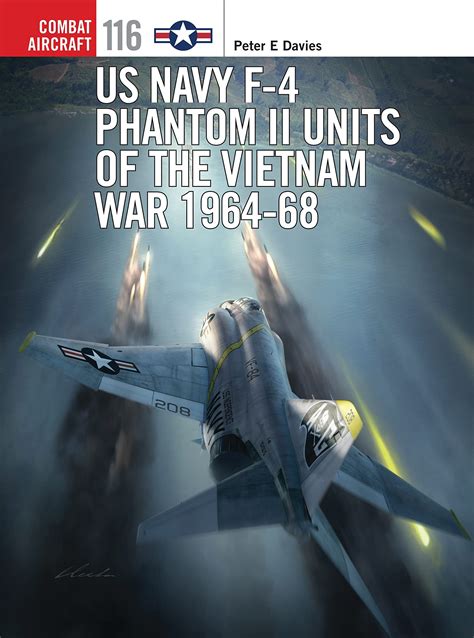
The F-4 Gave Birth to TOPGUN
The Navy responded with one of the most influential training reforms in aviation history.
Captain Frank Ault’s comprehensive review concluded that improved pilot training—not simply additional weapons—would restore American air superiority.
The result was the creation of the Navy Fighter Weapons School in 1969.
Better known as TOPGUN, the school transformed naval fighter instruction.
Instead of assuming superior technology guaranteed victory, instructors emphasized realistic air combat, aggressive maneuvering, energy management, missile employment, and dissimilar aircraft training against adversaries that simulated Soviet fighters.
Phantom crews learned how to maximize the aircraft’s strengths while minimizing its weaknesses.
Rather than attempting to out-turn smaller MiGs, pilots learned to preserve energy, exploit radar advantages, coordinate with wingmen, and carefully manage missile engagement envelopes.
The results proved extraordinary.
By the later stages of the Vietnam War, Navy fighter crews dramatically improved their kill ratio, validating the new doctrine that continues influencing naval aviation today.
The Importance of Two Crew Members
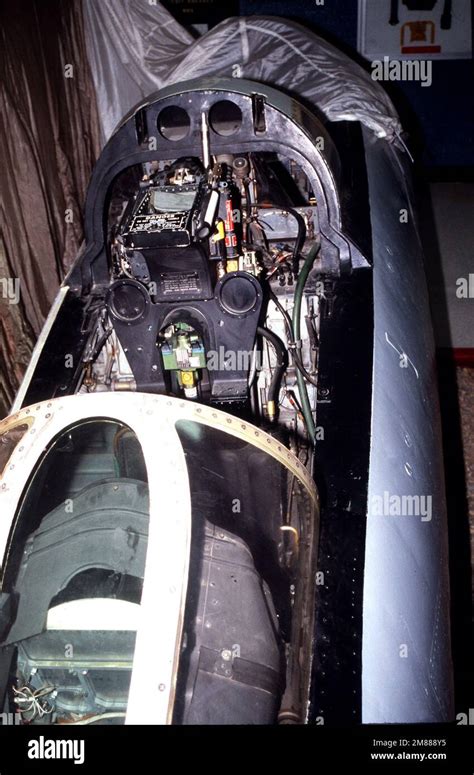
One of the Phantom’s greatest innovations was its two-person cockpit arrangement.
Unlike single-seat fighters, the F-4 divided responsibilities between the pilot and the Radar Intercept Officer (RIO).
While the pilot concentrated on flying the aircraft under intense g-forces, the RIO managed radar systems, tracked targets, monitored threats, communicated with controllers, and coordinated missile engagements.
This separation of duties significantly increased combat effectiveness.
The concept became especially valuable as radar systems and guided weapons grew increasingly sophisticated.
Recognizing its advantages, the Navy retained the two-seat philosophy when developing the F-14 Tomcat.
Unlike many fighters, every operational Tomcat featured both a pilot and RIO because combat experience had demonstrated the enormous tactical value of dedicated crew coordination.
Crew Resource Management Became a Naval Standard
Beyond hardware, the Phantom established lasting principles of Crew Resource Management (CRM).
Effective communication between pilot and RIO became just as important as aircraft performance.
Successful Phantom crews developed efficient cockpit coordination, task sharing, and rapid decision-making processes that dramatically improved survivability during complex engagements.
These CRM concepts eventually spread throughout naval aviation and influenced military aviation worldwide.
Even when later aircraft incorporated advanced automation, the emphasis on disciplined communication and workload management remained central to carrier aviation culture.
Modern fighters increasingly rely on computers to perform many tasks once handled by a second crew member, yet the underlying philosophy pioneered by Phantom crews continues guiding cockpit design today.
A Fighter That Could Do Nearly Everything
The Phantom’s greatest contribution may have been proving that multirole capability could become a strategic advantage rather than a compromise.
During Vietnam, the same aircraft often flew air superiority missions in the morning before conducting bombing operations later that day.
It served as:
- Fleet interceptor
- Tactical strike fighter
- Reconnaissance platform
- Nuclear delivery aircraft
- Electronic warfare platform
- Wild Weasel suppression aircraft
This operational flexibility allowed carrier commanders to adapt rapidly as missions evolved.
Instead of relying on numerous specialized aircraft, the Navy increasingly embraced versatile platforms capable of handling multiple mission sets.
This philosophy directly inspired the later F/A-18 Hornet.
How the F-14 Expanded the Phantom’s Vision
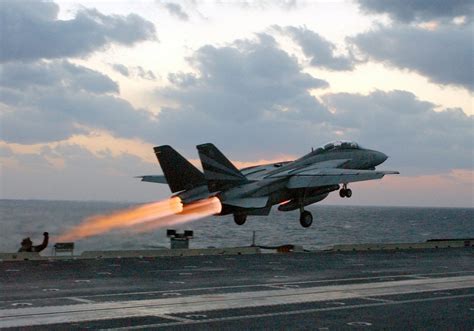
Although the F-14 corrected many of the Phantom’s shortcomings, it inherited much of its predecessor’s strategic DNA.
The Tomcat retained:
- Long-range interception philosophy
- Twin-engine reliability
- Two-person crew
- Advanced radar emphasis
- Beyond-visual-range missile doctrine
However, Grumman addressed several combat deficiencies revealed during Vietnam.
Variable-sweep wings dramatically improved maneuverability.
A bubble canopy enhanced pilot visibility.
An internal M61 Vulcan cannon restored close-range firepower.
The enormous AWG-9 radar paired with AIM-54 Phoenix missiles extended engagement ranges beyond anything previously available to carrier aviation.
Rather than replacing the Phantom’s concepts, the Tomcat refined them into a more specialized fleet-defense platform.
The Hornet Returned to the Phantom’s Multirole Philosophy
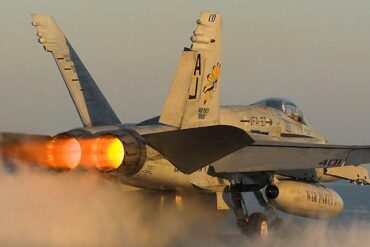
While the Tomcat prioritized air superiority, the F/A-18 Hornet marked a return to the Phantom’s balanced approach.
Designed from the outset as a strike fighter, the Hornet intentionally sacrificed some raw performance to maximize versatility.
It combined fighter escort, precision strike, close air support, fleet defense, suppression of enemy air defenses, and maritime attack within one highly reliable airframe.
This mirrored exactly what the Phantom had demonstrated decades earlier.
The Super Hornet expanded this flexibility even further, becoming the Navy’s primary workhorse capable of carrying a wide assortment of precision-guided weapons while maintaining effective air combat capability.
The Phantom’s multirole philosophy had become permanent doctrine.
The Phantom’s Influence Reaches the F-35C
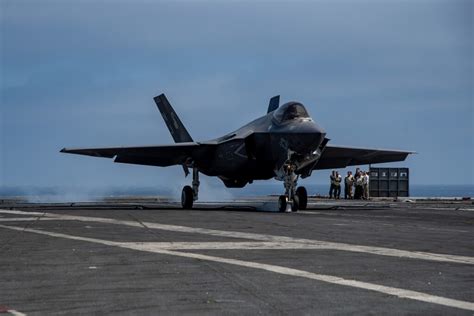
At first glance, the stealthy F-35C appears unrelated to the large, smoky Phantom.
In reality, many operational concepts connect the two aircraft.
Like the Phantom, the F-35C serves as a universal combat platform rather than a specialized interceptor.
It combines intelligence gathering, electronic warfare, strike capability, reconnaissance, and air superiority within one aircraft.
Instead of relying primarily on maneuverability, the Lightning II emphasizes information dominance.
Advanced sensors automatically fuse data from radar, infrared systems, electronic surveillance equipment, and friendly platforms into a single tactical picture.
Tasks once divided between pilot and Radar Intercept Officer are now largely managed by sophisticated software.
The philosophy remains remarkably familiar.
Technology has changed.
The mission has not.
From Dogfighting to Information Dominance
Naval aviation has evolved from close-range turning battles into highly connected network warfare.
Yet many tactical principles developed during Phantom operations remain relevant.
Energy management.
Missile employment.
Situational awareness.
Formation tactics.
Mutual support.
Mission flexibility.
Today’s F-35C can identify targets without revealing its own position, distribute targeting information across secure data links, and coordinate attacks involving multiple aircraft and naval assets.
Instead of simply shooting down enemy fighters, it orchestrates the entire battlespace.
This evolution represents a technological leap, but philosophically it follows the path first established by the Phantom decades earlier.
The Lasting Legacy of the F-4 Phantom II
History often remembers the aircraft that capture public imagination. The F-14 Tomcat achieved legendary status through its speed, sweeping wings, and Hollywood fame. The F/A-18 Hornet became synonymous with modern carrier operations. The F-35C represents the cutting edge of fifth-generation naval aviation.
Yet beneath each of these aircraft lies the enduring influence of the F-4 Phantom II.
It forced the Navy to rethink aerial combat after Vietnam. It inspired the creation of TOPGUN. It demonstrated the value of multirole flexibility, advanced radar integration, missile-centric warfare, and crew coordination. It proved that adaptability often outweighs specialization in the unpredictable environment of naval warfare.
Perhaps most importantly, the Phantom showed that even an imperfect aircraft can permanently reshape military doctrine. Its shortcomings became lessons. Its strengths became standards. Every major U.S. Navy fighter that followed—whether the fleet-defending Tomcat, the versatile Hornet, or the stealthy F-35C—carried forward ideas first tested aboard the decks of aircraft carriers by Phantom crews.
More than sixty years after its introduction, the F-4 Phantom II remains one of the most influential combat aircraft ever built. Not because it was flawless, but because it fundamentally changed how the U.S. Navy fights in the air. Its legacy is visible in every modern carrier air wing, where flexibility, information superiority, and multirole capability continue to define naval aviation in the twenty-first century.