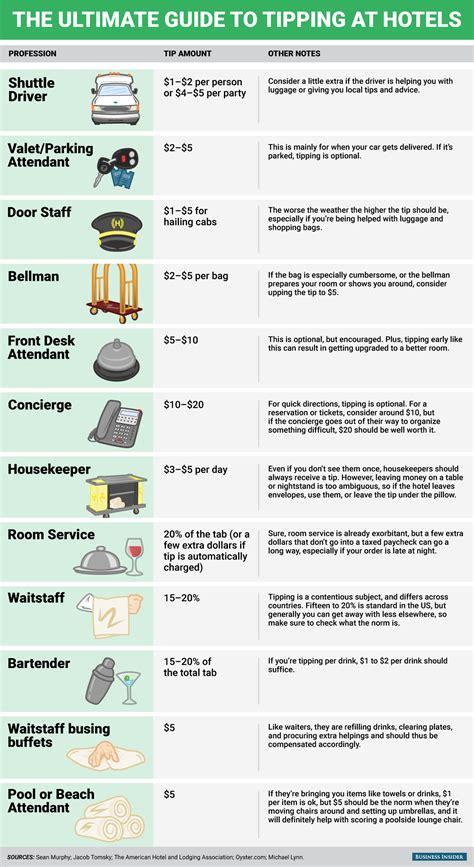
The ritual of ordering hotel room service carries an aura of indulgence—soft lighting, crisp linens, a knock at the door that promises comfort on demand. Yet beneath that polished tray and neatly arranged cutlery lies a question that unsettles even seasoned travelers: how much should you tip, and when is tipping actually appropriate? Room service tipping is not governed by a single rulebook. Instead, it exists at the intersection of culture, economics, and evolving hospitality norms, making it one of the most misunderstood aspects of hotel etiquette.
Unlike restaurants, where expectations are at least locally consistent, hotel room service introduces layers of ambiguity. Guests are often confronted with delivery charges, service fees, and gratuity lines that seem to overlap without explanation. The result is confusion, frustration, and sometimes guilt—especially when traveling internationally. Understanding what is fair, respectful, and reasonable requires more than instinct; it demands context.
The complexity begins with the simple fact that hotels operate globally, but tipping cultures do not. A guest may arrive with deeply ingrained habits shaped by their home country, only to find those habits misaligned with local norms. Over time, this cultural exportation subtly reshapes expectations on both sides of the door—guests unsure of what to do, staff unsure of what to expect.
Why Hotel Room Service Tipping Feels So Complicated
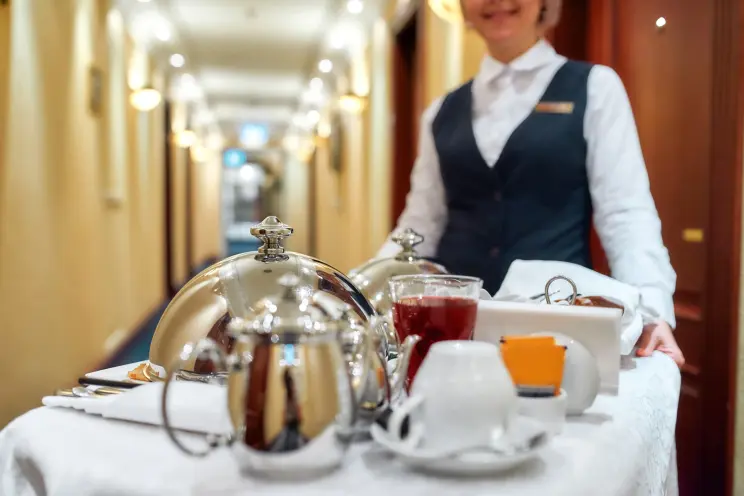
Room service occupies a strange middle ground between dining and delivery. It is neither a traditional restaurant experience nor a casual takeaway transaction. The service involves multiple roles—kitchen staff, runners, sometimes even supervisors—yet the guest typically interacts with just one person. This disconnect makes it difficult to assess where a tip actually goes and whether it meaningfully rewards the individual providing service.
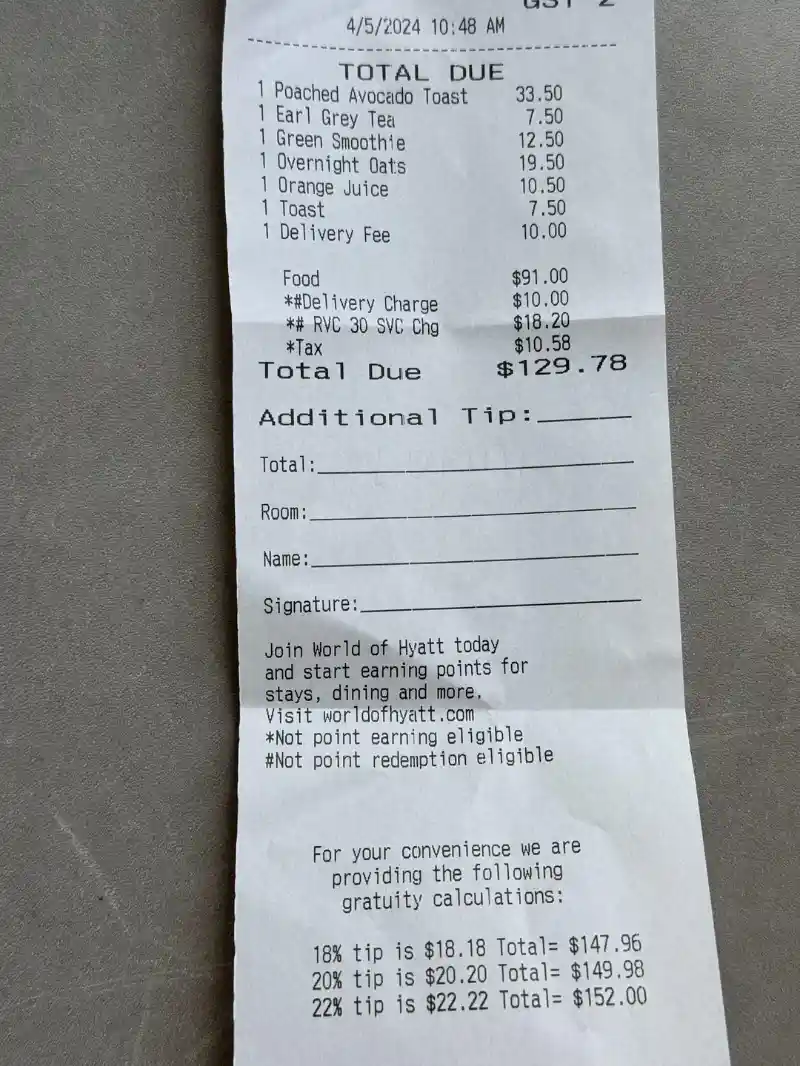
In many hotels, especially in the United States, room service bills arrive layered with fees that inflate the final cost far beyond the menu price. A single order might include a delivery charge, a service charge, applicable taxes, and then—almost provocatively—a blank line inviting an additional gratuity. What feels like generosity in a restaurant can feel like overpayment in a hotel room, particularly when the math reveals a steep markup before tipping even begins.
The ethical tension deepens when guests learn that service charges do not necessarily flow to service staff. In numerous properties, only a fraction of these charges are distributed to employees, with the remainder absorbed by the hotel. This practice blurs the moral clarity of tipping: is the guest compensating underpaid labor, or subsidizing corporate margins? Without transparency, even well-intentioned travelers are left guessing.
The American Model: Fees on Top of Fees
Nowhere is this confusion more pronounced than in the United States, where tipping culture is deeply embedded and aggressively institutionalized. American hotels often treat room service as a premium product, pricing it accordingly. A meal that costs modestly in the restaurant can balloon once delivered upstairs, and the expectation to tip remains firmly intact.
For American travelers, this environment creates a paradox. On one hand, there is social conditioning to tip generously for personal service. On the other, there is mounting resistance to what feels like compulsory generosity layered atop mandatory fees. The psychological friction is real, and it has led many guests to abandon room service altogether, opting instead for takeout or hotel restaurants where the rules feel clearer.
Yet even within this system, expectations are inconsistent. Some hotels quietly fold gratuity into service charges, while others leave it entirely optional. The absence of standardized disclosure places the burden of ethical decision-making squarely on the guest’s shoulders.
International Perspectives: When Tipping Is Optional—or Unwelcome
Step outside the United States, and the landscape changes dramatically. In many countries, room service is treated as a straightforward extension of hospitality rather than a tipping opportunity. France, for instance, often includes service in the price, reflecting a broader cultural belief that staff should be adequately compensated without relying on gratuities. A tip, if given at all, is a modest gesture rather than an obligation.
In Germany, service charges may appear, but tipping remains understated. Guests might round up the bill or leave a small amount as appreciation, yet failing to tip is rarely perceived as rude. The expectation is politeness, not performance-based compensation. For travelers from non-tipping cultures, this approach feels refreshingly simple—until confronted with a receipt that still includes a gratuity line.
Then there are destinations like Japan, where tipping can actively disrupt social norms. Service excellence is considered a professional standard, not something to be rewarded financially by the guest. In such contexts, a service charge may exist, but additional tipping is neither expected nor encouraged. Attempting to tip can even cause embarrassment.
These contrasts highlight a critical truth: tipping is not a universal language, and applying one’s home-country habits abroad can unintentionally create discomfort.
The Luxury Hotel Dilemma: Paying More, Tipping Less?
Luxury hotels introduce another layer of complexity. When guests are paying hundreds of euros or dollars per night, the assumption often arises that service is already accounted for in the room rate. This belief is not unfounded; high-end properties frequently market themselves on seamless, anticipatory service as part of the overall experience.
However, luxury does not automatically equate to equitable wage structures. Even in five-star hotels, room service staff may rely on tips as a meaningful supplement to income, particularly in countries influenced by American hospitality norms. The challenge for guests lies in reconciling the perception of inclusive luxury with the reality of behind-the-scenes labor economics.
In these settings, many seasoned travelers adopt a middle-ground approach: modest tipping that acknowledges good service without replicating American-style percentages. This strategy respects local customs while still recognizing individual effort.

Cultural Conditioning and the Psychology of Uncertainty
Tipping anxiety is rarely about money alone. It is about social signaling—fear of appearing cheap, ignorant, or disrespectful. Travelers often tip not because they are certain it is required, but because uncertainty feels worse than overpaying. This psychological pressure is especially strong in transitional spaces like hotels, where guests are temporarily embedded in unfamiliar systems.
The presence of a gratuity line on a receipt subtly shifts responsibility. Even in cultures where tipping is not customary, the mere option can create an implied expectation. Guests may interpret the blank line as a silent judgment, while staff may view it as a formality rather than a request. The ambiguity benefits no one.
For many, the most practical solution is comparative reasoning. Observing how tipping works in local restaurants provides a reasonable benchmark for room service. If restaurant tipping is modest or optional, applying a similar standard upstairs aligns with local norms and reduces guesswork.
Practical Guidance Without Absolutes
There is no universal rule that governs hotel room service tipping, and pretending otherwise only deepens confusion. What does emerge, however, are principles rather than percentages. Transparency matters. Context matters. Intent matters. A guest who tips thoughtfully within local customs demonstrates respect, even if the amount differs from another traveler’s choice.
Equally important is recognizing that declining to tip is not inherently disrespectful in many parts of the world. In non-tipping cultures, courtesy, gratitude, and polite interaction carry more weight than cash. A sincere thank-you can be as culturally appropriate as a monetary gesture.
The Real Bottom Line on Room Service Tipping
Hotel room service tipping sits at the crossroads of globalization and tradition. As travelers move fluidly across borders, tipping norms blur, evolve, and sometimes clash. Hotels, in turn, adopt hybrid billing practices that reflect both local customs and international guest expectations. The result is a system that feels inconsistent, occasionally opaque, and often frustrating.
Yet within this complexity lies an opportunity for conscious travel. By understanding local norms, questioning opaque fees, and tipping— or not tipping— with intention rather than reflex, guests can navigate room service etiquette with confidence. There is no single “correct” amount, but there is a thoughtful approach, and that is ultimately what defines good travel manners in an increasingly interconnected world.