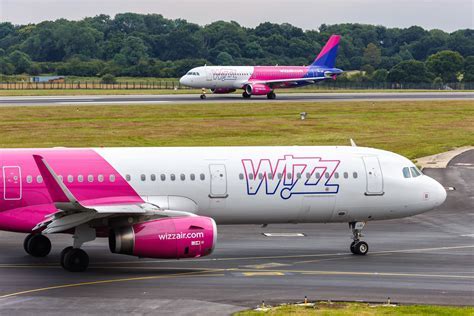
A seemingly routine landing turned into a rare aviation spectacle when a Wizz Air jet dramatically tipped backward at Haugesund Airport in Norway after arriving from Gdańsk, Poland. The aircraft, operated by GetJet Airlines for Wizz Air, had completed its journey and begun the standard disembarkation process when its nose suddenly rose into the air, causing the tail to strike the tarmac in an unexpected and alarming event.
Unfolding of a Disturbing Scene: From Smooth Touchdown to Sudden Tail-Strike
On Tuesday, June 15, 2025, the Wizz Air-operated Boeing 737-800, registered as Y-UNO, completed its flight from Gdańsk Lech Wałęsa Airport to Haugesund Karmøy Airport without issue. The skies were clear, winds were calm, and no technical problems had been reported midair. But the real drama didn’t start until the aircraft had already safely parked.
As passengers began to disembark from the forward exits and luggage handlers commenced unloading from the front cargo hold, the aircraft suddenly pivoted backward, with its nose lifting off the ground. The rear fuselage came into direct contact with the runway surface—a phenomenon known in aviation as a “tail-tip” incident. The sight was enough to bring operations at Haugesund Airport to an abrupt stop, grounding not only the involved aircraft but creating a ripple effect of confusion, delay, and concern.
The Culprit: Weight Imbalance and Critical Ground Handling Errors
Initial investigations revealed that the aircraft tipped due to a serious imbalance in weight distribution. While tail-tips are known to occur—albeit rarely—they are typically the result of uneven weight during loading or unloading. In this particular case, sources indicate that a combination of early unloading of forward baggage and premature passenger egress from the front caused the aircraft’s center of gravity to shift rearward beyond acceptable limits.
This shift, unmitigated by standard ground crew protocols, proved enough to cause the jet to tilt backward, embedding its tailcone into the asphalt.
No injuries were reported, but the emotional shock among passengers and crew was palpable. Airport officials stated that the aircraft remained stable in its tilted position and that emergency teams were dispatched immediately to assess structural damage and secure the scene.
Chaos Ensues: Flight Delays and Furious Travelers
The backward tilt had far-reaching consequences beyond the aircraft itself. The jet was originally scheduled to depart Haugesund at 12:30 PM for its return leg. However, with its tail embedded in the tarmac and the aircraft no longer deemed airworthy, all schedules were promptly frozen.
Stranded passengers vented their frustrations online, noting that Wizz Air offered limited communication in the first few hours following the incident. With many travelers relying on connections, business obligations, and personal timelines, the mood quickly turned sour.
Eventually, Wizz Air and GetJet Airlines arranged a replacement aircraft, which departed the airport around 8:40 PM—over eight hours behind schedule. Although all passengers were eventually transported to their destinations, the long delays, disruption to airport operations, and reputational blow to the airline left a lingering cloud.
Anatomy of a Tail-Strike on the Ground: The Rare but Preventable Phenomenon
While tail-strikes are occasionally seen during aggressive takeoffs or landings, seeing one on a stationary aircraft is exceptionally uncommon.
A tail-tip during disembarkation typically signals a breakdown in loading sequence protocols. Aircraft like the Boeing 737-800 rely heavily on even weight distribution. Their balance is delicate—especially during the boarding or deplaning phases when the fuselage is transitioning between static and dynamic loading states.
To prevent such incidents, most ground crews are trained to:
- Disembark passengers from the rear before unloading the front.
- Maintain ballast or cargo in the forward hold until rear cargo is removed.
- Monitor weight-and-balance software in real-time during ground ops.
In this case, it appears those safeguards either failed or were not followed properly, leading to an easily avoidable incident with serious operational implications.
Quick Resolution but Lingering Doubts
The good news: after thorough on-site inspection and stabilization, the aircraft was deemed structurally unharmed. The tailstrike, while visually dramatic, did not result in fuselage breaches, loss of hydraulic integrity, or compromise of avionics. Engineers confirmed that the plane could return to service the next day.
However, this resolution has not silenced critics. The incident sparked questions about the ground handling efficiency of third-party operators like GetJet Airlines, which Wizz Air frequently contracts to operate flights under its brand. It also raised doubts about whether cost-cutting pressures at budget carriers could be increasing the frequency of ground-level errors.
Spotlight on Wizz Air’s Operational Model and Risk Tolerance
As a leading player in the low-cost carrier (LCC) segment, Wizz Air has built its reputation on lean staffing, fast turnarounds, and outsourcing key operational tasks to contracted entities. While this model drives affordability, it also introduces layers of complexity—and risk.
Haugesund is not a major hub, but its growing significance in Wizz Air’s network mirrors the airline’s pan-European ambitions. Operating to and from such tier-two airports, often under high throughput and with minimal redundancy, means ground handling lapses can trigger widespread ripple effects.
Industry analysts have repeatedly warned that the razor-thin margins and compressed turnaround windows favored by low-cost carriers leave little room for error—and even less for miscommunication between ground and flight crews.
Passenger Safety and Public Perception
Although no injuries occurred, the visual of a commercial airliner tilted back on its tail deeply unsettles passengers. Air travel thrives on perceived safety. Any deviation from expected norms—especially when caught on camera—can reverberate far beyond one flight or one route.
Social media was flooded with images of the tilted plane, spawning memes, but also deep concern. Passengers, especially those flying with Wizz Air in the coming weeks, expressed hesitancy and demanded transparency.
Aviation experts argue that even minor incidents must be handled with clear communication, rapid response, and corrective training. For a generation of travelers increasingly influenced by online narratives, this incident is more than a technical hiccup—it’s a reputational event.
Investigations Underway: What Airlines and Airports Must Learn
In the wake of the incident, both Wizz Air and GetJet Airlines have pledged internal reviews. Haugesund Airport has also launched a parallel investigation into procedural lapses among its ground handling teams. Early reports suggest a checklist deviation, possibly triggered by tight schedules, miscommunication, or lack of supervisory oversight.
Key focal points of the investigation include:
- Ground crew compliance with standard unloading procedures
- Coordination between cabin crew and tarmac teams
- Real-time weight monitoring during passenger disembarkation
- Use of tail supports or ground-based balancing systems when available
These findings will likely influence airport policies, airline SOPs, and training curriculums across the budget airline ecosystem.
Final Thoughts: A Cautionary Tale in the Age of Cost-Centric Aviation
This incident at Haugesund, though resolved without injury or major damage, serves as a stark reminder of how fragile the operational dance of modern aviation can be. For airlines like Wizz Air, success hinges not just on cheap tickets, but on flawless coordination among myriad teams—each with their own pressures and protocols.
Passengers may accept smaller seats or fewer amenities. But they will not compromise on safety, clarity, or trust. A plane tipping over after landing—even if rare—is a breach of that trust. And in the competitive LCC market, trust is a currency more valuable than airfare.
As investigations continue and lessons are (hopefully) learned, this dramatic tail-tip will go down not as a catastrophe, but as a catalyst for change. One that forces both airlines and airports to reassess, recalibrate, and reemphasize the non-negotiable principles of safe air travel—even when the seat price is low.