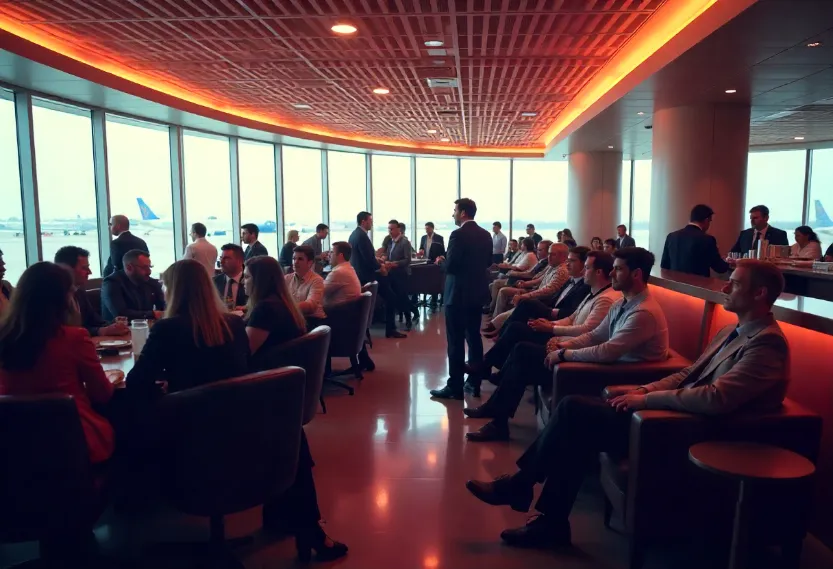
Delta Air Lines, long celebrated for its premium in-flight services and elite travel experiences, now finds itself grappling with a crisis that strikes at the very core of luxury aviation: Sky Club overcrowding. As 2025 unfolds, business travelers and high-status leisure flyers alike are discovering that their once-coveted access to Delta’s exclusive lounges no longer guarantees serenity, space, or even a seat. The problem isn’t just about logistics — it reflects a seismic cultural shift in what it means to be part of the “elite” class of travelers.
Delta’s Premium Promise Meets a Crowded Reality
As one of the most financially robust carriers in the U.S., Delta Air Lines has built its reputation on comfort, consistency, and exclusive perks. The Sky Club lounges have historically been a centerpiece of this promise — havens of tranquility for travelers seeking respite from crowded terminals. But by mid-2025, this promise is eroding. Reports of hour-long waits, standing-room-only interiors, and congested service counters are now commonplace, especially in major hubs like Atlanta (ATL) and New York-JFK.
The surge in demand stems from post-pandemic travel dynamics. “Revenge travel” — the consumer backlash against years of grounded flights — collided with widespread credit card benefits, corporate perks, and tier upgrades to open the gates to a flood of premium-seeking passengers. Delta’s Sky Clubs, once markers of exclusivity, have become overcrowded commons.
The American Express Clampdown: Rationing Access
To curb overcrowding, Delta took drastic action in February 2025 by limiting Sky Club access for American Express Platinum cardholders. Once promised unlimited access, these customers now face a 15-visit annual cap unless they spend a hefty $75,000 per year. Additionally, Basic Economy ticket holders — regardless of their card status — are now barred from lounges entirely.
These measures mark a deliberate shift in how Delta defines premium status. According to CEO Ed Bastian, the changes are about “preserving the lounge experience” and protecting the value of elite access. But to many long-time loyalists, the damage is already done. The Sky Club no longer feels like a sanctuary. It feels like a queue.
Elite Overproduction: A Theory Meets the Tarmac
The overcrowding isn’t unique to Delta, but it is particularly symbolic. The phenomenon aligns with Peter Turchin’s theory of elite overproduction — the idea that societies can create more elites than elite spaces. When applied to air travel, it means more travelers now qualify for perks like lounge access than there are lounges to accommodate them.
Frequent flyers with Delta SkyMiles Medallion status, premium co-branded credit cards, or corporate travel perks are all competing for the same finite real estate. The lounge, once a reward for top-tier loyalty, is now accessible to a burgeoning upper-middle class. As a result, the very notion of exclusivity is diluted.
Business Travelers on the Front Lines
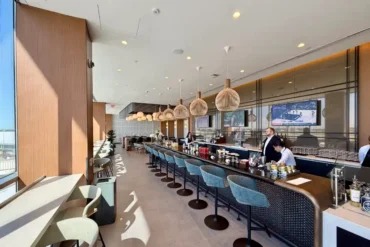
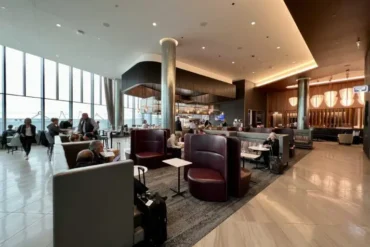
For business-class passengers, this dilution isn’t theoretical — it’s painfully real. Sky Clubs, previously ideal for catching up on emails or holding a quiet call, now resemble crowded cafés. Lounge Wi-Fi networks are stretched thin, food stations are depleted more quickly, and staff are overwhelmed.
The irony is profound: as the price of premium airfares rises, the quality of the pre-flight experience — a key part of the value proposition — has diminished. Time-pressed professionals are beginning to ask whether the Sky Club still justifies its reputation as a business essential.
Leisure Flyers Feel the Squeeze
The democratization of lounge access also affects leisure travelers. Many have spent thousands on Amex Platinum fees, or strategically booked premium seats, only to be met with overcrowding. For them, the lounge was not just about amenities; it was part of a broader aspirational lifestyle. Now, that aspiration feels compromised.
This is more than a minor inconvenience. It’s a signal that premium experiences once reserved for the few are losing their luster as they become available to the many. Delta’s brand — synonymous with elevated travel — is caught in the paradox of its own success.
Global Airline Industry Caught in the Same Spiral
Delta is not alone. The issue of lounge overcrowding is industry-wide:
- United Airlines has responded by increasing fees and launching new membership tiers, such as the “All Access” plan.
- American Airlines has battled not just crowding, but facility deterioration, with frequent reports of broken amenities and dirty lounges.
- British Airways has taken the rare step of incentivizing passengers to skip the lounge entirely during peak hours.
- Qantas faces public scrutiny over access to its Chairman’s Lounge, which has become a lightning rod for political controversy in Australia.
Each airline’s response reveals the difficulty of maintaining exclusivity in a market saturated with elites. As perks proliferate, their value plummets.
Delta’s Lounge Expansion Blueprint
In response, Delta is investing heavily in infrastructure. New Delta One Lounges — larger, more exclusive, and richly appointed — are scheduled to open at JFK, LAX, Boston, and Seattle throughout 2025 and 2026. These spaces are designed to offer an elevated tier of luxury, above even the standard Sky Club.
But expansion alone is not a silver bullet. Even with increased square footage, the influx of eligible passengers may continue to outpace supply. The airline faces a tightrope walk: offer enough access to maintain loyalty without overextending its brand’s premium promise.
The Illusion of Status in the Age of Access
The Sky Club dilemma mirrors broader economic and cultural patterns. In an age where high-status symbols — from Ivy League degrees to luxury travel — are increasingly accessible, the cachet of those symbols diminishes. What once made travelers feel elite now makes them feel ordinary.
The root of the problem lies in a systemic overextension of elite benefits. When too many people gain access to perks designed for a few, everyone’s experience suffers. Delta’s challenge is emblematic of that paradox: how to maintain the allure of exclusivity without alienating the masses that fueled its growth.
The Path Forward: Reclaiming True Luxury
Solving the Sky Club crisis requires more than lounge expansions and access restrictions. It demands a rethinking of luxury itself. Travelers no longer equate luxury with mere access. They crave space, silence, and seamless service — things that crowding obliterates.
Delta has an opportunity to redefine what premium means. The new Delta One Lounges are a start, but real change will come from refining the qualitative experience, not just the quantitative capacity. More targeted loyalty programs, more selective partnerships, and tech-enhanced capacity management may be the next frontier.
Ultimately, the Sky Club crisis is a reflection of a society in flux — one where wealth, status, and reward are being rebalanced. Airlines, like other luxury providers, must evolve or risk losing the loyalty of the very customers they worked hardest to attract.
Conclusion: The Luxury Traveler’s New Dilemma
Delta’s Sky Club overcrowding saga is more than an operational issue — it’s a symbol of the transformation underway in luxury travel. As the boundaries of elite access blur, airlines must confront the hard truth: exclusivity can’t be mass-produced.
The next chapter of luxury air travel will not be defined by how many people can be served, but by how well they are served. For Delta, the path forward lies in reclaiming intimacy, comfort, and distinction in a world that’s racing toward commoditized premium. Only then can the Sky Club return to its rightful place — not as a crowded checkpoint, but as a haven in the skies.