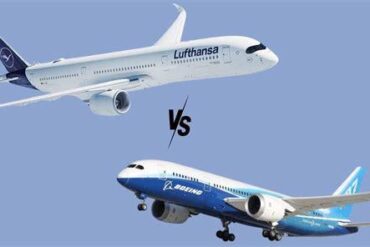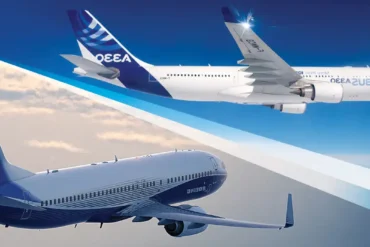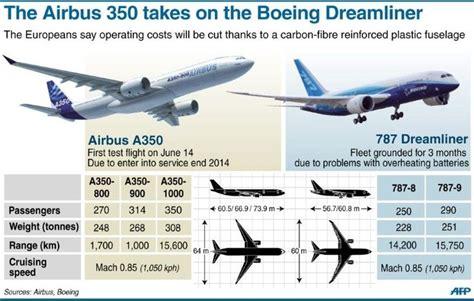
Modern widebody aircraft exist in a world where turbulence is unavoidable, but discomfort and structural stress are not. Over the past two decades, manufacturers have poured enormous engineering effort into making turbulence less frightening for passengers and less damaging for airframes. Two aircraft sit at the very top of this design philosophy: the Boeing 787 Dreamliner and the Airbus A350.
A persistent belief has grown among frequent flyers and aviation enthusiasts that the Boeing 787 handles turbulence better than the Airbus A350. The reality is more nuanced, more interesting, and far more technical. These aircraft do not compete by using the same playbook. Instead, they represent two different engineering philosophies that arrive at the same destination: safe, stable, and predictable flight through disturbed air.
Understanding which aircraft “handles turbulence better” requires moving beyond anecdotes and into wing physics, flight control software, and structural design choices that rarely make headlines but shape every flight.
How Modern Airliners Are Designed to Fight Turbulence
Turbulence is not a single phenomenon. It ranges from light atmospheric ripples to violent convective air associated with jet streams and storms. For aircraft designers, the challenge is not eliminating turbulence—an impossible task—but managing how the aircraft reacts to it.
Both the Boeing 787 and Airbus A350 rely on fly-by-wire systems, where computers interpret pilot inputs and atmospheric data before moving control surfaces. These systems react faster than any human pilot, making micro-adjustments that smooth the aircraft’s response to gusts.
Where the two aircraft diverge is how they distribute and dissipate those forces. Airbus leans heavily into active load alleviation, while Boeing places greater emphasis on structural flexibility, supported by software.
By the time passengers feel a bump, dozens of control laws and structural responses have already fired in milliseconds.
Airbus A350: Software-Driven Control and Load Alleviation
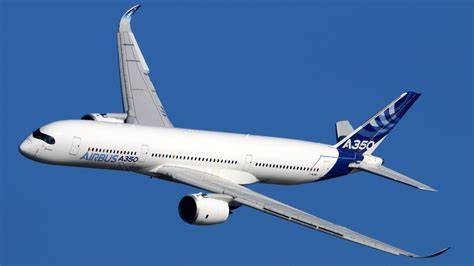
The Airbus A350 takes a highly refined, software-centric approach to turbulence. Its fly-by-wire system continuously monitors airflow, gust intensity, and wing loading. When turbulence strikes, the system commands the spoilers and control surfaces to respond almost instantly.
These spoilers subtly disrupt the lift generated by gusts, allowing excess energy to be bled away rather than transmitted directly into wing bending forces. The result is an aircraft that feels firm, planted, and tightly controlled. Pilots often describe the A350’s response as precise and authoritative, even in challenging atmospheric conditions.
This philosophy prioritizes predictability. The aircraft resists motion aggressively, keeping attitude changes small. For passengers, this can translate into sharper but shorter jolts—noticeable, but quickly suppressed. Structurally, the approach minimizes stress concentration by managing lift dynamically rather than allowing the wing to flex freely.
Airbus has refined this system through decades of fly-by-wire experience, beginning with the A320 and evolving through the A330, A340, and A380. The A350 represents the most mature expression of this lineage.
Boeing 787: Flexibility as a First-Line Defense
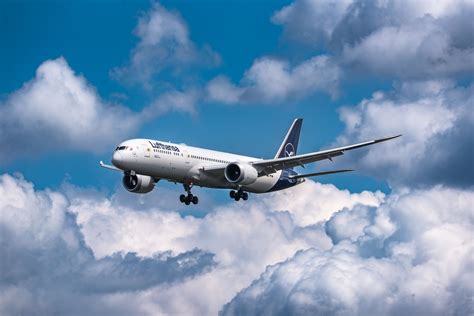
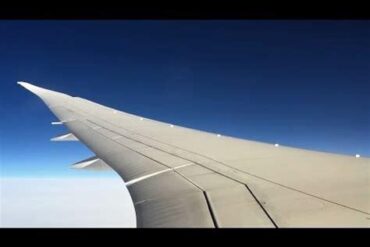
The Boeing 787 Dreamliner approaches turbulence from a different angle—literally and structurally. Its most striking feature is its extraordinarily flexible composite wing, which can visibly bend upward by several meters in flight.
Instead of resisting turbulence, the 787’s wing is designed to absorb and redistribute gust loads. When disturbed air hits the wing, the structure flexes, spreading forces across a larger area and longer time span. This reduces peak loads and smooths the aircraft’s response.
This design is only possible because of advanced carbon-fiber reinforced polymer (CFRP) construction. Composite materials allow engineers to tune stiffness and flexibility far more precisely than traditional aluminum alloys.
The 787 still uses sophisticated fly-by-wire corrections, but software plays a supporting role rather than being the primary shock absorber. The wing itself does much of the work.
Passengers often describe turbulence on the 787 as gentler but more fluid, with longer, rolling motions rather than sharp jolts. It feels less like hitting potholes and more like riding over waves.
Wing Flexibility: Why Bending Is Not a Weakness
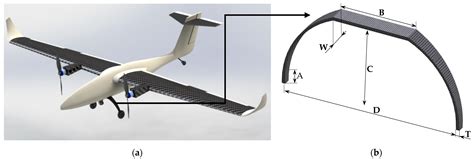
In aviation, rigidity is not strength. Flexibility is. A structure that bends distributes energy; a structure that resists concentrates it.
Boeing’s 787 wing is designed to flex dramatically under load. Certification tests have shown vertical wingtip deflection of approximately 25 feet (7.6 meters) before failure. By comparison, the Airbus A350 wing demonstrates around 17 feet (5.2 meters) of maximum deflection.
This does not mean the A350 is weaker. It means Airbus chose a stiffer wing, relying more heavily on active systems to manage loads. Boeing chose a more elastic structure, letting physics do some of the work naturally.
From a fatigue perspective, flexibility is powerful. Aircraft endure tens of thousands of pressurization cycles and countless turbulence encounters. Spreading stress reduces cumulative fatigue, which is responsible for roughly 90% of structural failures in aviation.
The 787’s wing behaves less like a rigid beam and more like a spring, smoothing both the ride and the long-term stress profile.
Advanced Gust Load Alleviation on the Dreamliner
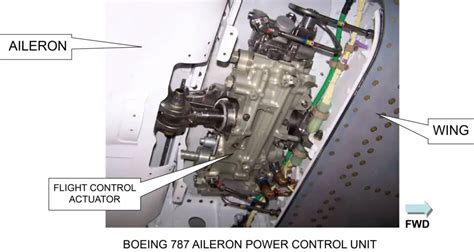
While wing flexibility is the headline feature, the 787 is not a passive aircraft. Its gust load alleviation systems are among the most advanced ever certified.
Sensors distributed across the airframe detect airflow changes and structural responses in real time. Control laws then adjust spoilers, ailerons, and elevators to fine-tune how the aircraft reacts.
A particularly notable system is the Flaps-Up Vertical Mode Suppression System (F0VMS), introduced on the Boeing 787-10. This technology actively manages elevator inputs when the flaps are retracted, reducing aeroelastic effects during turbulence and maneuvering.
Without F0VMS, the longer 787-10 would have required a heavier wing. Instead, Boeing preserved flexibility while maintaining stability—an elegant engineering solution that highlights how structural and software philosophies can coexist.
Passenger Perception: Smoothness vs Firm Control
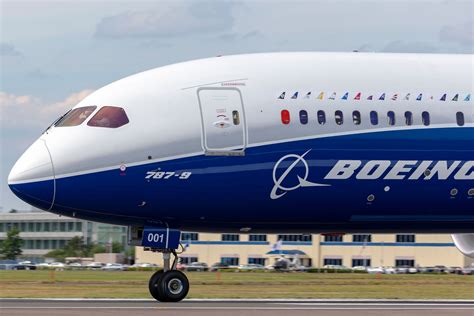
The debate over which aircraft “handles turbulence better” often comes down to human perception, not engineering superiority.
The Airbus A350 tends to resist motion, resulting in short, sharp corrections. Passengers may feel the initial bump more distinctly, but the aircraft settles quickly.
The Boeing 787 allows more movement but spreads it out. The ride feels softer and more elastic, with fewer abrupt jolts but more noticeable overall motion.
Neither approach is objectively superior. Some passengers prefer firmness and stability. Others prefer fluidity and gentler transitions. Pilots, too, vary in preference, often shaped by their training background and flight experience.
Critically, both aircraft remain well within structural and safety margins in turbulence far beyond what passengers typically encounter.
Cabin Design and Its Role in Comfort
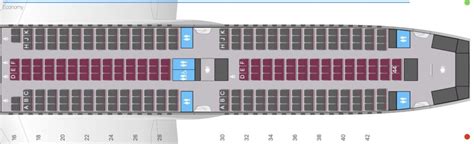
Turbulence comfort is not solely about wings and software. Cabin design matters.
The Boeing 787 was originally marketed as an eight-abreast economy aircraft, offering seats around 18.5 inches wide. In practice, most airlines adopted a nine-abreast layout, reducing seat width to approximately 17 inches. This narrower seating can amplify discomfort during turbulence simply because passengers have less personal space.
The Airbus A350 was designed from the outset for nine-abreast seating, with seats around 18 inches wide and wider aisles. This extra width subtly improves perceived stability and comfort, especially when the aircraft moves.
In premium economy, the situation reverses. The 787 often offers seven-abreast seating, while the A350 typically uses eight-abreast, giving the Dreamliner an edge in personal space.
Business class differences are minimal, though the A350 generally offers slightly wider aisles.
Operational Strategies: Airlines Fighting Turbulence with Data
Aircraft design is only one piece of the puzzle. Airlines increasingly use data-driven turbulence avoidance to protect passengers and crew.
Carriers like Emirates now integrate advanced weather modeling, AI-based prediction tools, and real-time data sharing. Partnerships with organizations such as Lufthansa Systems and participation in IATA’s Turbulence Aware program allow airlines to reroute aircraft around turbulent zones more effectively than ever before.
These systems reduce exposure to severe turbulence regardless of aircraft type. A well-routed A350 will feel smoother than a poorly routed 787, and vice versa.
Climate Change and the Growing Importance of Turbulence Design
Turbulence is becoming a bigger design driver. Studies indicate a 55% increase in severe turbulence since 1979, largely attributed to climate-driven changes in high-altitude wind patterns.
Clear-air turbulence—turbulence without visual warning—is becoming more common. This places even greater emphasis on structural resilience and real-time response systems, areas where both the 787 and A350 excel.
Future aircraft will likely blend these philosophies even further, combining extreme flexibility with increasingly predictive software.
So, Does the Boeing 787 Handle Turbulence Better Than the Airbus A350?
The honest answer is no—and yes, depending on perspective.
The Boeing 787 does not outperform the Airbus A350 in a universal, measurable sense. It simply handles turbulence differently. The Dreamliner’s flexible wing absorbs and spreads forces, creating a softer, more flowing ride. The A350’s software-driven control strategy resists motion, delivering firmness and rapid stabilization.
Both aircraft represent the pinnacle of modern aerospace engineering. Both are extraordinarily safe. Both reduce fatigue, protect structure, and improve passenger comfort compared to previous generations.
The difference is not about superiority. It is about philosophy. One bends. The other resists. Both succeed.
In a sky where turbulence is becoming more frequent and more complex, the real victory is that passengers today experience what would have terrified flyers just a generation ago as nothing more than a mild inconvenience.