The sight of a historic military aircraft climbing into the sky is one of aviation’s most powerful reminders that history does not always belong behind glass. Across the United States, a remarkable collection of former military aircraft continues to fly in civilian hands, preserved by museums, nonprofit organizations, restoration teams, and dedicated warbird operators. These aircraft are no longer weapons of war, yet their engines still run, their propellers still turn, and their airframes still demonstrate the engineering that shaped modern aviation.
Among the most fascinating survivors are aircraft that originated with the United States Army Air Forces (USAAF), the wartime predecessor of today’s United States Air Force. Many were built in enormous numbers during World War II, only for the overwhelming majority to disappear through combat losses, postwar scrapping, accidents, and decades of neglect. Keeping even one example airworthy today requires specialized engineering knowledge, scarce replacement parts, extensive inspections, and a financial commitment that can rival the restoration of a small museum.
Civilian operation also comes with a very different regulatory framework from military service. Former military aircraft can operate under several FAA airworthiness categories depending on their design and certification history. Many surviving World War II warbirds fly under Limited or Experimental Exhibition certificates, allowing them to operate for purposes such as exhibition, education, and airshows. That framework helps explain how aircraft that once crossed enemy territory can still legally take to the American skies more than eight decades later.
The six aircraft examined here provide an unusually broad picture of the surviving warbird community. They include medium bombers, heavy bombers, a military transport, a high-performance fighter, and one of the most technologically advanced bombers of its generation. All six have strong connections to the Commemorative Air Force (CAF), whose aircraft and restoration programs have helped keep some of America’s most important aviation history alive.
The survival figures are estimates rather than a perfect worldwide census. Warbird ownership changes, aircraft move between museums, and the definition of “surviving” can vary depending on whether an airframe is complete, restorable, or currently airworthy. Even so, the contrast between wartime production totals and the tiny number still flying tells an extraordinary story.
North American B-25 Mitchell: The Rugged Medium Bomber
The North American B-25 Mitchell is one of the most recognizable American bombers still operating as a civilian warbird. The aircraft first flew in August 1940 and became internationally famous less than two years later during the Doolittle Raid of April 1942. Sixteen B-25Bs were launched from the aircraft carrier USS Hornet to attack targets in Japan, demonstrating that a land-based medium bomber could be adapted for an extraordinary carrier-launched mission.
Nearly 9,900 B-25 Mitchells were eventually produced, and roughly 40 are believed to remain airworthy today. That makes the Mitchell comparatively accessible among surviving World War II bombers, although “accessible” is relative when maintaining a twin-engine aircraft that is more than 80 years old.
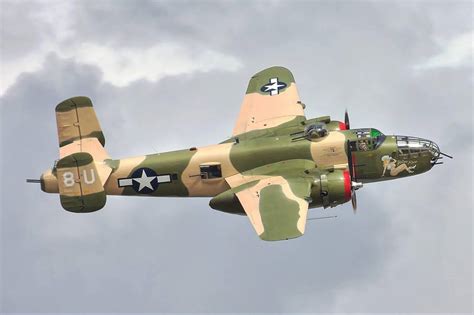
The CAF operates notable examples including “Yellow Rose” and “Maid in the Shade.” The latter is among only a few dozen B-25Js still flying. Both retain their original basic configuration, including twin Wright R-2600 radial engines producing approximately 1,700 horsepower each. The aircraft’s twin-tail arrangement and tricycle landing gear were important features that helped make it practical for operations from rough wartime airfields.
The Mitchell earned its reputation through more than the Doolittle Raid. In the Pacific and Mediterranean theaters, B-25 crews conducted low-level attacks, strafing missions, skip bombing, and conventional bombing operations. The aircraft was valued for its ruggedness and ability to absorb punishment while remaining controllable.
That toughness has another meaning today. A design capable of surviving demanding wartime missions also provides a remarkably compelling flying museum. When a B-25 starts its engines at an airshow, spectators are not simply watching an old airplane move. They are seeing a machine whose basic configuration remains closely connected to the aircraft that operated from muddy forward bases and distant Pacific islands.
Consolidated B-24 Liberator: The Rarest Flying American Bomber
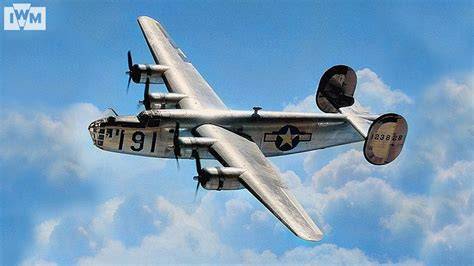
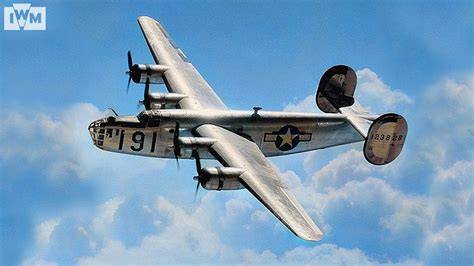
If the B-25 represents relative abundance among flying World War II bombers, the Consolidated B-24 Liberator represents almost the opposite. More than 18,000 Liberators were produced, making the type one of the most prolific American military aircraft ever built. Yet only around 14 complete examples are believed to survive, and just one remains airworthy.
That aircraft is “Diamond Lil,” operated by the Commemorative Air Force. Its rarity makes every flight especially significant because there is effectively no second flying Liberator available to provide the same experience.
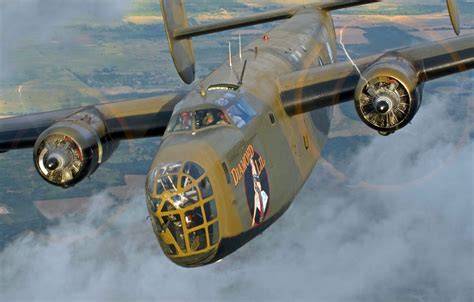
The B-24 was powered by four Pratt & Whitney R-1830 Twin Wasp radial engines and featured a high-aspect-ratio Davis wing. Its maximum speed was approximately 303 mph, giving it a higher top speed than the B-17 Flying Fortress. The aircraft could also carry as much as 8,000 pounds of bombs, depending on mission configuration.
Liberators served across virtually every major theater of World War II. They performed strategic bombing, maritime patrol, anti-submarine operations, reconnaissance, and long-range attacks. Their involvement in the dangerous low-level raids against the Romanian oil fields at Ploesti became one of the best-known examples of the aircraft being pushed to its limits.
The B-24’s wartime story is also a story of American industrial power. Consolidated alone could not produce the aircraft at the required rate, so production expanded across multiple factories. Ford’s Willow Run plant near Detroit became particularly famous for its Liberator production, while facilities in San Diego, Fort Worth, Tulsa, and Dallas also contributed to the program.
This distributed production system was a defining feature of American wartime manufacturing. Thousands of components flowed between suppliers and factories before complete aircraft emerged from enormous assembly lines. The fact that only one B-24 remains airworthy today makes the contrast extraordinary: from thousands being produced during wartime to a single example still flying under its own power.
Douglas C-47 Skytrain: The Transport That Helped Win the War
The Douglas C-47 Skytrain has a different legacy from the bombers and fighters on this list. Rather than being designed primarily to destroy enemy targets, it was built to move the people, equipment, and supplies that made large-scale military operations possible.
The C-47 was the military adaptation of the Douglas DC-3, one of the most influential airliners ever produced. More than 10,000 military C-47s were constructed for the United States, in addition to the large civilian DC-3 fleet. During World War II, the aircraft carried troops, transported supplies, evacuated wounded personnel, and towed gliders. It also became one of the principal aircraft used for airborne operations.
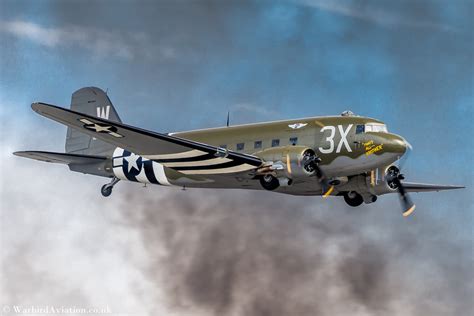
One of the most historically important surviving examples is “That’s All, Brother.” The aircraft served as the lead C-47 for the main Allied airborne assault during D-Day on June 6, 1944. It carried pathfinders ahead of hundreds of other C-47s and thousands of paratroopers as Allied forces began the liberation of Western Europe.
Its later history was almost lost. After the war, the aircraft entered civilian service and eventually ended up in a Wisconsin boneyard. Its wartime identity was rediscovered by Air Force historians in 2015, opening the door to one of the most remarkable restoration projects in modern warbird aviation.
The CAF restored the aircraft to its 1944 D-Day configuration, and it returned to flight in January 2018. It subsequently crossed the Atlantic to participate in commemorations in Normandy, including major D-Day anniversaries.
The C-47 is particularly fascinating because its civilian afterlife is almost as important as its military one. Thousands of surplus aircraft returned to civilian service after 1945, helping airlines and operators rebuild global commercial aviation. Unlike many specialized bombers, the basic DC-3 design proved so useful that examples continued carrying passengers and freight decades after World War II.
Boeing B-17 Flying Fortress: Fewer Than Ten Still Airworthy
Few aircraft represent American World War II air power as strongly as the Boeing B-17 Flying Fortress. Boeing, Douglas, and Lockheed produced approximately 12,731 B-17s, yet fewer than ten are believed to remain airworthy today.
That dramatic decline reflects the aircraft’s wartime losses, postwar disposal, accidents, and the enormous difficulty of preserving four-engine bombers. Around 45 complete B-17 airframes are thought to survive in various conditions, but only a fraction remain capable of flight.
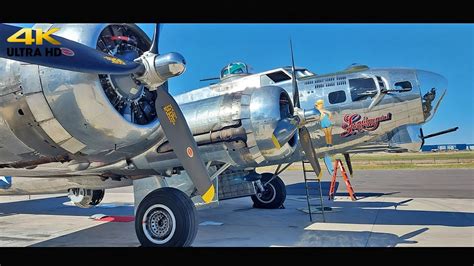
The B-17 became the symbol of the USAAF’s daylight strategic bombing campaign over Europe. It could carry a substantial defensive armament, with late versions equipped with as many as 13 .50-caliber machine guns. More importantly, crews developed a reputation for bringing heavily damaged aircraft home, sometimes with engines disabled or large sections of the airframe damaged by enemy fire.
The CAF’s “Sentimental Journey” is a B-17G built late in 1944. It arrived too late to see combat and subsequently served in roles including air-sea rescue and wildfire fighting before being donated to the CAF in 1978.
Restoration required extensive work and reference to original Boeing engineering documentation. The aircraft retains four Wright R-1820 Cyclone engines, each producing roughly 1,200 horsepower. With a top speed of approximately 300 mph, the Flying Fortress was not fast by modern standards, but its presence in the air remains unmistakable.
Its continued operation also demonstrates the enormous difference between surviving and flying. A static B-17 is already a rare historical artifact. A B-17 with four radial engines running is something far more difficult to achieve, requiring a specialized organization, experienced mechanics, trained crews, and an ongoing stream of funding.
North American P-51 Mustang: The WWII Fighter With the Largest Flying Population
Among the aircraft discussed here, the North American P-51 Mustang has the largest population of surviving airworthy examples. More than 15,000 Mustangs were produced before production ended in 1946, and enthusiast registries indicate that approximately 150 to 160 remain airworthy.
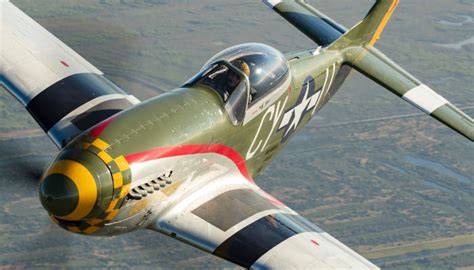
The Mustang’s relative abundance is partly a consequence of its huge production run and long postwar career. The aircraft remained in military service with some countries for decades after World War II, while surviving examples became highly desirable among private collectors, museums, and airshow operators.
The CAF’s “Gunfighter” is a P-51D built at North American’s Inglewood, California, facility. It entered USAAF service in March 1945 and is powered by a Packard-built Rolls-Royce Merlin engine producing approximately 1,490 horsepower.
The P-51 transformed the strategic bombing campaign in Europe because of its combination of speed, range, and high-altitude performance. With external drop tanks, Mustangs could accompany B-17 and B-24 formations deep into German territory. This allowed American fighter forces to provide sustained escort protection rather than abandoning bombers once they reached the limits of earlier escort fighters.
The Mustang was credited with destroying thousands of enemy aircraft during World War II and became one of the defining fighters of the conflict. Today, hearing a Merlin-powered P-51 accelerate down an airshow runway provides a direct sensory connection to that era.
Boeing B-29 Superfortress: Only Two Still Fly
The rarest category on this list may belong to the Boeing B-29 Superfortress, not because only one survives, but because just two remain airworthy worldwide. The CAF’s “FIFI” and Wichita-based “Doc” are the only B-29s still capable of taking off under their own power.
Nearly 3,970 B-29s were produced, making the tiny surviving airworthy population particularly remarkable. The Superfortress represented a major technological leap over earlier American bombers.
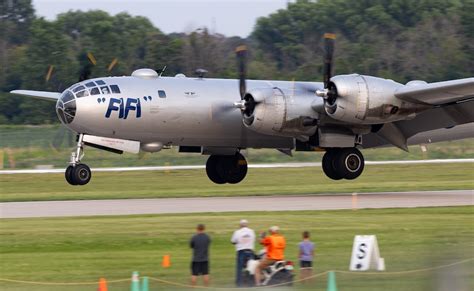
The B-29 was America’s first bomber with a pressurized crew compartment, allowing crews to operate at high altitudes without relying continuously on oxygen masks. It also incorporated remotely operated gun turrets controlled through an early analog fire-control system, illustrating how rapidly aircraft technology had advanced by the final years of World War II.
Its historical significance is immense. Enola Gay and Bockscar, two B-29s, carried the atomic bombs used against Hiroshima and Nagasaki in August 1945. The missions remain among the most consequential events in modern history, permanently linking the B-29 to the end of the Pacific War and the beginning of the nuclear age.
“FIFI” was built in 1945 and later served as a test aircraft before being left in storage in Arizona. The CAF rescued the aircraft during the early 1970s and undertook the enormous task of returning it to flight.
Today, “FIFI” is part of the CAF’s AirPower History Tour and offers one of the world’s rare opportunities to see a B-29 operating under its own power. For aviation historians, that matters enormously. There are plenty of B-29s preserved in museums, but only two can still demonstrate what the aircraft sounded and felt like when its four engines came alive.
Why These Civilian Warbirds Still Matter
These six aircraft illustrate six different survival stories. The B-25 Mitchell remains relatively numerous because its rugged design and production volume gave the warbird community a useful foundation. The B-24 Liberator demonstrates how dramatically survival can shrink even after mass production on an industrial scale. The C-47 shows how military technology can transition into civilian aviation and continue serving generations after a war ends.
The B-17 represents the preservation of a national symbol, while the P-51 Mustang remains the most widely represented flying American World War II fighter. The B-29 Superfortress, meanwhile, demonstrates the extreme end of historical preservation, with only two examples still flying anywhere on Earth.
Their survival is not accidental. Behind every flight is a network of restorers, pilots, mechanics, historians, engineers, donors, volunteers, and organizations willing to accept the enormous responsibility of operating aging aircraft. Parts must be fabricated when original components can no longer be sourced. Engines require specialist knowledge. Airframes need continuous inspection, and every flight must balance public access with preservation.
That is why a civilian warbird is much more than an old military aircraft with a new owner. Each flight represents a decision to keep a piece of aviation history operational rather than allowing it to become permanently static. When one of these aircraft climbs away from an American runway, it briefly reconnects the present with an era when aviation technology was developing at an extraordinary pace and aircraft production had become an essential part of national survival.
For the public, that experience is increasingly precious. Every year, the number of airworthy World War II aircraft tends to become smaller, while the expertise required to maintain them becomes harder to replace. The six retired USAAF aircraft still flying as civilian warbirds therefore represent something rare: history that can still move, fly, and be heard.
And that may be the most important reason these aircraft continue to take to the skies. Museums can preserve an airframe, but flight preserves the experience of aviation itself. A B-17’s four engines, a P-51’s Merlin, a B-25’s twin radials, or the enormous presence of a B-29 in the air can communicate something that photographs and exhibits simply cannot. These aircraft survived the war, survived decades of changing technology, and survived the scrapyard. Their continued flight ensures that the engineering, people, and stories behind them remain more than memories.