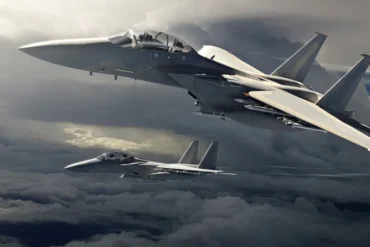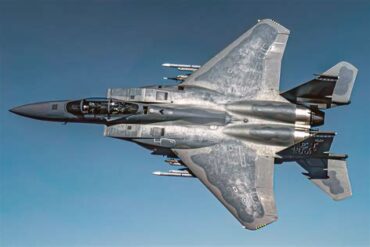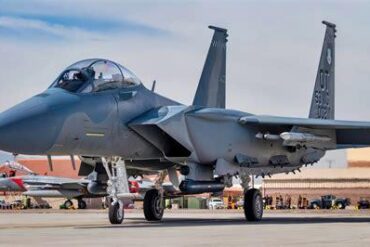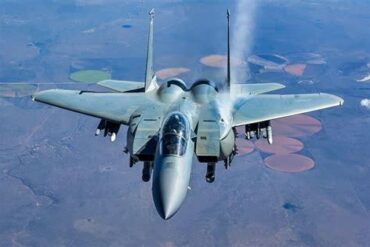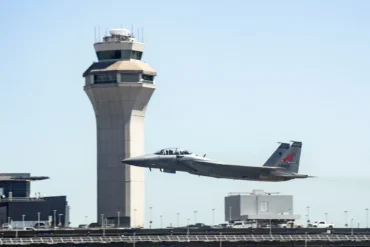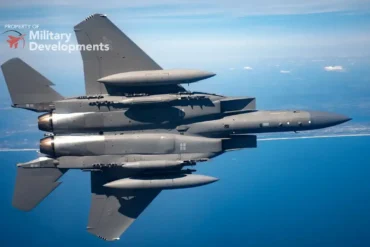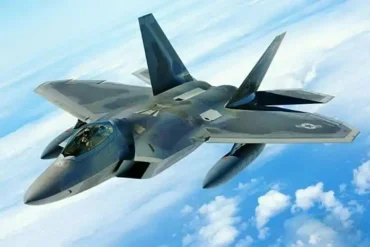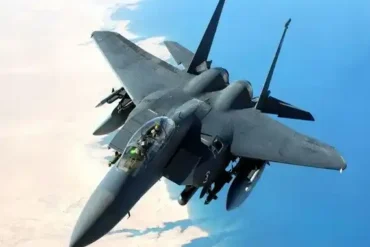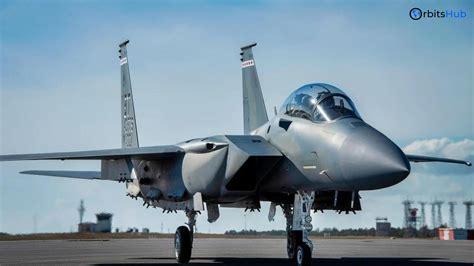
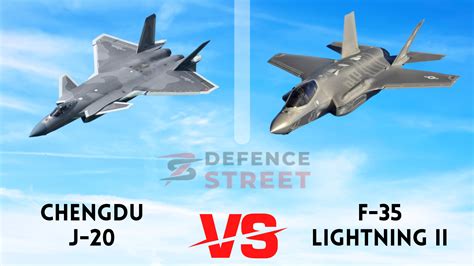
The rivalry between the F-15EX Eagle II and the Chengdu J-20 “Mighty Dragon” represents more than just a contest between two highly advanced fighter jets—it is a direct reflection of differing national defense strategies, technological priorities, and operational doctrines. While the J-20 focuses on stealth dominance and long-range interception, the F-15EX embodies multi-role versatility, unmatched payload capacity, and electronic warfare supremacy. Both platforms are formidable in their own right, but their design philosophies set them on diverging paths in modern aerial warfare.
Design Philosophy: Multirole Versus Purpose-Built Stealth
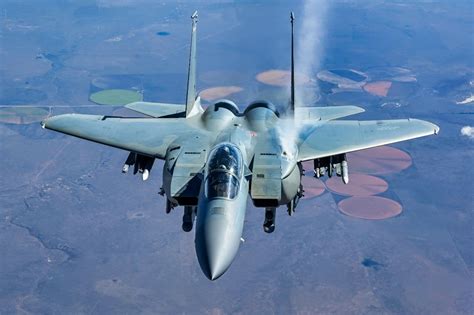
The F-15EX Eagle II, a heavily upgraded derivative of the legendary F-15, is designed to remain a dominant force well into the 21st century. It retains the proven airframe strength of its predecessor while integrating cutting-edge avionics, electronic warfare suites, and an open mission systems architecture that allows for rapid technology insertion. The aircraft is intended to serve as both an air superiority platform and a long-range strike fighter, capable of carrying more ordnance than any other fighter in the U.S. inventory.
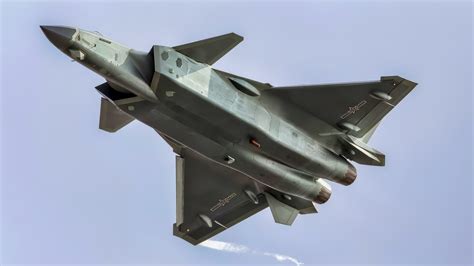
In contrast, the J-20 is China’s first stealth fighter, developed from the ground up with low observability and beyond-visual-range (BVR) engagement in mind. Designed to neutralize high-value assets such as AWACS and aerial refueling tankers, the J-20 favors first-shot capability and strategic disengagement over close-range dogfighting. This doctrinal difference is evident in its internal weapons bays, radar-absorbent materials, and aerodynamic shaping optimized for stealth over maneuverability.
Stealth Advantage: J-20’s First-Strike Capability
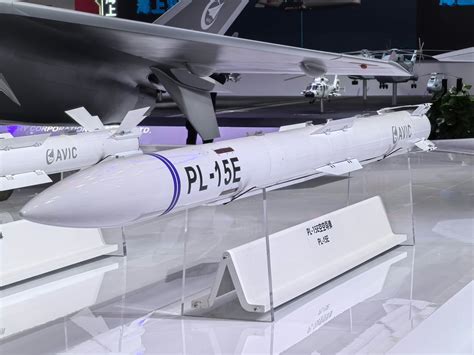
Stealth is the J-20’s defining strength. Its design incorporates planform alignment, serrated edges, and coatings that significantly reduce radar cross-section (RCS). The internal carriage of its PL-15 long-range missiles ensures that stealth is maintained during combat operations, enabling the aircraft to remain undetected at extended ranges and potentially deliver a first strike before adversaries can react.
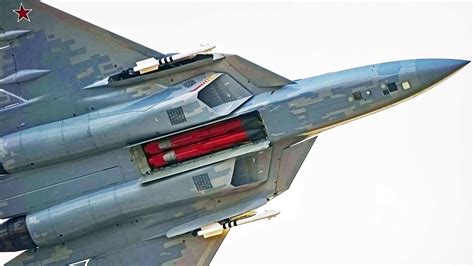
In comparison, the F-15EX lacks stealth due to its legacy fourth-generation frame and external weapons mounting. However, it compensates with the Eagle Passive Active Warning Survivability System (EPAWSS)—a state-of-the-art electronic warfare suite capable of jamming enemy radars, spoofing incoming missiles, and executing electromagnetic deception in contested environments. This allows the Eagle II to operate effectively against even advanced surface-to-air missile (SAM) systems and stealth fighters.
Avionics and Sensor Superiority
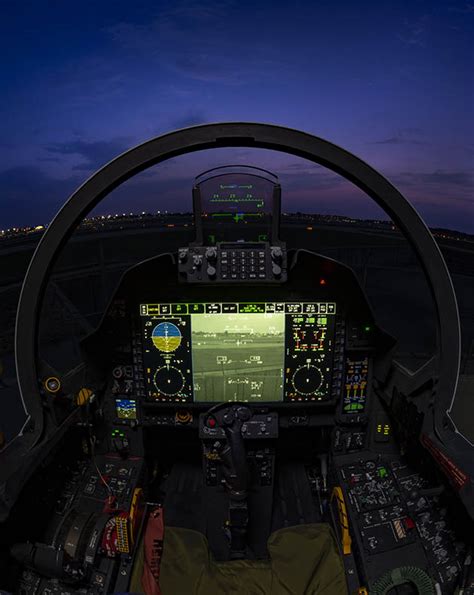
The F-15EX is equipped with the AN/APG-82(V)1 AESA radar, offering exceptional range, resolution, and multi-target tracking capabilities. Its glass cockpit features large-area touch displays and fully digital flight controls, enhancing pilot situational awareness. The aircraft integrates seamlessly into network-centric warfare, with Link-16, advanced datalinks, and secure communications enabling it to share targeting data with F-35s, AWACS, and ground-based command systems in real time.
The J-20 employs the Type 1475 AESA radar along with advanced electro-optical targeting and infrared search-and-track (IRST) systems. Continuous upgrades have extended its radar detection range significantly, making it a more potent threat than in its early service years. However, the Chinese platform’s sensor fusion capabilities and interoperability remain less transparent, and likely inferior to the highly integrated U.S. system-of-systems approach that the F-15EX benefits from.
Engines, Speed, and Agility
F-15EX Eagle II Performance:
- Engines: 2 × General Electric F110-GE-129
- Max Speed: Mach 2.5
- Service Ceiling: 65,000 ft
- Thrust-to-Weight Ratio: High, enabling superior acceleration and climb rate
- Maneuverability: Excellent, optimized for within-visual-range (WVR) combat with high-G turn capability
J-20 Mighty Dragon Performance:
- Engines: 2 × WS-10C (future WS-15 upgrades planned)
- Max Speed: Approx. Mach 2.0
- Service Ceiling: 66,000 ft
- Maneuverability: Adequate for BVR tactics, but hampered by lack of thrust vectoring and heavier stealth-oriented design
The F-15EX’s aerodynamic agility gives it a decisive edge in dogfights, while the J-20’s airframe is optimized for high-speed, stealthy interception rather than turning engagements.
Armament and Payload Capacity
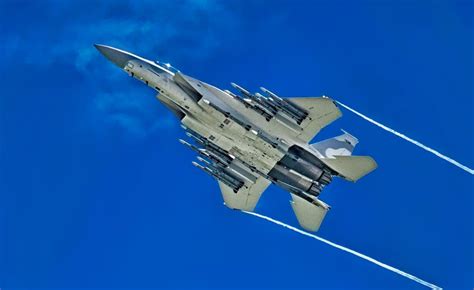
The F-15EX has been dubbed the “missile truck” for a reason. It can carry up to 22 air-to-air missiles, including AIM-120D AMRAAM and AIM-9X Sidewinder. It is also capable of deploying AGM-158 JASSM cruise missiles and hypersonic weapons, making it a true multirole powerhouse. Additionally, the internal M61 Vulcan 20mm cannon gives it lethal close-range capability—an advantage the J-20 lacks entirely.
The J-20 carries PL-15 BVR missiles and PL-10 short-range missiles internally, maintaining stealth. Four external hardpoints can be used when stealth is not a priority, bringing its total payload capacity to around 24,000 lbs, but mounting external weapons increases its radar signature.
Comparison Table: F-15EX Eagle II vs. J-20 Mighty Dragon
| Specification | F-15EX Eagle II | J-20 Mighty Dragon |
|---|---|---|
| Generation | 4.5+ | 5th |
| Role | Multirole Fighter | Stealth Interceptor |
| Max Speed | Mach 2.5 | Mach 2.0 |
| Service Ceiling | 65,000 ft | 66,000 ft |
| Engines | 2 × F110-GE-129 | 2 × WS-10C (future WS-15) |
| Stealth | Low | High |
| Missile Capacity | Up to 22 AAMs | 6 internal, 4 external |
| Cannon | 1 × M61 Vulcan 20mm | None |
| Radar | AN/APG-82(V)1 AESA | Type 1475 AESA |
| EW Suite | EPAWSS | Classified |
| Operational Range | ~1,200 miles | ~1,200 miles |
Likely Combat Outcomes
In a BVR engagement, the J-20’s stealth advantage would likely allow it to detect and target the F-15EX first. Using PL-15 missiles with estimated ranges beyond 200 km, it could attempt to neutralize the threat before the Eagle II comes within firing distance.
However, if the battle transitions to WVR combat, the F-15EX’s superior maneuverability, cannon armament, and high missile capacity would likely tilt the balance in its favor. Its EPAWSS suite could also degrade the effectiveness of incoming missile threats, buying critical survival time.
FAQs
1. Which aircraft has better stealth capabilities?
The J-20 has superior stealth, with a significantly lower radar cross-section than the F-15EX. Its internal weapons bays and radar-absorbent materials make it harder to detect in BVR engagements.
2. Can the F-15EX carry hypersonic missiles?
Yes. The F-15EX is designed to accommodate hypersonic weapons, giving it strategic strike capabilities beyond traditional air-to-air and air-to-ground munitions.
3. Does the J-20 have a gun for close combat?
No. The J-20 lacks an internal cannon, reflecting China’s doctrinal focus on long-range engagements rather than dogfighting. This can be a disadvantage in WVR scenarios against agile opponents like the F-15EX.