
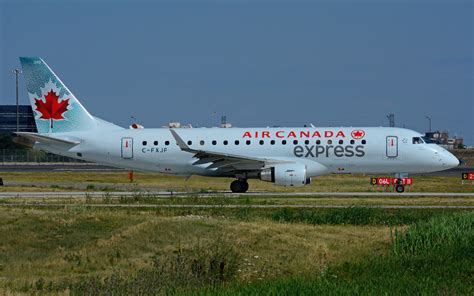
Air Canada’s Embraer E175 routes showcase the dynamic role of regional aviation in bridging short distances with high efficiency, connecting major Canadian hubs to vital U.S. cities. Operated exclusively by Jazz Aviation under the Air Canada Express brand, these flights are a cornerstone of the airline’s cross-border regional connectivity. The E175s, while modest in size, punch well above their weight in both comfort and performance, maintaining a vital link for business and leisure travelers alike.
Inside the Air Canada–Jazz Aviation Partnership
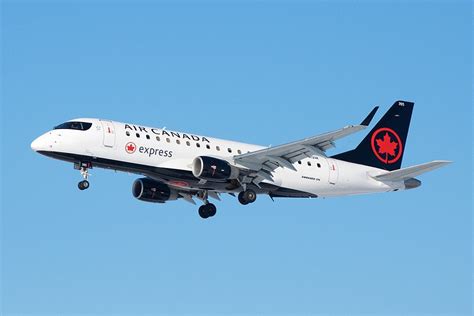
Air Canada doesn’t directly operate the Embraer 175s. Instead, Jazz Aviation, headquartered at Halifax Stanfield International Airport, manages the 25-jet fleet as part of a capacity purchase agreement. These aircraft wear the Air Canada Express livery and serve some of the most competitive short-haul routes across the northeastern United States and Eastern Canada.
Each E175 seats 88 passengers, with 12 seats in business class and 64 in economy. Despite being classified as regional jets, their range of 2,200 nautical miles and service ceiling of 41,000 feet allow them to cover a broad swath of routes without compromising on speed, efficiency, or comfort.
#1: Cleveland Hopkins to Toronto Pearson — 193 miles
The shortest E175 route in Air Canada’s system is a brisk hop between Cleveland Hopkins International Airport (CLE) and Toronto Pearson International Airport (YYZ). Averaging 193 miles, this sector is often completed in just over an hour. In June 2025, Jazz Aviation plans 68 flights, providing 5,168 seats and a total of 997,424 available seat miles (ASM).
Despite its brevity, this route is crucial for connecting Cleveland’s financial and healthcare industries with Toronto’s global economic hub. The frequency of flights supports both daily commuters and spontaneous travelers.
#2: Detroit Metropolitan to Toronto Pearson — 214 miles
Just 21 miles longer than the Cleveland sector, the Detroit-Toronto route clocks in at 214 miles. Jazz Aviation will operate 38 flights on this leg in June 2025, offering 2,888 seats and generating 618,032 ASMs.
This route connects two vital industrial cities, offering a short transborder jump that saves travelers from long drives or complex connections. Though the frequency is lower than Cleveland, it plays a similarly strategic role.
#3: Pittsburgh to Toronto Pearson — 222 miles
At 222 miles, the Pittsburgh-YYZ route sits comfortably in the middle of the short-haul range. Air Canada Express plans 55 flights across this route in June 2025, filling 4,180 seats and totaling 927,960 ASMs.
Pittsburgh’s growing tech and healthcare industries make it a natural candidate for short but critical air links to Canada. This route sees consistent business travel and increasingly leisure-oriented demand, particularly in summer.
#4: Boston Logan to Montréal–Trudeau — 254 miles
This 254-mile hop from Boston to Montréal is the highest capacity E175 route in this lineup. Jazz Aviation is slated to operate 80 flights in June 2025, delivering 6,080 seats and an impressive 1,544,320 ASMs.

The dense flight schedule speaks to the route’s commercial value. With Boston’s international education hubs and Montréal’s business centers, this corridor serves a vibrant flow of bi-directional travel, bolstered by bilingual service onboard and strong trade ties.
#5: Columbus to Toronto Pearson — 305 miles
At 305 miles, the Columbus–Toronto sector is one of the longer E175 short-haul flights. Jazz Aviation schedules about one flight daily, resulting in 31 flights, 2,356 seats, and 718,580 ASMs for the month of June.

This route is seasonal but significant, providing a fast track between central Ohio and Canada’s largest city. As the A220-300 is added to this route in summer 2025, the E175 may be repositioned, but it remains crucial for now.
#6: Toronto Pearson to Montréal–Trudeau — 315 miles
The only purely domestic short-haul route on this list, this 315-mile flight from Toronto to Montréal is unique. Surprisingly, only one E175 flight is scheduled for June 2025, making it the rarest among its peers with just 76 seats and 23,940 ASMs.

While the low frequency might suggest limited demand, the route’s symbolism lies in connecting Canada’s two largest metropolises. It also emphasizes the bilingual operational environment, with crew delivering announcements in both English and French.
#7: LaGuardia to Montréal–Trudeau — 323 miles
The longest route on this list, at 323 miles, connects LaGuardia Airport (LGA) in New York with Montréal. Jazz Aviation will operate 23 flights in June, providing 1,748 seats and 564,604 ASMs.

Despite being the longest, it remains a short hop in absolute terms. This route underscores Air Canada’s strong presence at LaGuardia, where it held the distinction of being the largest non-U.S. airline by market share in 2024. With deep cultural, economic, and diaspora links between New York and Montréal, the frequency here supports vital travel corridors.
Why These Routes Matter in a Competitive Landscape
While these routes may appear modest on a map, they serve as critical arteries in the North American aviation network. The Embraer E175, with its efficient performance and generous cabin layout, is tailor-made for such regional hops. The aircraft delivers big jet comfort in a small jet footprint, giving passengers a seamless experience without compromising on speed or scheduling.
Each of these connections supports strong economic ties — from cross-border commerce and healthcare coordination to academic exchange and leisure travel. With regional jets like the E175, Air Canada Express and Jazz Aviation have carved out a competitive edge, enabling high-frequency, low-distance travel with efficiency and style.
Whether flying from the industrial heartland of the Midwest or the bustling cultural centers of the East Coast, these quick flights prove one thing: regional aviation is far from secondary — it’s essential.