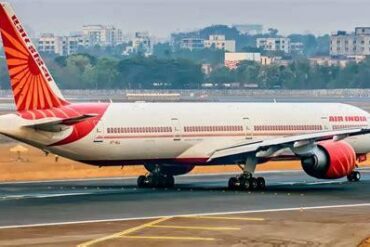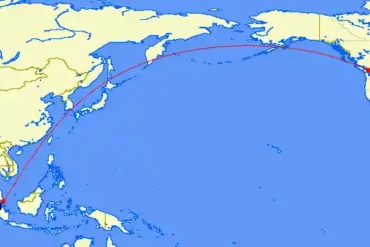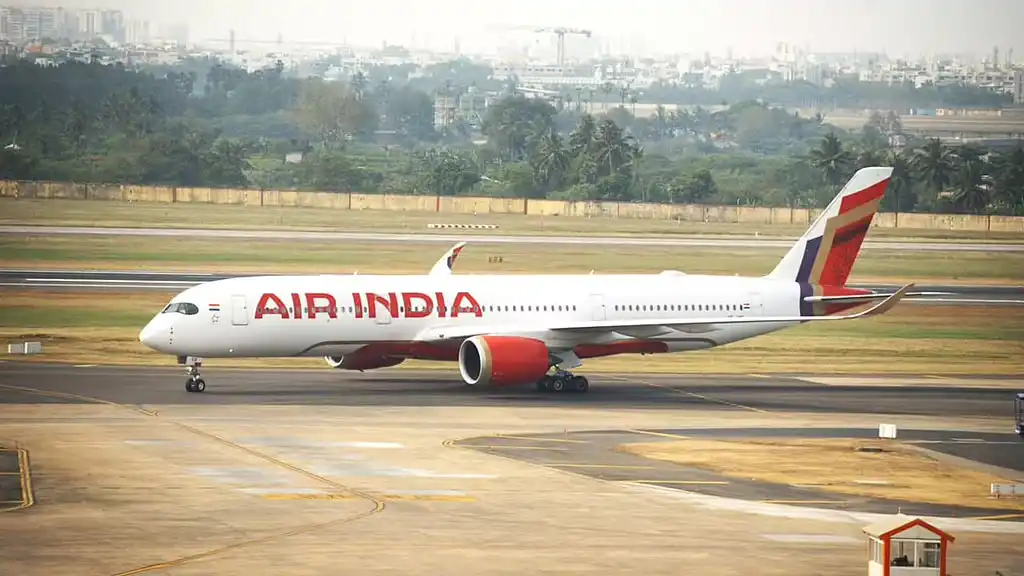
On December 23, 2025, Air India’s reputation took a serious hit after a captain assigned to operate a Boeing 777-300ER was found intoxicated shortly before a scheduled long-haul flight from Vancouver (YVR) to Vienna (VIE) and then on to Delhi (DEL). The unsettling discovery not only delayed Air India Flight AI186 by over seven hours, but also sparked a cross-national investigation involving Transport Canada, the Royal Canadian Mounted Police (RCMP), and India’s Directorate General of Civil Aviation (DGCA).
Captain Saurabh Kumar Pulled From Duty After Alcohol Test
According to multiple confirmed sources, the situation unraveled when a duty-free store employee at Vancouver International Airport detected the distinct odor of alcohol on the breath of Captain Saurabh Kumar, who was preparing to board and operate the international flight. Alarmed by the implications, the employee took swift action and alerted airport police, prompting an immediate response by RCMP officers.
The officers conducted two separate breathalyzer tests, both of which confirmed that the pilot was over the legal alcohol limit for flight crew members operating in Canada. While the exact blood alcohol concentration (BAC) was not disclosed, the breach of the Canadian Aviation Regulations (CARs) was serious enough to warrant the pilot’s removal from duty and possible enforcement action.
Canadian Authorities Demand Explanation from Air India
Following the incident, Transport Canada Civil Aviation (TCCA) issued a formal notice to Air India and Indian regulators, highlighting multiple regulatory violations:
- CARs 602.02 and 602.03: Breach of crew member fitness for duty regulations.
- Condition (g) of Air India’s Foreign Air Operator Certificate (FAOC #1946): Violation of operational compliance conditions.
Transport Canada called for Air India to conduct a comprehensive internal investigation through its Safety Management System (SMS) and to implement corrective measures to ensure that such an incident does not recur.
In a statement issued shortly after, Air India confirmed the event, referring to it as a “last-minute delay” due to a crew fitness issue. The airline emphasized that a replacement pilot was swiftly rostered and reiterated its zero-tolerance policy toward rule violations:
“The pilot has been taken off flying duties during the process of enquiry… Pending the outcome of the investigation, any confirmed violation will attract strict disciplinary action.”
Flight AI186: Seven-Hour Delay, Dozens Affected
Originally scheduled to depart at 3:00 PM local time, Flight AI186 eventually took off after 10:00 PM, nearly seven hours behind schedule. Questions remain about how Air India managed to re-staff the flight within that window, especially considering crew duty time regulations. It is unclear whether a standby crew was activated, or if only the pilot was substituted while the rest of the crew remained operationally viable.
This delay caused significant disruption for dozens of international travelers, many of whom were bound for connecting flights in Vienna or onward to Delhi. Passengers expressed frustration over the lack of real-time updates and inadequate communication from the airline during the delay period.
A Grim Reflection on Crew Oversight and Reporting Culture
What sets this case apart is that it was not a routine security or internal check that identified the pilot’s condition, but rather a third-party duty-free store employee. This raises critical concerns about the internal reporting culture within Air India’s crew. Observers note that it is highly unlikely that other crew members failed to notice signs of intoxication during the hotel check-out, airport shuttle ride, or security clearance.
This speaks to an uncomfortable truth within parts of the aviation industry—a culture of silence and herd mentality. Crew members may refrain from reporting colleagues for fear of backlash or breaking group solidarity. Such inertia could have led to catastrophic consequences, had the pilot not been stopped by someone outside the airline’s chain of command.
How Intoxicated Was the Pilot?
While the public statement confirmed the presence of alcohol, officials have yet to disclose the pilot’s exact BAC. In Canada, pilots are held to a zero-tolerance threshold, with regulations generally prohibiting any alcohol consumption within eight hours of reporting for duty.
There is a substantial difference between a BAC of 0.04%—which is over the legal limit for pilots but not necessarily incapacitating—and a BAC of 0.4%, which could signal a severe level of impairment. The lack of clarity leaves open speculation: was this a case of careless boundary-crossing, or a glaring act of gross negligence?
Regardless, industry experts stress that any detectable alcohol level in a pilot preparing to operate a commercial airliner is unacceptable and dangerous.
Global Ramifications for Air India and Indian Aviation
The implications of this event go far beyond the delayed flight. Air India’s international reputation has taken yet another blow amid other operational criticisms and previous crew-related controversies. Indian aviation authorities must now demonstrate to their global counterparts that they are serious about enforcement, transparency, and preventive measures.
Canadian regulators, especially after direct involvement by the RCMP, are unlikely to drop the matter without seeing documented changes in protocol. The outcome could result in revisions to Air India’s Foreign Air Operator Certificate, or increased scrutiny of Indian carriers operating in North America.
This event also puts additional pressure on the DGCA to implement more rigorous random alcohol testing, better pre-flight crew assessments, and enhanced crew training programs about ethical responsibility and whistleblowing procedures.
Air India’s Path Forward: Damage Control or Deep Reform?
Air India’s response so far has been procedural, citing safety protocols, temporary crew removal, and cooperation with authorities. But public confidence requires more than formality—it requires visible action.
To regain trust, Air India must:
- Disclose full investigative findings publicly
- Enforce disciplinary measures that align with international norms
- Provide psychological and behavioral support mechanisms for crew members
- Foster a culture of accountability rather than silence among its employees
Only through transparent and sustained reform can the airline hope to restore its image in the competitive landscape of international aviation.
Conclusion: A Wake-Up Call for the Aviation Industry
The events at Vancouver International Airport serve as a sobering reminder of the high stakes involved in airline operations. Trust in aviation hinges not only on machines and protocols, but on the integrity and fitness of the individuals operating those machines.
The fact that a third-party airport employee was the whistleblower—and not fellow crew members—should trigger deep introspection within airlines globally. Pilot intoxication is not just a legal violation; it is a fundamental breach of the public trust.
As investigations continue and accountability unfolds, one can only hope that this moment of disgrace becomes a catalyst for reform—not just for Air India, but for the entire industry.