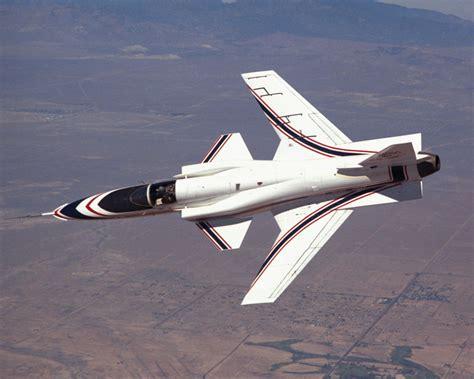
The story of the forward-swept wing is one of aviation’s most fascinating paradoxes—a design that delivered exceptional performance, validated cutting-edge technologies, and yet quietly disappeared from the future of fighter jets. At the center of this story stands the experimental Grumman X-29, an aircraft so radical that it redefined what engineers believed was possible, even as it proved why some innovations, no matter how impressive, remain impractical.
In the 1980s, aerospace engineers were chasing a new frontier: extreme maneuverability. The Cold War demanded aircraft capable of outperforming adversaries in tight dogfights, and traditional wing designs were approaching their limits. The idea of sweeping wings forward—rather than backward—offered a tantalizing promise: greater agility, improved airflow control at high angles of attack, and enhanced lift distribution.
Yet this was not a new idea. During World War II, German engineers experimented with forward-swept wings on the Junkers Ju 287. The concept worked in theory, but the materials of the time simply couldn’t withstand the forces involved. The wings twisted under stress, leading to structural instability that made operational use impossible.
Four decades later, technology finally caught up with ambition.
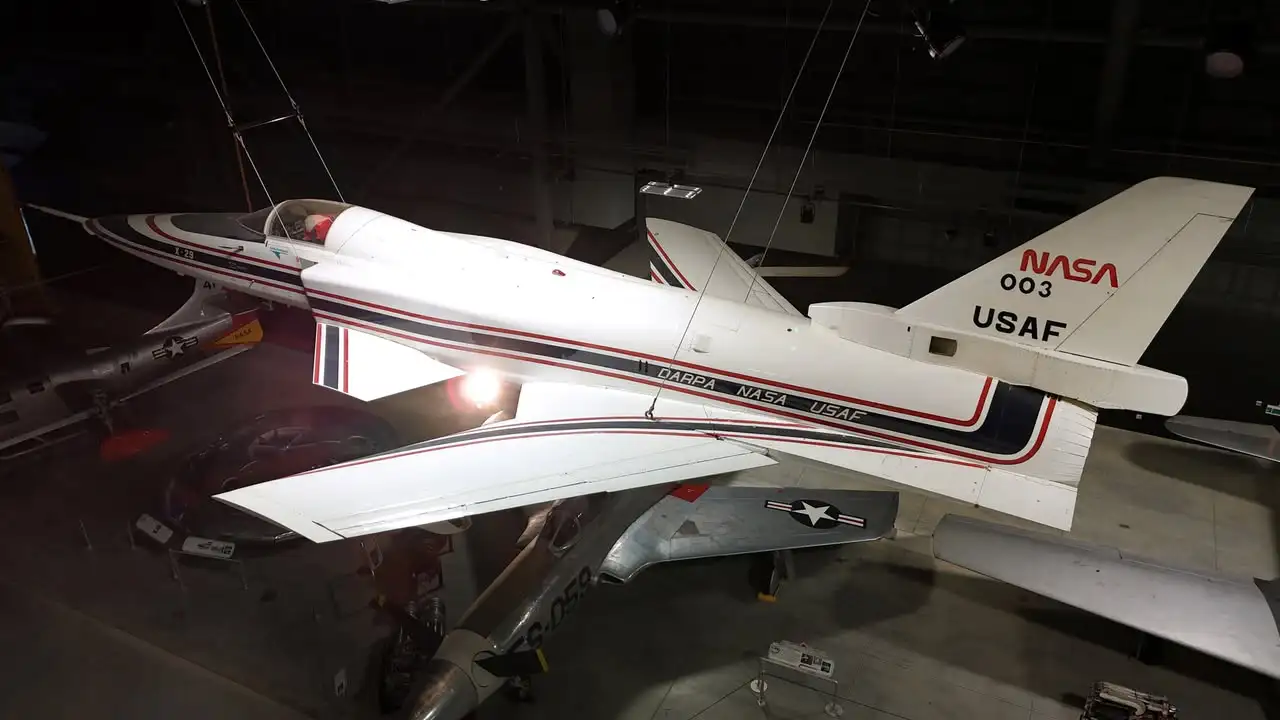
The X-29 was born as a collaboration between NASA, DARPA, and Grumman. It wasn’t designed to become a production fighter—it was built to answer a question: Could forward-swept wings finally work in the real world?
The answer, surprisingly, was yes.
Why Forward-Swept Wings Look Strange—But Work Brilliantly
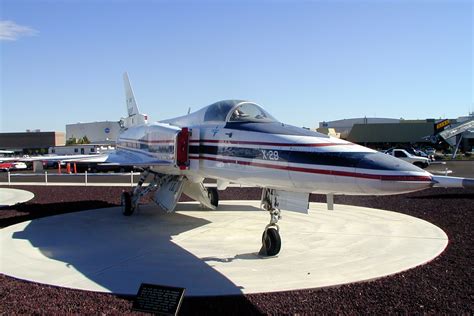
At first glance, forward-swept wings appear almost backward—because they are. Instead of angling away from the fuselage, the wings angle forward toward the nose. This unconventional geometry fundamentally changes how air flows across the aircraft.
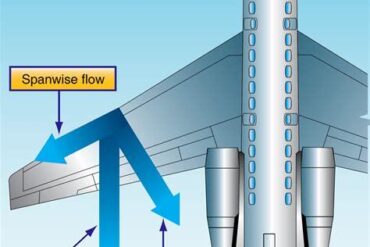
In traditional swept-back wings, airflow tends to move outward toward the wingtips, increasing the likelihood of tip stalls. Forward-swept wings reverse this behavior. Air flows inward toward the fuselage, keeping airflow attached to the wings even at extreme angles.
This creates several aerodynamic advantages:
- Superior control at high angles of attack
- Delayed stall characteristics
- Enhanced maneuverability in dogfight conditions
- More effective lift distribution across the wing
In practice, this meant the X-29 could perform maneuvers that conventional fighters struggled to match. It remained controllable even in flight regimes that would push other aircraft to their limits.
But this brilliance came with a hidden cost—one that nearly tore the aircraft apart.
The Invisible Enemy: Aeroelastic Divergence
The greatest challenge facing forward-swept wings wasn’t aerodynamics—it was physics at the structural level.
A phenomenon known as aeroelastic divergence threatened to destroy the aircraft mid-flight. This occurs when aerodynamic forces cause the wing to twist. In forward-swept designs, that twist increases lift, which causes more bending, which increases twist again—a runaway feedback loop.
Left unchecked, the process ends in catastrophic structural failure.
This was the exact reason earlier attempts like the Ju 287 failed. Engineers simply couldn’t build wings stiff enough to resist the twisting forces without making them too heavy to fly.
The X-29 solved this problem using one of its most important innovations: advanced composite materials.
Carbon Fiber: The Technology That Made the Impossible Fly
The X-29 was one of the first aircraft to rely heavily on carbon-fiber composites. These materials allowed engineers to do something revolutionary: tailor the flexibility of the wing.
Instead of making the wing completely rigid, engineers designed it to bend in controlled ways while resisting dangerous twisting. This technique, known as aeroelastic tailoring, allowed the aircraft to safely operate within its flight envelope.
This breakthrough didn’t just enable the X-29—it changed aviation forever.
Today, composite materials are standard in modern aircraft, including the Boeing 787 Dreamliner and the Airbus A350. Ironically, the technology pioneered to stabilize one of the most unstable aircraft ever built is now used to make airliners smoother, lighter, and more efficient.
Flying on the Edge: The Role of Digital Fly-by-Wire
Even with advanced materials, the X-29 remained inherently unstable. In fact, it was described as one of the most aerodynamically unstable aircraft ever flown.
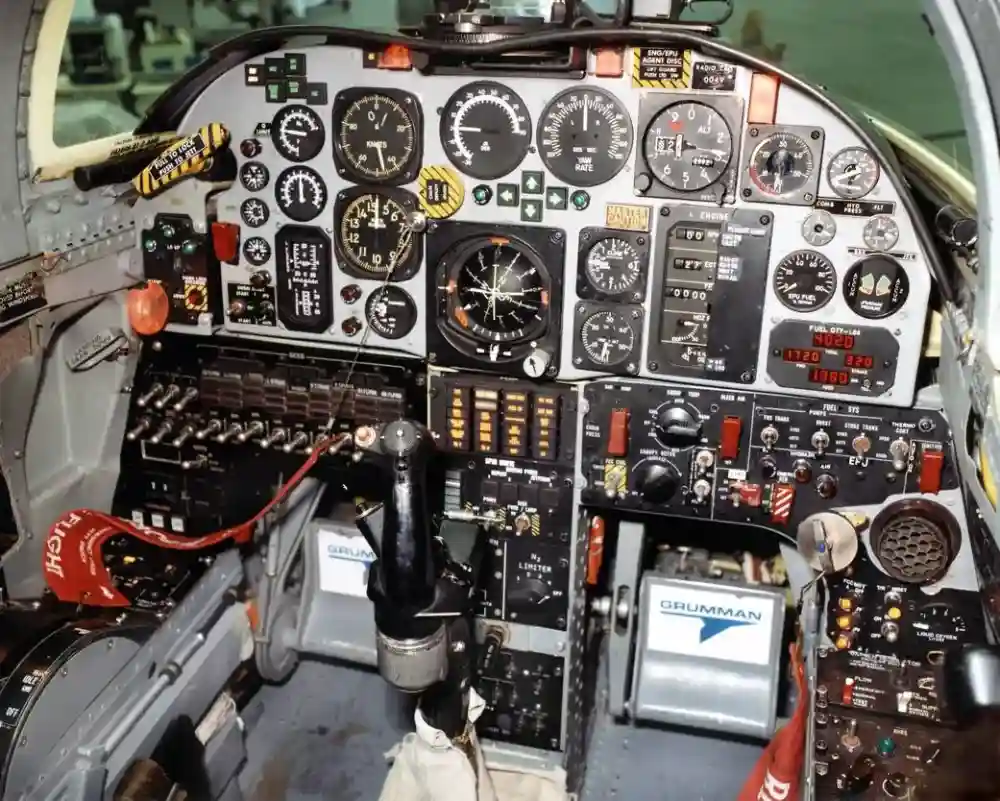
To keep it in the air, engineers relied on digital fly-by-wire systems—a technology that replaced mechanical controls with computer inputs.
Instead of the pilot directly controlling the aircraft, onboard computers constantly adjusted control surfaces in real time, making thousands of corrections per second. Without this system, the X-29 would have been uncontrollable.
This wasn’t just a supporting feature—it was essential. And it helped pave the way for modern fighters like the F-22 Raptor and F-35 Lightning II, both of which rely heavily on advanced flight control systems.
A Successful Experiment That Changed Aviation
By every technical measure, the X-29 program was a success. Over 279 test flights, the aircraft demonstrated that forward-swept wings were not only viable but highly effective in specific performance areas.
It validated:
- Composite structural design
- Digital flight control systems
- High-angle-of-attack aerodynamics
- Advanced instability management
And yet, despite all of this, no operational fighter jet adopted forward-swept wings.
That wasn’t an accident. It was a decision rooted in cold, hard trade-offs.
The Hidden Cost: Fatigue, Complexity, and Maintenance
The biggest issue wasn’t whether forward-swept wings could work—it was whether they could last.
Aircraft structures endure enormous stress over time, especially in combat environments. Even conventional aircraft suffer from fatigue. The B-1B Lancer, for example, has faced early retirement pressures largely due to airframe wear from years of demanding flight profiles.
Forward-swept wings amplify these stresses.
Even with composite materials, the constant bending and load redistribution introduced long-term durability concerns. Maintenance requirements would likely have been higher, inspection cycles more frequent, and operational costs significantly increased.
For a military aircraft expected to endure thousands of flight hours in harsh conditions, this was a critical drawback.
The Performance Trade-Off That Changed Everything
Another key disappointment emerged during testing: drag reduction was less significant than expected.
Early studies suggested forward-swept wings might dramatically reduce aerodynamic drag. In reality, the X-29 performed similarly to contemporary fighters like the F-16 Fighting Falcon and F-15 Eagle.
This erased one of the design’s biggest theoretical advantages.
Without a clear performance leap in speed or efficiency, the additional complexity and structural challenges became harder to justify.
Stealth Changed the Rules of Fighter Design
While the X-29 was proving its agility, a different revolution was quietly reshaping air combat: stealth technology.
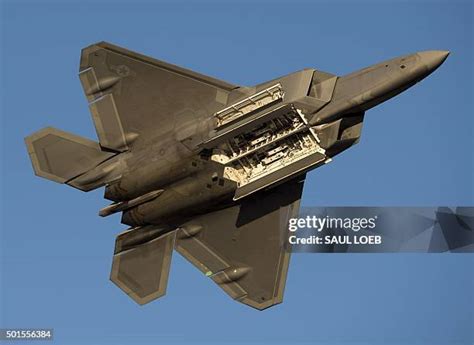
Aircraft like the F-22 and later the F-35 shifted the focus away from close-range dogfighting toward beyond-visual-range engagement, sensor fusion, and radar evasion.
Forward-swept wings posed a problem in this new paradigm.
Their geometry complicates radar signature management. The angles and surfaces required for stealth—carefully aligned to deflect radar waves—are harder to achieve with forward-swept configurations. In some aspects, they can even increase radar visibility.
This made them fundamentally incompatible with the priorities of fifth-generation fighters.
Alternative Paths to Agility
Instead of adopting forward-swept wings, engineers found other ways to achieve extreme maneuverability.
Modern fighters use:
- Thrust vectoring
- Leading-edge extensions
- Canards (in non-US designs)
- Advanced control algorithms
Aircraft like the Eurofighter Typhoon and Chengdu J-20 incorporate different aerodynamic solutions to enhance agility without the structural penalties of forward-swept wings.
The result? Comparable or superior performance with far fewer compromises.
The Soviet Counterpart: A Parallel Experiment
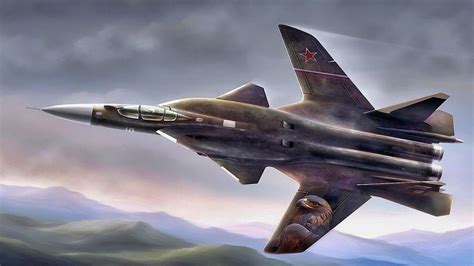
The United States wasn’t alone in exploring this concept. The Soviet Union—and later Russia—developed its own forward-swept wing demonstrator: the Sukhoi Su-47 Berkut.
First flown in the late 1990s, the Su-47 echoed many of the X-29’s findings. It demonstrated impressive maneuverability and served as a testbed for advanced technologies.
But like its American counterpart, it never entered production.
The reasons were nearly identical: complexity, cost, structural concerns, and shifting design priorities.
Why No Modern Fighter Uses Forward-Swept Wings
The absence of forward-swept wings in modern aircraft isn’t due to failure—it’s due to optimization.
Modern fighter design prioritizes:
- Stealth and low observability
- Sensor integration and data fusion
- Long-range engagement capability
- Operational durability and cost efficiency
Forward-swept wings excel in a narrow performance window—primarily maneuverability—but fall short when evaluated against the full spectrum of modern requirements.
In engineering, the best design isn’t the one that excels in one area—it’s the one that balances all constraints most effectively.
Legacy of the X-29: A Silent Revolution
Although no production aircraft adopted its signature wing design, the X-29’s influence is everywhere.
Its legacy lives on in:
- Composite airframe construction
- Fly-by-wire control systems
- High-agility flight envelope research
- Advanced aerodynamic modeling
Even today’s next-generation fighter concepts—focused on networking, autonomy, and stealth—benefit indirectly from the data gathered during the X-29 program.
A Design That Was Ahead of Its Time—and Beyond Its Limits
The X-29 proved something rare in aviation: that a radical idea could work exactly as intended—and still not be worth pursuing.
Its forward-swept wings delivered remarkable performance, validated groundbreaking technologies, and expanded the boundaries of aerospace engineering. But they also revealed the unforgiving reality of design trade-offs.
In the end, the X-29 didn’t fail. It did something far more valuable.
It showed engineers precisely where the edge of possibility ends—and where practicality begins.