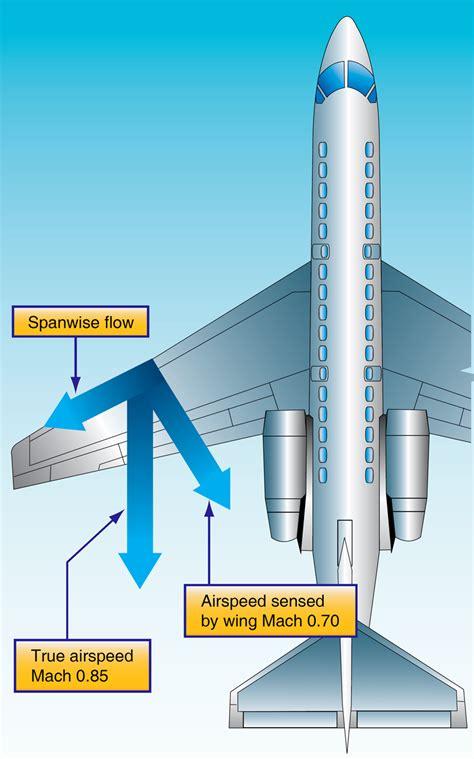
A swept wing, where the wing is angled backward or forward from the fuselage rather than extending perpendicularly, has become a cornerstone of modern aircraft design. Studied initially by Albert Betz and Adolph Busemann in 1935, this configuration emerged as essential for achieving efficient, stable, and fast flight near the speed of sound. Swept wings delay the formation of shock waves and dramatically reduce wave drag, making them standard on nearly all jet-powered aircraft today.
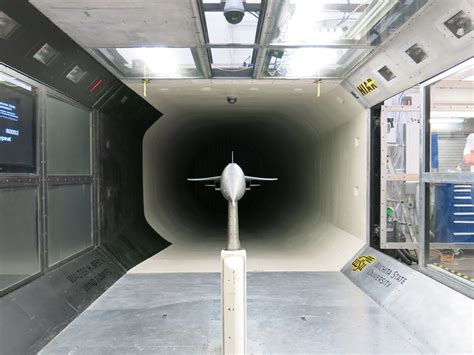
Understanding the Aerodynamic Reasons for Wing Sweep
The sweep of a wing serves multiple crucial aerodynamic and structural purposes. One of the primary motivations is to align the aircraft’s center of gravity with its aerodynamic center, ensuring longitudinal balance. This principle was demonstrated early on with aircraft such as the Messerschmitt Me 163 Komet and the pioneering jet fighter, the Me 262. Another key factor is providing longitudinal stability, particularly in tailless designs like the Me 163.
Moreover, swept wings allow aircraft to delay the onset of compressibility effects, which become prominent as speeds approach Mach 1. Combat aircraft, airliners, and business jets all leverage this characteristic to increase their Mach-number capability. In some designs, sweep also supports structural solutions, such as accommodating a wing carry-through box without compromising cabin space, a feature notably implemented in the HFB 320 Hansa Jet. Finally, sweep can offer static aeroelastic relief, helping wings manage high g-loads without excessive deformation.
Structural Challenges of Swept Wings
While swept wings offer impressive aerodynamic benefits, they introduce unique structural challenges. Sweeping increases the spar length and consequently the weight, while simultaneously reducing torsional stiffness. This makes the wings more flexible and susceptible to dynamic instabilities.
In backward-swept configurations, the wing’s natural flexing under load can reduce the angle of attack at the tips, inherently limiting bending loads — a beneficial self-limiting property. However, forward-swept wings face the opposite issue: flexing increases the tip angle of attack, risking aeroelastic divergence unless the structure is made exceptionally rigid.
When discussing sweep, two measures are pivotal: the leading-edge angle, important for supersonic flight, and the quarter-chord angle, vital for subsonic and transonic regimes. Typical sweep angles range from 0° to over 45°, with higher values critical for aircraft operating consistently at high Mach numbers.
Aerodynamic Implications of Sweep Design
At subsonic and transonic speeds, parts of the wing surface can experience localized supersonic flow, generating shock waves just aft of the maximum thickness point. Supercritical airfoil designs — with a flattened upper surface and a reflexed trailing edge — emerged to mitigate these shocks, allowing higher critical Mach numbers with reduced drag.
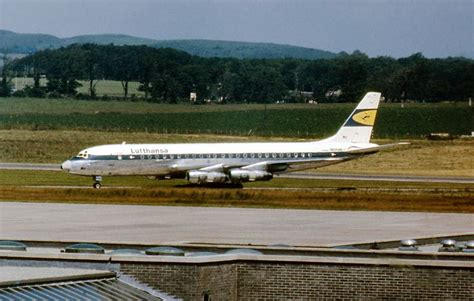
Sweeping a wing effectively reduces its curvature by a factor of cos θ. For example, a 45° swept wing experiences about 70% of the original curvature, raising the aircraft’s critical Mach number by approximately 30%. Nevertheless, at the wing root, where the fuselage induces “middle effect” unsweeping, designers incorporated solutions like fuselage indentations, as pioneered by Dietrich Küchemann, and uncambered root airfoils on aircraft like the Douglas DC-8.
At supersonic speeds, wings need to lie inside the Mach cone generated by the aircraft’s nose. This results in subsonic flow over the wing despite the aircraft traveling faster than sound. For a Mach 1.3 cruise, a 45° sweep suffices; Mach 2 speeds require about 60°, determined by the sine of the Mach angle relation.
Disadvantages and Design Solutions
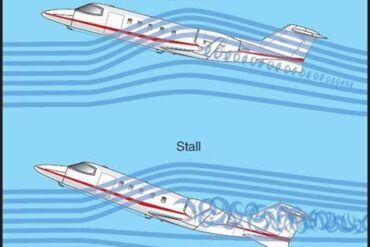
Despite their advantages at high speed, swept wings pose significant challenges at low speeds. One major issue is the promotion of spanwise flow, thickening the boundary layer and leading to early tip stalls, which can cause dangerous nose-up “pitch-up” incidents, famously seen in the F-100 Super Sabre’s “Sabre dance.”
Early aerodynamic fixes included:
- Wing fences (MiG-15) to block spanwise flow
- Dogtooth notches (Avro Arrow) to control airflow separation
- Widened wing tips (Republic XF-91 Thunderceptor) to delay tip stall
- Crescent wings (Handley Page Victor) to optimize lift distribution
Modern fighters use leading-edge slats, compound flaps, and leading-edge extensions to counteract these effects, ensuring better low-speed handling and reducing the risk of catastrophic stall behaviors.
Theoretical Foundations: Sweep Theory
Sweep theory was first introduced by Adolf Busemann in 1935 and mathematically refined by Robert T. Jones in 1945. Jones demonstrated that shock waves form only when the normal component of airflow over a surface becomes supersonic. By sweeping the wings, the aircraft effectively reduces this normal component, thereby delaying the onset of compressibility and allowing higher flight speeds before drag rises sharply.
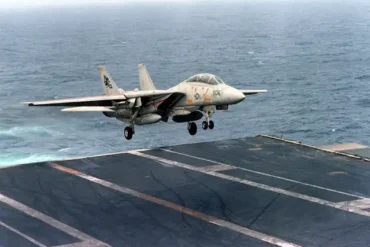
When operating at lower speeds, the swept wing’s reduction in lift can be mitigated through techniques like variable-incidence wings — as seen on the Vought F-8 Crusader — and swing wings or variable-geometry wings used in designs such as the F-14 Tomcat, F-111 Aardvark, and Panavia Tornado.
Innovations in Forward-Swept Wings
Forward-swept wings, while less common, offer significant theoretical advantages, particularly in low-speed handling. They promote inboard airflow, delaying tip stall and maintaining aileron effectiveness during critical flight phases.
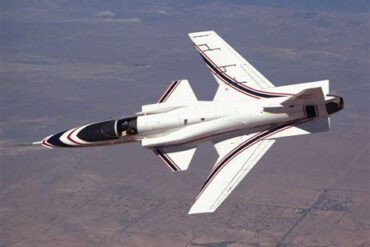
However, the wash-in effect — an increase in angle of attack at the tips — poses serious stability challenges. To overcome these issues, forward-swept wings must be constructed with exceptionally rigid materials. Only a few experimental aircraft, like the Grumman X-29 and the Sukhoi Su-47 Berkut, managed to showcase extreme forward-sweep designs successfully, thanks to fly-by-wire control systems.
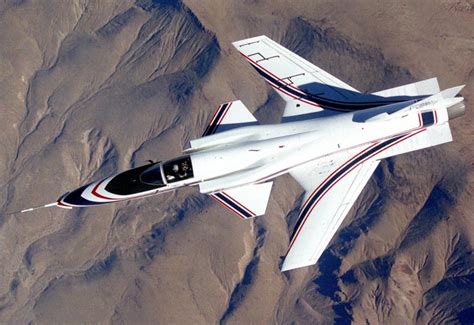
Notable production models with mild forward sweep included the Junkers Ju 287 and the HFB 320 Hansa Jet, but no major production airliner or fighter has yet adopted extreme forward sweep due to its complex structural demands.
Historical Evolution of Swept Wing Development
The early 20th century saw innovative efforts at achieving natural stability using swept wings, notably through tailless glider designs like J.W. Dunne’s D.5 and D.8 and the Westland-Hill Pterodactyl series.
In Germany, Busemann’s 1935 presentation at the Volta Conference sparked intense interest. Subsequent research by Hubert Ludwieg and applications on the Me 262, Me 163, and various late-war projects (like the Ta 183 Huckebein and Me P.1101) brought the swept wing concept to operational reality.
Postwar, these ideas catalyzed remarkable advancements. While Britain’s Miles M.52 program, intended for supersonic straight-wing flight, was canceled, America’s Bell X-1 achieved the first manned supersonic flight. Simultaneously, Britain’s de Havilland DH 108 Swallow demonstrated the first swept-wing supersonic flight.
Data obtained through Operation Paperclip informed Boeing’s pivotal redesign of the B-47 Stratojet, featuring 35° swept wings and podded engines under the wing. Meanwhile, North American Aviation transformed the straight-wing XP-86 into the iconic F-86 Sabre, which dominated air combat in Korea and set multiple speed records.
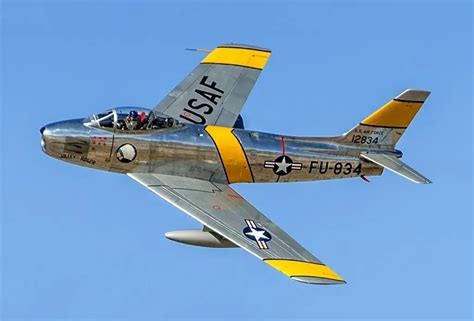
The Soviet Union’s aerodynamic efforts produced the MiG-15, MiG-17, and MiG-19 — all swept-wing fighters with formidable performance. Sweden’s SAAB 29 Tunnan and 32 Lansen adopted similar designs, cementing the swept wing’s place in both military and civil aviation.
By the 1960s, swept wings were standard across all new fighter designs and most commercial jets, including iconic models like the Boeing B-52 Stratofortress, the Tupolev Tu-95 Bear, the Vickers Valiant, and the Handley Page Victor.
Later decades refined the formula with short fixed wings (e.g., F-15 Eagle, MiG-29 Fulcrum) and variable-geometry swing wings for tactical versatility, showcasing the enduring relevance of sweep in aircraft design.