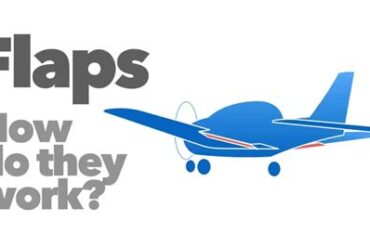
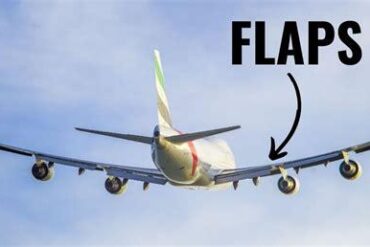
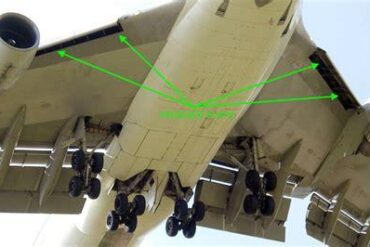
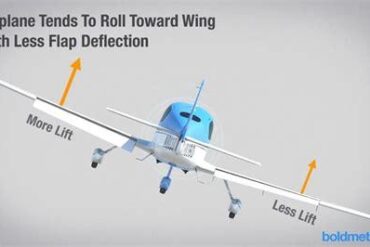
Aircraft design is a delicate balance of aerodynamic forces, structural limitations, and control authority. One particularly subtle yet significant phenomenon occurs when wing flaps are deflected—resulting in opposite pitching moments depending on whether the aircraft has a high-wing or low-wing configuration. In this article, we delve deep into the aerodynamic mechanisms behind why flap deployment causes a nose-up moment in high-wing aircraft but induces a nose-down moment in low-wing aircraft.
Understanding the Aerodynamic Baseline
Before analyzing flap effects, we must establish a foundation regarding wing placement, center of gravity (CG), and center of pressure (CP). The CG is the point through which the aircraft’s weight acts. The CP is the effective point of lift force application on the wing, and it shifts depending on airfoil shape and angle of attack.
When flaps are deflected, typically downward, they increase the wing’s camber and therefore lift. However, this is accompanied by an increase in drag and often a change in the location of the CP.
Flap Deflection and the Creation of Downwash
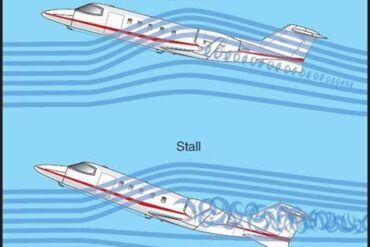
Flaps increase the effective angle of attack of the airfoil and generate more lift at lower speeds, which is especially critical during takeoff and landing. However, they also increase downwash—the downward deflected airflow trailing behind the wing. This intensified downwash interacts differently with the aircraft’s horizontal stabilizer depending on wing placement relative to the fuselage and CG.
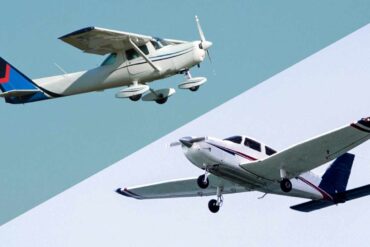
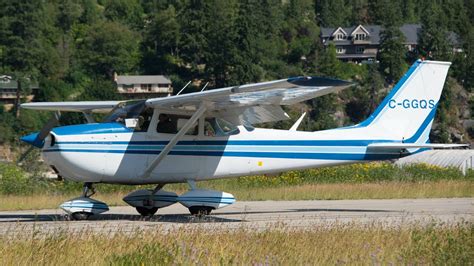
In high-wing aircraft, such as the Cessna 172, the wings are mounted above the CG. When flaps are deployed:
- Lift increases significantly behind the CG.
- Drag is generated at a point above the CG.
- Downwash increases, directing more airflow onto the horizontal stabilizer, located below and behind the wing.
This enhanced downwash on the tailplane pushes the tail downward, resulting in a nose-up pitching moment. Additionally, because the drag acts above the CG, it creates a torque that also pitches the nose upward.
The Role of the Lever Arm and Vertical Geometry
To fully understand this moment, we must visualize the lever arm formed between the CG and the location of drag/lift forces on the wing. In high-wing aircraft:
- The vertical offset between the wing and the CG creates a moment arm for drag.
- The drag vector, pointing opposite to motion, applies force above the CG, causing a counter-clockwise torque, which in aircraft terms means pitching up.
Thus, two distinct aerodynamic changes contribute to this effect:
- Tail downforce increase from downwash
- Drag-induced torque from high wing position
Low-Wing Aircraft: A Different Aerodynamic Behavior
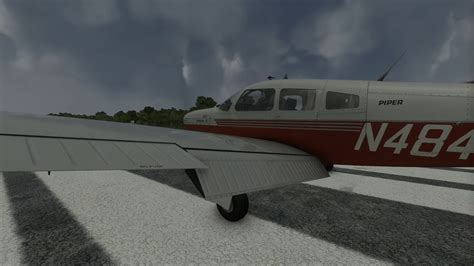
Conversely, in low-wing aircraft, the wings are mounted below the CG. Examples include many Piper models and various light sport aircraft. When flaps are deployed on these configurations:
- The increase in lift still occurs aft of the CG.
- The drag now acts below the CG, reversing the moment arm direction.
- The increased downwash from flaps rarely reaches the horizontal stabilizer effectively, especially if the stabilizer is mounted high, as seen in T-tail configurations.
Therefore, the dominant aerodynamic effect is the pitching moment induced by flap deflection on the wing itself. This moment is nose-down due to:
- The shift of the CP aft on the wing as camber increases.
- The additional lift behind the CG, producing clockwise torque (nose-down).
- The drag vector below the CG causing pitch-down torque.
This is why many low-wing aircraft demonstrate a noticeable nose-down attitude upon flap extension.
Camber and Center of Pressure Migration
A common misconception is that flap deflection always moves the CP forward. While this can be true in certain contexts, for most trailing-edge flap systems, the opposite is often the case. The increased camber at the trailing edge causes the CP to migrate aft, not forward. This rearward movement, particularly in low-wing aircraft, is located behind the CG, amplifying the nose-down moment.
In contrast, high-wing aircraft benefit from the downwash interaction with the tailplane, and the CP movement is less significant compared to the drag-induced and tail-induced moments.
Real-World Examples and Pilot Observations
Pilot accounts support these aerodynamic principles. For instance, in the Cessna 152 and 172, both high-wing designs, flap deployment produces a pitch-up tendency that must be manually trimmed or corrected with nose-down elevator input. This moment is immediate and often sharp, especially during full flap application on final approach.
Meanwhile, Piper PA-28 series pilots consistently report a nose-down pitching moment on flap extension. This requires nose-up trim or back pressure to maintain glide slope and airspeed.
Influence of Tailplane Design: Conventional vs. T-Tail
Tailplane design further complicates this picture. T-tail aircraft, where the horizontal stabilizer is mounted atop the vertical stabilizer, experience less interference from wing downwash. This is especially relevant in low-wing T-tail aircraft, such as the Piper Tomahawk or some military trainers.
In these cases:
- The tail is positioned out of the wake of the wing, so downwash effects are minimized.
- The aircraft is more likely to exhibit cleaner nose-down tendencies when flaps are used.
- Pitch control may feel delayed or more “floaty,” which can impact flare timing during landing.
Stability and Trim Considerations
Understanding these pitch behaviors is essential for aircraft stability and trim system effectiveness. Manufacturers design the elevator authority and trim capability to accommodate these moment changes. However, it remains critical for pilots to anticipate the pitch behavior during flap operations, especially when transitioning between different aircraft types.
A high-wing pilot switching to a low-wing model must be ready for the unexpected pitch-down upon flap deployment, while a low-wing pilot transitioning to a high-wing design might be surprised by the initial nose-up jerk when deploying flaps.
Conclusion: A Function of Geometry and Flow Interaction
The difference in pitching moment caused by flap deflection in high-wing vs low-wing aircraft arises not simply from flap physics alone, but from the complex interaction of wing placement, center of gravity, and downwash influence on the tailplane.
To summarize:
- High-wing aircraft experience nose-up pitching moments due to:
- Drag force above CG creating upward torque
- Downwash increasing tail downforce
- Low-wing aircraft experience nose-down pitching moments due to:
- Drag force below CG creating downward torque
- Aft movement of CP increasing nose-down lift moment
- Minimal downwash effect on tailplane, especially with T-tails
This aerodynamic behavior underscores the importance of comprehensive flight training, design analysis, and type-specific familiarity. When aerodynamics, structure, and control systems converge, the results can surprise even seasoned pilots—unless one understands the underlying principles governing these flight dynamics.