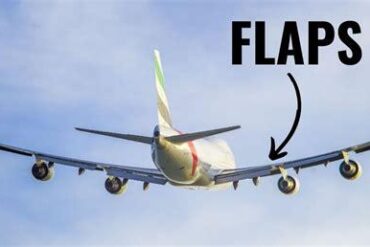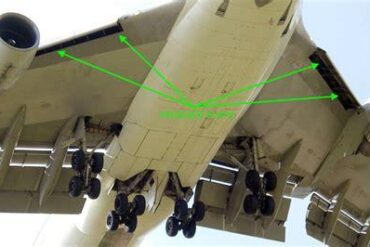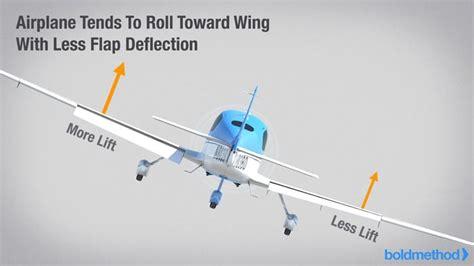
Asymmetric flaps refer to a condition where the flap on one wing extends or retracts while the flap on the opposite wing remains unchanged. This issue can arise due to mechanical failure or jamming. If left unaddressed, it can lead to significant rolling towards the wing with less flap extended. In severe cases, this roll might surpass the aileron control available, potentially leading to a spin or loss of control.
In any case of asymmetric flaps, the wing with the greater flap extension generates more lift. Consequently, the wing with the lesser flap will stall first. Many aircraft come equipped with systems designed to detect and sometimes minimize this condition. A common method involves using two needles on the flap position indicator. When the needles overlap, everything is functioning normally. However, if they separate, it signals an asymmetric flap situation, requiring pilot intervention to halt the flap movement.
More advanced systems utilize flap position sensors and a flap brake system. If these sensors detect an asymmetric flap condition, the flap brakes activate automatically, stopping further flap movement. This helps prevent the situation from deteriorating.