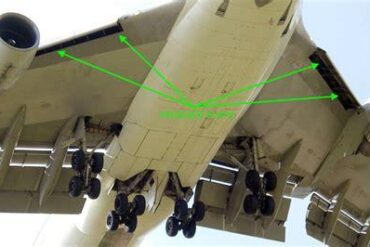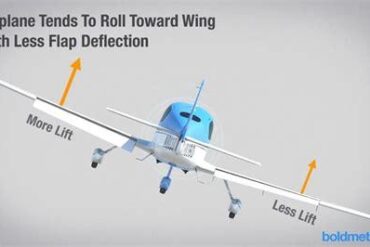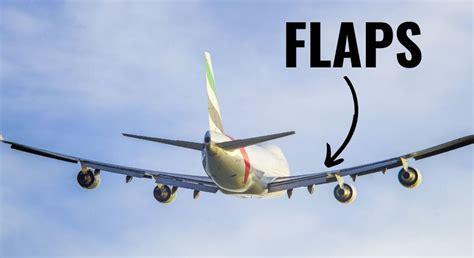
Flaps are essential high-lift devices found on the trailing edge of an aircraft’s wing. When they are extended, flaps increase the wing’s camber and, in many cases, its chord and surface area. This leads to greater lift and drag while lowering the stall speed, ultimately improving takeoff and landing performance.
Various flap designs exist, and larger aircraft often use more than one type, employing different configurations on the inboard and outboard sections of their wings. Here are some common flap designs:
-
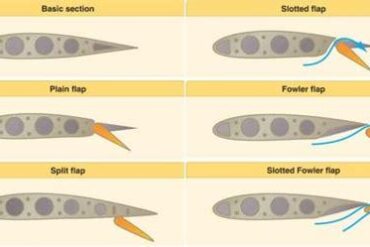
Plain Flap: This design involves the rear part of the wing rotating downward on a simple hinge located at the front of the flap.
-
Split Flap: In this type, the lower surface of the wing hinges downward from the leading edge of the flap, while the upper surface stays in place.
-
Slotted Flap: Similar to the Plain Flap, the Slotted Flap has a gap between the flap and the wing. This gap allows high-pressure air from below the wing to flow over the upper surface of the flap, reducing boundary layer separation and keeping the airflow smooth.
-
Fowler Flap: This is a split flap that first slides back before hinging downwards. It increases both the chord and wing surface area, enhancing lift during takeoff and landing. Most large aircraft feature this type or its variations for optimal performance.
-
Double Slotted Fowler Flap: This design takes the Fowler flap a step further by adding features from the slotted flap, which helps energize the boundary layer for even better performance.
Overall, understanding these different flap types can provide insights into how they contribute to aircraft efficiency and safety during flight.