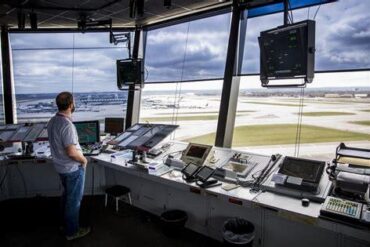
The public often imagines air traffic control as a clean, abstract world of radar blips, calm voices, and mathematical precision. To passengers, it is invisible infrastructure—something that works quietly in the background so reliably that its existence is barely noticed. Yet behind the glass of control towers and the dim glow of radar rooms, air traffic control is intensely human. It is experienced through eyes, memory, repetition, and sometimes through images so stark they become impossible to forget.
For most controllers, the days blur together in successful routine. Aircraft depart, aircraft arrive, separation is maintained, conflicts are resolved before they ever become visible to the outside world. Safety statistics reflect this triumph. Modern aviation is astonishingly safe, and catastrophic events are profoundly rare. But rarity does not mean absence. Over the span of a career that may stretch decades, some controllers will witness moments that cut through routine like a blade. Once seen, those moments never truly leave.
What makes these experiences so haunting is not only the tragedy itself, but the way they embed into the controller’s daily work. Unlike passengers, controllers return to the same runways, the same airspace, the same visual references day after day. The place where something went wrong becomes part of the scan, part of the mental map, part of the job. These are the things in air traffic control that you just can’t unsee—not because controllers dwell on them by choice, but because the profession demands constant visual and cognitive engagement with the exact spaces where history occurred.
When the Accident Becomes a Permanent Landmark
On a clear winter night in late January 2025, American Airlines Flight 5342, a Bombardier CRJ-700 arriving into Washington, DC, was minutes from landing at Ronald Reagan Washington National Airport. The approach to Runway 33 is visually stunning, with the Potomac River reflecting city lights and national monuments glowing in the distance. For passengers, it is one of the most iconic arrivals in the United States. For controllers in the tower, it is a carefully choreographed sequence repeated thousands of times a year.
That night, a Sikorsky UH-60 Black Hawk helicopter occupied the same slice of sky. The collision occurred half a mile from the runway threshold, directly over the river. From the tower cab, the view was unobstructed. The event unfolded in real time, not as a delayed report or a replayed clip, but as a sudden, irreversible rupture in what should have been a routine landing. Sixty-seven lives were lost.
In the weeks that followed, recovery operations marked the site visibly. Cranes stood in the river, illuminated against the night sky. Even after the equipment was removed, the absence remained. Controllers working Runway 15/33 could not look down final approach without seeing where it happened. This is the cruel geometry of aviation accidents in controlled airspace: the location does not disappear. It becomes a permanent reference point, etched into the environment and the mind.
For controllers at DCA, that spot is now inseparable from their professional awareness. Every landing clearance issued, every departure monitored, carries the weight of that memory. The job requires vigilance, not avoidance. The eyes must still go there, again and again, because safety demands it.
The Modern Curse of Endless Replays
In previous generations, an accident might be investigated, documented, and discussed internally, but it would not follow a controller home in high definition. Today, social media algorithms, news cycles, and instant video sharing ensure that no one truly escapes the imagery. Footage of the DCA collision circulated globally within hours, captured from multiple angles and replayed relentlessly.
For controllers who were present—or even those who simply work in the same facility—the repetition is brutal. Avoidance becomes nearly impossible. Screens in break rooms, headlines on phones, unsolicited clips appearing in social feeds all reinforce the same sequence of events. The human brain is not designed to process trauma on a loop, yet technology ensures that loop runs continuously.
This creates a strange asymmetry. The public consumes the footage as information or spectacle, while controllers experience it as memory reinforcement. Armchair analysis flourishes online, dissecting seconds and decisions with the benefit of hindsight. Yet for the individuals responsible for maintaining safety across the National Airspace System, the psychological cost is immeasurable. Even when investigations identify multiple contributing factors, the sense of personal responsibility can linger indefinitely.
Aviation safety is built on redundancy, on layers of protection meant to prevent single points of failure. When multiple errors align, the result feels not just tragic but existential. Controllers understand, intellectually, that no one person controls every variable. Emotionally, that understanding offers limited comfort.
How Trauma Becomes Part of the Scan
The Local Controller (LC) position in a control tower is intensely visual. The scan is methodical and continuous: runway, threshold, departure end, final approach, surrounding airspace, ground vehicles, weather cues, lighting anomalies. This pattern repeats hundreds—sometimes thousands—of times in a single shift.
At night, especially in complex urban environments like Washington, DC, the scan becomes more demanding. City lights create visual noise. Aircraft lights blend into background illumination. Depth perception shifts. After an accident, the scan subtly changes again. The site of the event becomes a fixed mental waypoint, checked instinctively even when nothing is happening there.
This is not morbid fixation. It is adaptive behavior. The brain flags locations associated with danger, ensuring heightened awareness in those areas. Over time, that heightened awareness becomes automatic. Controllers do not consciously think about the memory every time they look there, but the imprint remains. It is woven into professional muscle memory, reinforcing diligence while quietly extracting its toll.
The Invisible Ripples Through Families and Lives
The impact of aviation accidents extends far beyond the control room. Controllers carry the experience home, often without the vocabulary to explain it fully. Spouses and families may sense the change—sleeplessness, distraction, emotional withdrawal—without knowing how to reach it.
Unlike passengers or first responders, controllers occupy a strange psychological space. They were present, responsible, and powerless all at once. They did not physically intervene, yet their role ties them intimately to the outcome. This ambiguity complicates grief and recovery. It is harder to mourn publicly when the loss feels abstract to outsiders but intensely personal internally.
In some cases, dreams become the outlet. Controllers report recurring nightmares in which they themselves are aboard the aircraft they once worked. The brain searches for coherence, substituting familiar faces and environments in an attempt to process what logic cannot resolve.
Heroes You Rarely Hear About
Not every unforgettable moment ends in tragedy. Some are unforgettable precisely because catastrophe was narrowly avoided. Patrick Harten, a controller at New York TRACON (N90), was the last to speak with Captain Chesley “Sully” Sullenberger before US Airways Flight 1549 lost both engines and ditched in the Hudson River.
Public narratives focus on the miracle landing, but behind the scenes, Harten believed the aircraft was lost. Convinced there were no survivors, he stepped away to collect himself in silence. Only later did he learn that everyone had lived. That emotional whiplash—moving from assumed fatality to relief—left its own lasting mark.
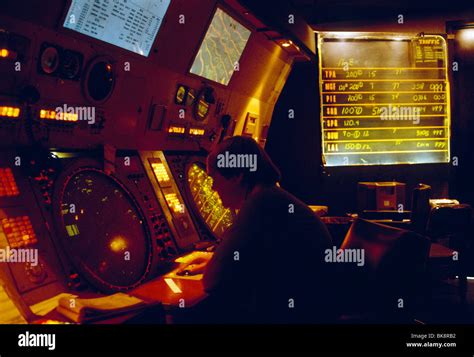
Such stories rarely dominate headlines. Controllers are trained to deflect praise, to see success as the expected outcome rather than an extraordinary achievement. Yet within the profession, these moments resonate deeply. They remind controllers why the work matters, even as they underscore how thin the margin can be.
The Meaning of a “Save”
Within air traffic control culture, a “SAVE” is spoken of with quiet reverence. It refers to an intervention that clearly prevents an accident—an outcome that would almost certainly have been catastrophic without decisive action. The Archie League Award, named after the first air traffic controller, honors such moments.
Recipients do not seek recognition. In fact, many are uncomfortable with it. The ethos of the profession emphasizes collective responsibility over individual heroism. Still, among peers, these stories carry weight. They serve as reminders that training, experience, and composure under pressure can bend fate in the right direction.
Yet even saves leave marks. Knowing how close things came can haunt a controller just as persistently as an accident. The difference is that the memory carries relief alongside fear, rather than loss alone.
Watching the Unavoidable Happen
Some accidents unfold entirely outside a controller’s influence. In November, at Louisville Muhammad Ali International Airport, UPS Flight 2976 suffered a catastrophic engine separation during takeoff. From the tower, controllers watched the aircraft depart normally—until it didn’t. There was no corrective clearance to issue, no vector to provide. Physics had already taken control.
These moments challenge the illusion of omnipotence often attributed to air traffic control. Controllers manage airspace, not destiny. When mechanical failure or structural loss occurs within sight of the tower, the helplessness is acute. It reinforces a sobering truth: despite layers of safety, aviation remains a human endeavor operating within physical limits.
Beyond Numbers and Statistics
On a typical day in the United States, around 50,000 flights operate safely. At peak moments, more than 5,000 aircraft may be airborne simultaneously under ATC supervision. These numbers are often cited to reassure the public, and rightly so. The system works.
But for controllers, safety is not statistical. It is personal. The thousands of uneventful shifts fade into the background, while the few that involve crisis remain vivid. Memory does not scale proportionally. It clings to anomaly, not routine.
Controllers who worked through decades often struggle to recall specific “good days,” because success is defined by absence of incident. The mind, however, retains the days when outcomes were uncertain or tragic. This is not a flaw; it is a survival mechanism that prioritizes learning from rare but consequential events.
September 11, 2001: A Defining Scar
For those who were on position during September 11, 2001, the memories are inescapable. Controllers who spoke to the hijacked aircraft, or who managed the unprecedented nationwide ground stop that followed, still carry that day with them.
The shock was not only professional but existential. The realization that the system itself could be weaponized shattered assumptions about control and predictability. Many controllers returned to work within hours, performing under conditions of uncertainty unlike anything before or since.
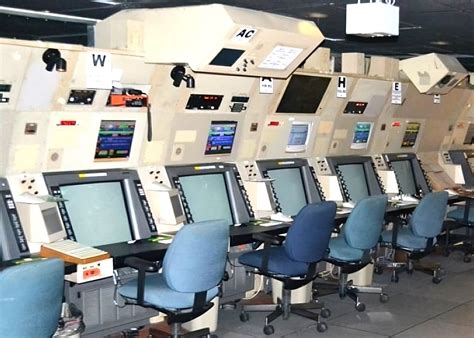
The profession absorbed the trauma quietly. There were no grand gestures, only continued service. For some, the weight never fully lifted. For others, it hardened into resolve. Either way, the imprint remains.
The Complicated Reality of Seeking Help
Mental health support in air traffic control is fraught with complexity. Controllers must maintain strict medical certification. Certain medications, while helpful in civilian life, can jeopardize a controller’s career. This creates a dangerous paradox: acknowledging distress may feel riskier than suppressing it.
Programs like Critical Incident Stress Management (CISM) exist, but they are often seen as first steps rather than comprehensive solutions. The culture of the profession prizes resilience and reliability, sometimes at the expense of vulnerability. As a result, some controllers carry their burdens alone, hoping time will dull the edges.
This silence does not indicate weakness. It reflects structural constraints that make openness costly. Addressing this tension remains one of the industry’s most pressing, and least visible, challenges.
Why Controllers Stay
Despite everything—the pressure, the responsibility, the memories that refuse to fade—air traffic control remains profoundly rewarding. The work demands sharp intellect, emotional regulation, and an unusual tolerance for consequence. Few professions ask so much, so consistently.
Those who succeed do so not because the job is easy, but because it aligns with something fundamental in them: a desire to impose order on chaos, to protect strangers they will never meet, to keep the sky safe one clearance at a time.
The memories that cannot be unseen are part of that bargain. They testify to the reality of the work, stripped of abstraction. Controllers return each day hoping for routine, prepared for anything, carrying the past not as a burden alone, but as a reminder of why vigilance matters.
In the end, air traffic control is not about numbers on a screen. It is about people, seen and unseen, moving through shared space. And sometimes, about learning to live with what that space has shown you—because once you’ve seen it, it stays.