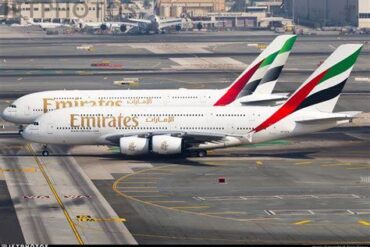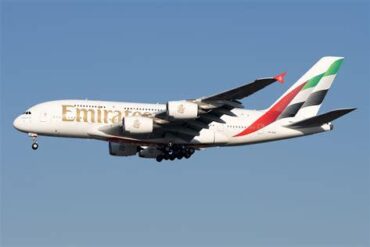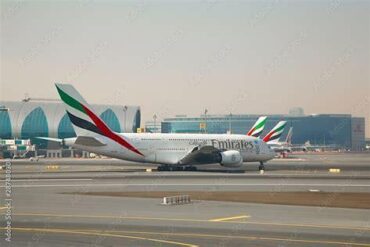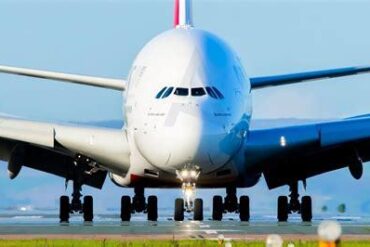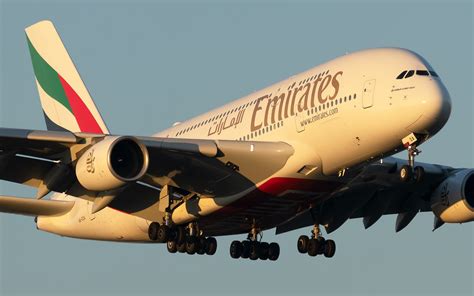
The Airbus A380 was never a subtle aircraft. It arrived like architecture with wings—double-decked, unapologetically vast, a machine built to move cities through the sky. When Emirates introduced the superjumbo to the United States in August 2008, beginning with Dubai–New York JFK, it wasn’t merely adding capacity; it was staging a spectacle. Nearly two decades later, while New York JFK still enjoys three daily A380 flights, the map has quietly contracted. Four US gateways—Boston, Dallas/Fort Worth, Chicago O’Hare, and Orlando—have all watched the double-decker depart, some gradually, others after fleeting appearances.
Boston: A Short-Lived Superjumbo Experiment
Emirates’ relationship with Boston began in March 2014, but the Airbus A380 didn’t arrive until January 2017. That initial deployment functioned as an infrastructure proving ground, allowing Logan International Airport to demonstrate it could physically and operationally handle the world’s largest passenger aircraft. Ironically, Emirates wasn’t Boston’s first regular A380 operator—British Airways claimed that distinction just months later and continues to maintain service.
Emirates’ own A380 tenure in Boston was strikingly brief. The aircraft appeared in two concentrated bursts: June–September 2019 to capture peak summer demand, and again from December 2019 to January 2020 to absorb holiday traffic. Then global aviation hit the pandemic wall.
From June to September 2019, the numbers looked promising at first glance. 112,095 round-trip passengers flew the route, representing a 39% traffic increase versus the previous year. Yet capacity had surged even faster—up 47%—which diluted the seat load factor to 89%. For a premium-heavy aircraft like the A380, that imbalance matters. Revenue, not just volume, determines viability. Discounted fares and softer premium yields may have eroded profitability.
Today, Boston remains in the Emirates network, but the superjumbo is gone. The route relies on the four-class Boeing 777-300ER, configured with 328 seats—one of the airline’s lower-capacity layouts. Department of Transportation data through October 2025 shows a 68% load factor, a figure that invites strategic questions. Seasonal frequency cuts or a future shift to the Airbus A350-900 remain plausible scenarios as Emirates fine-tunes capacity to demand.
Dallas/Fort Worth: Capacity Without the Right Demand Mix
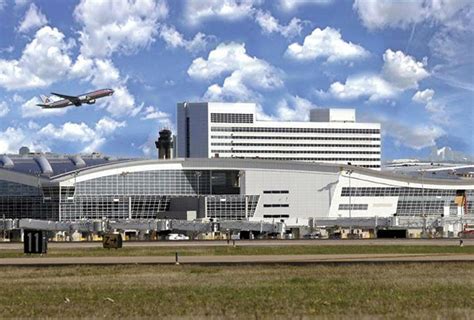
Dallas/Fort Worth joined the Emirates map in February 2012, marking a major expansion into the American heartland. The A380 arrived in October 2014, positioning Dallas as an early superjumbo gateway—preceding Houston’s A380 debut by two months.
Yet the aircraft’s tenure proved short. By February 2016, the daily 489-seat superjumbo rotation ended.
The contrast with Houston is revealing. Both Texas markets support Emirates service, but only Houston retains the A380. The difference lies not simply in passenger numbers but in yield composition—the profitability of each seat sold.
Houston’s economy, deeply tied to oil and energy industries, generates high-value corporate travel. Booking data underscores this premium pull: Saudi Arabia ranked the third most-trafficked country from Houston, with Kuwait sixth. Energy sector connectivity fuels demand for first and business class cabins—the very spaces where the A380 generates disproportionate revenue.
The seat math illustrates the divide. In 2026, Houston’s A380 operation provides 65,700 annual round-trip premium seats, compared with 35,032 offered from Dallas via the smaller 777-300ER. Dallas had volume, but Houston had margin. For a fleet as capacity-dense and cost-sensitive as the A380, that distinction is decisive.
Chicago O’Hare: A One-Day Infrastructure Trial
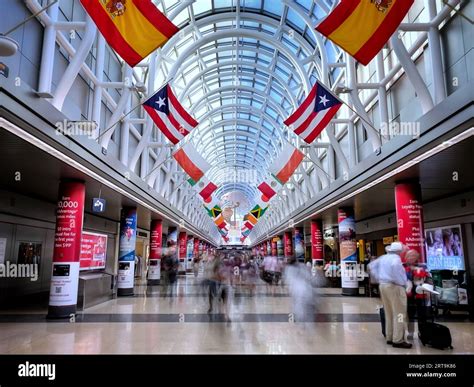
Chicago’s encounter with the Emirates A380 borders on aviation folklore. The aircraft operated a single round-trip flight on July 19, 2016. No seasonal run, no extended trial—just one carefully orchestrated visit.
The mission was technical, not commercial. Emirates used the flight to validate O’Hare International Airport’s ground infrastructure, ensuring gates, taxiways, jet bridges, and turnaround processes could support regular superjumbo operations if needed.
They were never needed.
Emirates continues to serve Chicago, but exclusively with the Boeing 777-300ER. Historically, only British Airways has operated regular A380 service to O’Hare, and even that has since ceased, reflecting broader industry recalibration around ultra-large aircraft.
Chicago’s single A380 appearance stands as a reminder that airport readiness and market readiness are separate equations. Steel and concrete can be upgraded; sustained premium demand is harder to engineer.
Orlando: A Celebratory Superjumbo Cameo
If Chicago’s A380 visit was operational, Orlando’s was ceremonial.
On September 1, 2015, Emirates dispatched the superjumbo for a one-off round trip to mark the airline’s launch in Central Florida. The aircraft’s presence was less about capacity planning and more about symbolic arrival—an aviation fireworks display announcing Emirates’ entry into one of America’s most tourism-driven markets.
Since that inaugural flourish, Orlando service has settled into a steady rhythm aboard the Boeing 777-300ER. Leisure demand to Florida is substantial, but it is also price-sensitive and heavily seasonal—conditions that rarely justify the economics of a 500-seat flagship.
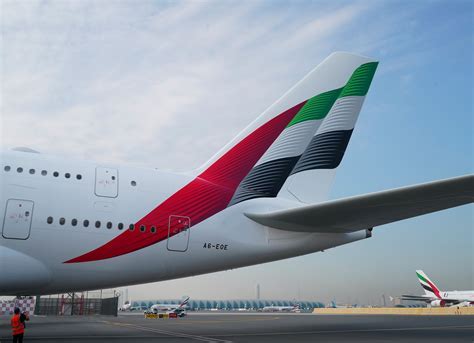
The A380 thrives where premium cabins fill reliably. Orlando’s visitor mix—families, theme-park travelers, vacation packages—leans economy-heavy. The aircraft’s absence reflects not failure, but fit.
Why Emirates Is Consolidating A380 Deployments
The withdrawal from these four US airports isn’t an indictment of the markets themselves. It’s a case study in fleet optimization—deploying the right aircraft where its unique economics shine brightest.
The Airbus A380 excels on routes with three defining traits:
- Extremely high passenger volume
- Strong premium-cabin demand
- Slot-constrained hub airports
New York JFK satisfies all three, which explains its continued triple-daily A380 presence. Boston and Dallas showed volume but inconsistent yields. Chicago and Orlando never progressed beyond trials.
Operating the world’s largest passenger jet is capital-intensive. Every deployment carries opportunity cost. Flying an A380 to a market that can only half-monetize its premium space is like using a symphony orchestra to play background music in an elevator—technically impressive, economically questionable.
The Superjumbo’s Future in the United States
Emirates remains, by a wide margin, the world’s largest A380 operator, and the United States is still central to its long-haul strategy. Beyond New York, the aircraft continues serving major gateways such as Los Angeles, San Francisco, Washington Dulles, and Houston—cities where demand density and premium traffic justify the scale.
Yet the broader industry trajectory is clear. Airlines increasingly favor next-generation twin-engine aircraft—A350s and 787s—that deliver long range with lower operating costs and flexible capacity. Emirates itself is integrating the Airbus A350-900 into its fleet, a signal of gradual diversification rather than abrupt replacement.
The A380 isn’t vanishing; it’s concentrating. Like a deep-sea creature retreating to pressure zones where it thrives, the superjumbo is consolidating around routes that can sustain its immense appetite for passengers and profit alike.
For aviation watchers, these route withdrawals tell a larger story. Aircraft don’t disappear from markets because they’re unloved. They leave because the mathematics of global mobility—demand curves, yield structures, fleet efficiency—quietly redraw the map beneath them.