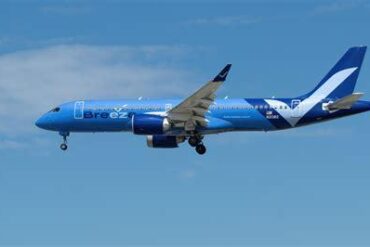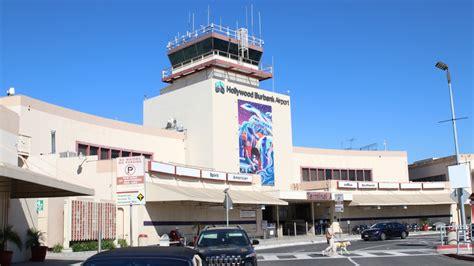
Los Angeles International Airport (LAX) may dominate the headlines and passenger volumes, but two alternative airports within Los Angeles County—Hollywood Burbank Airport (BUR) and Long Beach Airport (LGB)—offer travelers significant domestic connectivity with smaller crowds, easier access, and a distinctly local flavor. As July travel heats up, these two airports emerge as critical regional hubs. Here’s an in-depth look into their evolving route maps, airline activity, and the shifting dynamics that could shape the future of Southern California air travel.
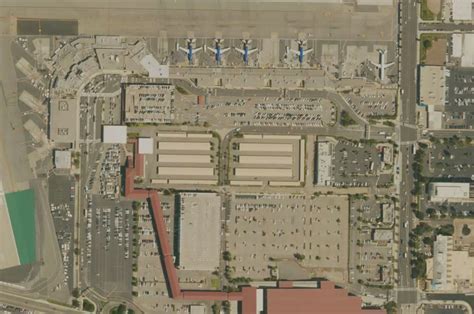
Burbank Airport: Record Numbers Meet Strategic Cuts
Hollywood Burbank Airport, often praised for its convenience and proximity to downtown Los Angeles and the San Fernando Valley, is surging with activity in 2025. In July alone, 650 direct weekly departures are scheduled, nearly doubling the 335 at Long Beach. Southwest Airlines, long the dominant player at Burbank, accounts for 373 of those flights—more than half the airport’s total.
Despite Burbank’s growing passenger numbers—6.5 million travelers welcomed in 2024, with consistent YoY growth from February through May 2025—capacity this July has slightly contracted. Weekly departing available seat kilometers (ASKs) are down 13% YoY, and weekly flights are down 7.8% compared to the same month in 2024. The culprit? Airlines trimming underperforming or strategically redundant routes amid changing passenger demands and evolving fleet strategies.
Southwest and the Great Realignment at Burbank
Southwest Airlines, which historically used Burbank as a key hub for point-to-point service, has removed 38 weekly departures. The carrier axed routes to Eugene (EUG), Portland (PDX), New Orleans (MSY), and San Antonio (SAT). These adjustments mirror a shift away from low-yield leisure routes to more business-focused, high-yield destinations. While this represents a short-term dip in capacity, it may align the airline more closely with current market realities.
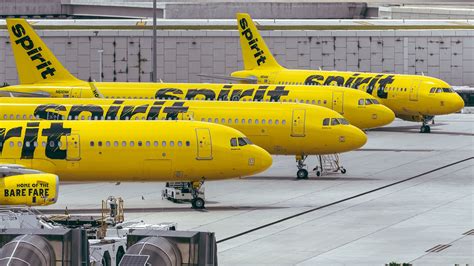
Spirit Airlines, too, has undergone a transformation. Its rebranded premium offerings—Spirit First, Premium Economy, and Value—reflect an attempt to move upmarket. However, the airline reduced 14 weekly flights, including cutting Burbank-Oakland and Portland, retaining only Las Vegas from its Burbank network this July.
Avelo Airlines, another low-cost player, has also trimmed operations, removing six routes that had one to three departures weekly. These include destinations like Boise, Redding, Brownsville, and Colorado Springs.
Growth from Full-Service Carriers
In contrast, Delta Air Lines and United Airlines have expanded. Delta now operates 28 weekly departures to Salt Lake City (SLC), up from 21 last July. United, focusing on its Denver (DEN) hub, increased service to three daily flights, up from two. Frontier Airlines has also re-entered the Burbank–Denver market with two weekly flights.
JetBlue and American Airlines remain static: JetBlue offers daily service to JFK, while American continues service to Dallas/Fort Worth (DFW) and Phoenix (PHX) via American Eagle.
Overall, Burbank has seen a net loss of six destinations this July, but still maintains a robust network of 31 destinations and 39 unique routes. It remains a powerful secondary airport for the Los Angeles area.
Top Routes and Frequencies at Burbank
The busiest route from Burbank is the short hop to Las Vegas (LAS), with a staggering 86 weekly flights in July—up to 14 daily on Mondays, Thursdays, and Fridays. Spirit and Southwest both operate this high-frequency service.
The next most active routes include:
- San Francisco (SFO): 63 weekly flights via Alaska and United
- Oakland (OAK): 59 weekly, all on Southwest
- Phoenix (PHX): 59 weekly via American and Southwest
These routes emphasize intra-California and short-haul travel, catering to both business travelers and leisure flyers alike.
Long Beach Airport: Smaller Scale, Focused Execution
Compared to Burbank, Long Beach Airport (LGB) presents a quieter, more tailored offering. With 335 weekly departures, it’s just over half as busy as BUR, but its charm lies in simplicity, speed, and accessibility. Only three airlines currently operate from Long Beach: Southwest Airlines, Delta Air Lines, and Hawaiian Airlines.
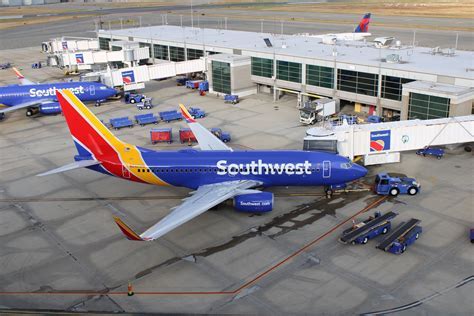
Southwest absolutely dominates, accounting for 300 of 335 flights and 91% of weekly seat capacity. The airline’s presence shapes the airport’s profile as a key regional player.
Southwest’s Stronghold at Long Beach
Southwest has leveraged Long Beach’s accessible location to build a mini-hub with 19 destinations on its July schedule. High-frequency services include:
- Las Vegas (LAS): 43 weekly flights
- Sacramento (SMF): 39 weekly
- Oakland (OAK): 33 weekly
- Phoenix (PHX): 29 weekly
- San Jose (SJC): 24 weekly
The most exciting addition is the red-eye to Baltimore/Washington International (BWI), which launched on June 5, departing at 20:45 local time and arriving at 05:00. Long Beach Mayor Rex Richardson hailed it as a key development for city tourism, which continues to trend upward.
Delta and Hawaiian’s Focused Service
Delta Air Lines maintains a steady three-daily flight operation to its hub in Salt Lake City, with two of those flights run under the Delta Connection brand.
Hawaiian Airlines, now part of the Alaska Air Group following their 2024 merger, operates daily flights to Honolulu (HNL) and Kahului (OGG), giving Southern California residents direct access to the islands with minimal airport congestion.
The JetBlue Legacy and Market Shifts
JetBlue’s absence from Long Beach continues to be felt. The airline shuttered its base at LGB in October 2020, citing shifting demand and the desire to consolidate operations at LAX. Pre-pandemic, JetBlue had achieved an impressive 83.8% load factor in 2019, but that dropped sharply during the COVID era to 59.95%, hastening its retreat.
American Airlines, too, exited Long Beach in February 2023, ending its last flight to Phoenix and walking away from earlier routes like Dallas/Fort Worth. The vacuum they left behind has allowed Southwest to seize available slots and grow its footprint without much resistance.
Conclusion: Two Airports, Diverging Paths, Shared Value
While Hollywood Burbank and Long Beach Airport may share geography, they pursue distinct aviation strategies. Burbank remains busier and more diversified, with a blend of low-cost and full-service carriers. Long Beach, by contrast, thrives under a high-frequency, limited-carrier model, anchored firmly by Southwest Airlines’ dominant presence.
Together, they provide the Los Angeles region with powerful alternatives to LAX, serving millions of passengers seeking ease, proximity, and efficiency. As travel demand continues to rise through summer 2025, both airports are poised to play increasingly vital roles in Southern California’s dynamic air travel ecosystem.