South Korea’s aviation sector is preparing for a new transpacific competitor as Parata Air pushes forward with plans to launch flights to the United States in 2026. The newly revived airline, reborn from the collapsed Fly Gangwon brand, has already submitted an application to the US Department of Transportation seeking authority to operate scheduled and charter services between South Korea and major American leisure destinations.
The carrier’s ambitious strategy signals more than a simple route expansion. It represents a calculated attempt to redefine how Korean low-cost airlines compete on long-haul international markets. By combining widebody aircraft, premium seating options, and lower fares, Parata Air is positioning itself between traditional budget carriers and legacy full-service airlines.
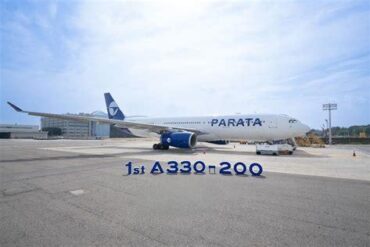
According to the DOT filing under Docket DOT-OST-2025-1922, Parata Air plans to begin flights from Seoul Incheon International Airport (ICN) to Los Angeles International Airport (LAX) and Las Vegas Harry Reid International Airport (LAS) starting March 29, 2026. The airline intends to operate the routes using Airbus A330-200 aircraft configured for medium- and long-haul travel.
The move immediately places the airline into direct competition with industry giants such as Korean Air and Asiana Airlines, both of which dominate transpacific passenger traffic between South Korea and the United States.
From Fly Gangwon Collapse To Parata Air Revival
Parata Air’s story is rooted in one of the most turbulent periods in modern aviation history. The airline traces its origins to Fly Gangwon, a regional South Korean carrier launched in 2019 from Yangyang Airport on the country’s northeastern coast. Fly Gangwon focused primarily on domestic leisure routes connecting travelers to destinations such as Jeju and Busan.
However, the COVID-19 pandemic devastated travel demand across Asia, and smaller airlines with limited financial reserves struggled to survive prolonged border restrictions and collapsing passenger numbers. Fly Gangwon eventually suspended operations and entered court-led rehabilitation proceedings in 2023.
The airline’s revival came in 2024 when Winix Co., a Korean appliance manufacturer, acquired the carrier’s assets and initiated a complete rebranding effort under the name Parata Air. The word “Parata” originates from the Korean term 파랗다, meaning “blue,” reflecting the airline’s branding and visual identity.
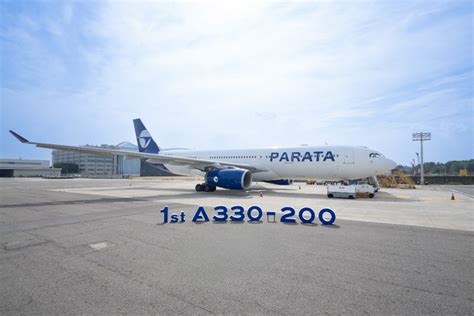
After regaining its Air Operator Certificate in September 2025, the carrier resumed commercial operations with an inaugural post-rebrand flight between Seoul Gimpo and Yangyang using an Airbus A330-200 registered as HL8709.
The rapid transition from bankruptcy rehabilitation to international expansion highlights the aggressive growth strategy now guiding the airline’s leadership.
Why Los Angeles And Las Vegas Matter
Parata Air’s selection of Los Angeles and Las Vegas is far from accidental. Both destinations attract significant Korean leisure traffic and benefit from strong tourism demand throughout the year.
Los Angeles remains one of the largest gateways for Korean travelers entering North America, supported by a large Korean-American population, extensive business links, and year-round tourism demand. Las Vegas, meanwhile, has become increasingly popular among South Korean tourists seeking entertainment-focused vacations, luxury resorts, and package travel experiences.
The airline appears focused on tapping into the post-pandemic rebound in outbound Korean tourism. Research from Yanolja Research estimated that 14.564 million Koreans traveled abroad during the first half of 2025, bringing outbound travel volumes close to pre-pandemic levels.
That recovery represents a major opportunity for airlines capable of offering affordable long-haul fares without eliminating passenger comfort entirely.
Parata Air’s Hybrid Low-Cost Strategy
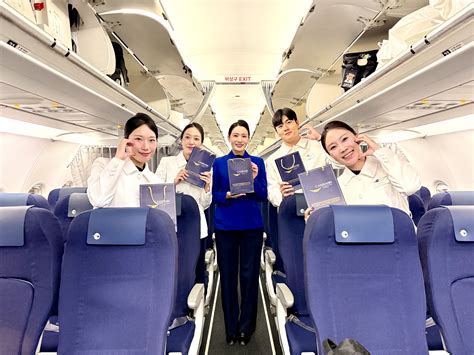
Unlike traditional ultra-low-cost carriers that prioritize maximum seat density and minimal onboard service, Parata Air is attempting to build what it describes as a hybrid airline model.
The airline combines low base fares with optional premium upgrades, additional comfort products, and widebody aircraft cabins more commonly associated with full-service international airlines.
Its current fleet includes two Airbus A330-200 aircraft alongside one Airbus A320-200 used for shorter domestic and regional operations. A second leased A320 is expected to join the fleet in the near future.
Parata Air’s cabin configurations reveal how aggressively the airline is targeting travelers seeking affordability without sacrificing long-haul comfort.
One A330-200 layout accommodates 294 passengers, including 49 Comfort Plus seats featuring 35-inch pitch seating and widths up to 19.5 inches. The remaining 245 economy seats maintain relatively generous spacing compared to many budget competitors.
A second A330-200 configuration introduces a dedicated Business Smart cabin with 18 premium seats arranged in a 2-2-2 layout. These seats offer 74-inch pitch measurements alongside reclining functionality, premium meals prepared by chefs, and airport lounge access.
This approach allows the airline to target multiple passenger segments simultaneously, from budget-conscious leisure travelers to premium tourists seeking upgraded experiences at lower prices than legacy airline business class fares.
Open Skies Agreement Creates Expansion Potential
Parata Air’s DOT application also requests broader operating authority under the US–Korea Open Skies agreement, potentially opening the door for future expansion beyond Los Angeles and Las Vegas.
That flexibility could eventually allow the carrier to explore additional North American destinations with large Korean traveler demand, including cities such as Seattle, San Francisco, Honolulu, or New York.
For now, however, the airline’s success will depend heavily on whether it can sustain profitability in one of the world’s most competitive long-haul aviation markets.
Fuel costs, aircraft utilization, airport fees, and intense pricing pressure remain major challenges for any low-cost airline attempting transpacific operations. Yet Parata Air believes changing travel patterns are creating space for a new type of Korean airline — one capable of blending lower fares with upgraded passenger experiences.
As South Korean outbound tourism continues its rapid recovery, Parata Air’s bold US expansion plans may become one of Asia’s most closely watched airline developments heading into 2026.