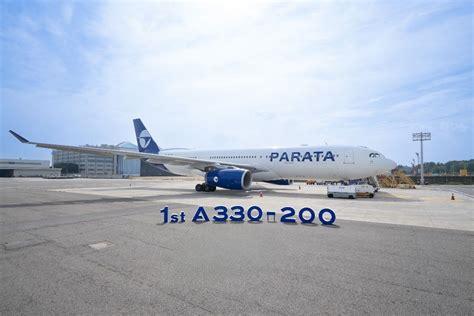
Parata Air may be small by global aviation standards, but its ambitions are anything but. The South Korean low-cost carrier is preparing for its most audacious move yet: launching its first-ever nonstop long-haul flights to the United States in 2026, a step that would push the airline onto one of the world’s most competitive aviation stages.
Barely months into commercial operations, Parata Air has already secured a crucial regulatory milestone. Its application for a foreign air carrier permit has been approved, clearing a major legal hurdle for US-bound services. While the airline has not formally confirmed specific routes, previous statements point toward Los Angeles and Las Vegas as the leading candidates for its initial transpacific expansion.
Founded from the restructuring of Fly Gangwon and backed by appliance manufacturer Winix, Parata Air only operated its first commercial flight in September 2025. According to ch-aviation data, its current fleet consists of four aircraft—two Airbus A320ceos and two Airbus A330-200s—with an average age of 16.7 years. That modest fleet size makes its US ambitions especially striking, signaling a high-risk, high-reward strategy.
A Calculated Leap Across the Pacific
Entering the US market is no small feat, particularly for a low-cost carrier attempting long-haul operations. Transpacific routes demand high aircraft utilization, resilient demand, and the financial stamina to withstand fare wars. Yet Parata Air appears intent on carving out a niche alongside South Korea’s growing cohort of budget and hybrid long-haul operators.
The airline’s timing is notable. Demand between South Korea and North America has rebounded strongly, driven by diaspora travel, tourism, and business traffic. At the same time, passengers have become increasingly price-sensitive, creating space for carriers willing to challenge legacy airlines on fares.
Los Angeles: The Most Likely Launchpad
Los Angeles stands out as the most probable starting point. The Seoul–Los Angeles market is the largest transpacific city pair involving South Korea, supported by a Korean and Korean-American population exceeding 300,000 in the Los Angeles area alone.
In the 12 months to November 2025, booking data shows 675,000 round-trip local passengers traveled between Seoul and Los Angeles—more than 1,780 passengers per day. Nearly 96% of those travelers flew nonstop, underscoring both the market’s maturity and its intensity.

If Parata Air enters this route, it would become the fourth nonstop passenger operator, joining Korean Air, Asiana Airlines, and Air Premia. The competitive picture is complicated by Korean Air’s majority ownership of Asiana, effectively reducing independent competition at the top end of the market.
For Parata Air, success in Los Angeles would depend on its ability to undercut incumbents without triggering unsustainable fare compression. With Air Premia already operating as a hybrid low-cost long-haul carrier, stimulating significant new demand may prove challenging, particularly on such a well-served route.
Las Vegas: A More Flexible Opportunity
Las Vegas presents a very different competitive dynamic. While smaller than Los Angeles, the Seoul–Las Vegas market has long attracted both diaspora travelers and leisure-focused visitors drawn to Nevada’s entertainment industry.
In the year to November, approximately 89,000 passengers traveled between Seoul and Las Vegas, making it the 11th-largest South Korea–US/Canada market. Unlike Los Angeles, around one-third of passengers flew indirectly via connecting hubs, leaving room for a new entrant to stimulate demand with nonstop, lower-cost service.

Currently, Korean Air is the sole operator, flying daily with the Boeing 777-300ER, a service it has maintained for roughly two decades. Parata Air’s entry would mark the first time the route has two regular operators, outside of limited seasonal or event-driven services such as those tied to the Consumer Electronics Show.
As a budget-focused airline, Parata Air could find Las Vegas more forgiving than Los Angeles, particularly if it positions the route as an affordable leisure gateway rather than a premium-heavy business corridor.
Fleet Realities and Long-Haul Economics
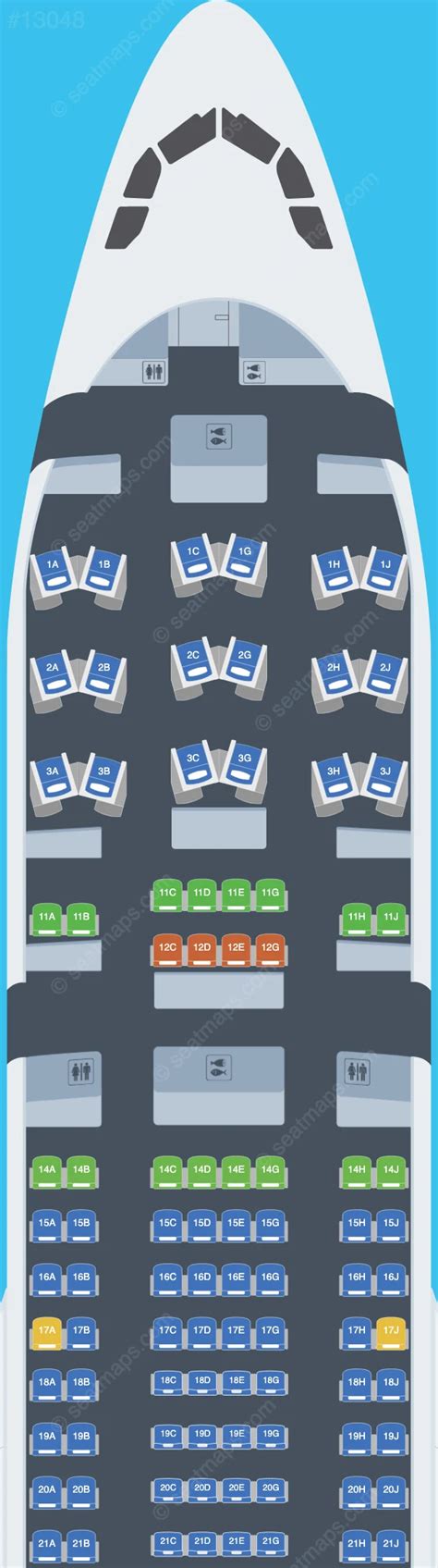
Operating transpacific flights with A330-200 aircraft is feasible but demanding. These aircraft lack the fuel efficiency of newer-generation widebodies like the Boeing 787 or Airbus A350, placing extra pressure on cost control and load factors.
Parata Air’s long-haul model will likely hinge on high-density cabin layouts, ancillary revenue, and aggressive pricing, echoing strategies used by other low-cost long-haul operators worldwide. The airline’s relatively small fleet also means that operational disruptions could have outsized impacts, especially on routes exceeding 11 hours.
Joining a Crowded Transpacific Club
If Parata Air launches US services, it would become the 11th passenger carrier operating between Seoul and the US/Canada, excluding Pacific territories. It would join a diverse lineup that includes Air Canada, Delta Air Lines, United Airlines, American Airlines, WestJet, and several South Korean operators.
Its arrival would also reinforce a broader trend: the rise of South Korean budget and hybrid carriers across the Pacific. Alongside Air Premia and T’Way Air, Parata Air would make it three Korea-based low-cost players competing on long-haul North American routes—a scenario almost unthinkable a decade ago.
A High-Stakes Test of Ambition
Parata Air’s proposed US expansion is bold, bordering on audacious. With limited scale, aging aircraft, and fierce competition, the risks are undeniable. Yet aviation history is full of carriers that reshaped markets by challenging assumptions about who could fly long-haul profitably.
Whether Los Angeles, Las Vegas, or both ultimately make the cut, Parata Air’s move signals confidence, urgency, and ambition. If executed well, its transpacific debut in 2026 could redefine its future—and add another disruptive chapter to the evolving story of long-haul low-cost aviation.