Denver International Airport is quietly positioning itself for another major leap in long-haul connectivity, this time with its sights set firmly on South Korea. After making aviation headlines with the successful debut of the Airbus A380 on Lufthansa’s Munich–Denver route, the Mile High City is now exploring whether demand exists for nonstop flights to Seoul Incheon International Airport, a move that could bring yet another superjumbo operator to Colorado.
The development signals more than route experimentation. It reflects Denver’s ambition to transform from a powerful domestic hub into a globally connected intercontinental gateway, capable of supporting the world’s largest passenger aircraft on a regular basis.
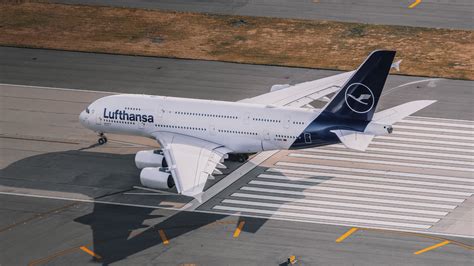
Denver’s momentum did not happen overnight. For years, the airport has invested heavily in runway infrastructure, terminal expansion, and international passenger processing capacity. The payoff became visible in 2025, when Lufthansa introduced the A380 on its Munich service, marking the aircraft’s first-ever commercial appearance in Denver. The response from travelers was immediate and emphatic, with load factors strong enough to extend the deployment beyond its originally planned schedule.
Now, airport officials are taking the next logical step—measuring appetite for Asia.
Passenger Survey Signals Serious Intent for Seoul Connectivity
Denver International Airport recently launched a South Korea Air Travel Survey, inviting passengers to share insights into their travel habits, preferences, and willingness to support a nonstop link to Seoul. The survey is not symbolic; it forms a core part of the airport’s business case analysis, helping determine whether sustained demand exists across business, education, leisure, and cultural travel sectors.
South Korea represents a strategic market. Seoul is one of Asia’s most important financial and technology hubs, with strong links to aerospace, energy, higher education, and advanced manufacturing—industries deeply embedded in Colorado’s economy. A nonstop connection would dramatically shorten travel times and elevate Denver’s status as a transpacific gateway.
From an airline perspective, the data collected could be decisive. Long-haul routes, particularly those exceeding 6,000 miles, require confidence in premium and economy demand alike. Denver’s growing international profile and strong regional catchment area make it an increasingly compelling candidate.
Could Korean Air Bring the Airbus A380 to Colorado?
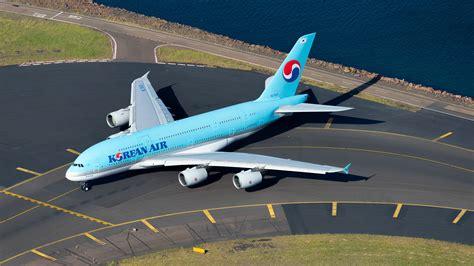
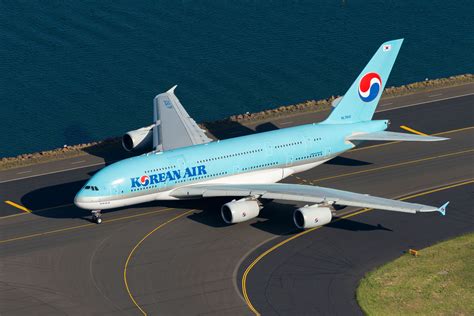
While United Airlines would appear the natural U.S.-based contender given Denver’s role as one of its largest hubs, attention is increasingly turning to Korean Air. The South Korean flag carrier is one of the remaining global operators of the Airbus A380, currently fielding five aircraft with additional units expected as part of its merger with Asiana Airlines.
A Seoul–Denver route operated by Korean Air would be a statement of intent, aligning perfectly with the airline’s strategy of deploying high-capacity aircraft on long-haul, high-profile routes. The distance between Seoul and Denver is well within the A380’s operational sweet spot, and Denver’s airfield elevation—once considered a limiting factor—has already proven compatible with the aircraft during Lufthansa’s operations.
For Denver, attracting Korean Air would not simply mean another airline; it would mean anchoring its Asian network with one of the continent’s most respected premium carriers.
Inside Korean Air’s Airbus A380 Experience
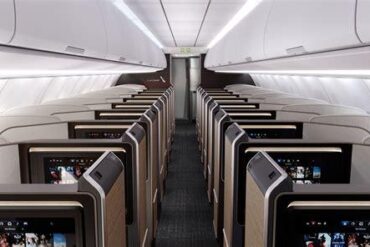
Korean Air’s A380s are configured to emphasize space, comfort, and premium service, a combination well-suited to ultra-long-haul travel. The aircraft feature a three-class layout accommodating 407 passengers, noticeably fewer than many high-density A380 configurations, reinforcing the airline’s quality-first philosophy.
The upper deck is dedicated entirely to Prestige Class, Korean Air’s business cabin, offering 94 fully flat beds in a 2-2-2 arrangement. While window seats lack direct aisle access, the cabin’s sheer width and quietness compensate, delivering a relaxed long-haul environment. On the lower deck, 12 First Class suites provide direct aisle access for every passenger, reinforcing Korean Air’s reputation for understated luxury.
The remaining space houses over 300 economy seats in a 3-4-3 layout, designed with generous legroom by industry standards. For passengers flying nearly half the globe, the A380’s stability and reduced cabin noise remain significant selling points.
Lufthansa’s A380 Success Proves Denver’s Widebody Potential
Lufthansa’s experience in Denver offers a compelling blueprint. When the airline replaced its Airbus A350-900 with the A380 on the Munich route, capacity jumped by 75 percent, yet demand absorbed the increase with ease. What was initially planned as a seasonal trial quickly turned into an extended deployment, followed by a confirmed return in summer 2026.
The success demonstrated two critical realities. First, Denver can sustain very large aircraft without diluting yields. Second, passengers actively seek out the A380 experience, particularly on long transatlantic sectors where comfort and reliability matter most.
For airport planners and airline strategists alike, this performance reduces the perceived risk of introducing another A380 route, even one as ambitious as a transpacific service.
Why a Seoul Route Would Redefine Denver’s Global Role
A nonstop Seoul flight would reshape Denver’s international identity. Beyond convenience, it would unlock one-stop connectivity across Asia, linking Colorado directly to markets such as Japan, Southeast Asia, and Australia through Seoul’s vast hub network.
The economic implications are equally significant. Enhanced air links often precede investment, academic collaboration, and tourism growth. For Denver, a city already punching above its weight in aviation infrastructure, such a route would confirm its transition into a true global hub rather than a regional connector.
While no airline has yet announced a formal commitment, the signals are unmistakable. Passenger surveys, proven A380 performance, and strategic market alignment all point in the same direction. If Korean Air ultimately answers Denver’s call, the sight of a second Airbus A380 touching down in the Mile High City may soon move from speculation to reality.