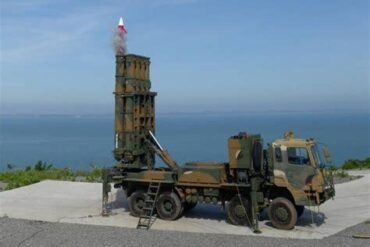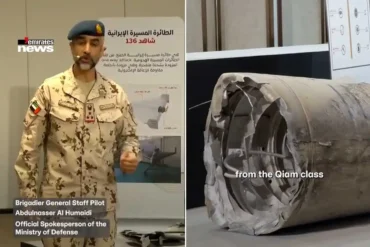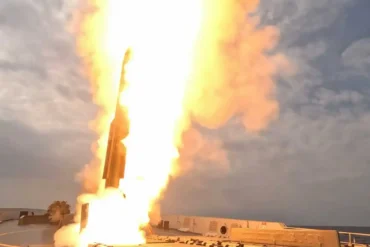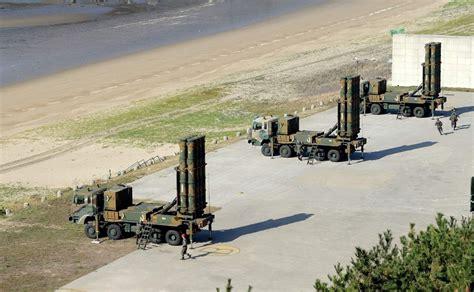
The first real-world interception by South Korea’s Cheongung II (KM-SAM Block II) air defense system has marked a significant moment in modern missile defense and global arms exports. During a wave of Iranian retaliatory missile strikes across the Middle East, the United Arab Emirates reportedly used the South Korean-built system to destroy an incoming ballistic missile. The event represents the first confirmed combat use of the Cheongung II system, transforming what had previously been a promising export platform into a combat-proven missile defense capability.
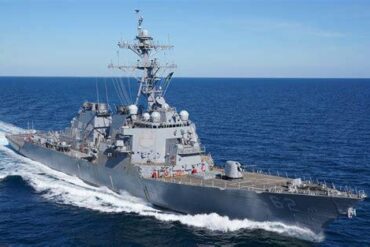
The interception occurred during a broader regional escalation involving missile and drone attacks that spread across multiple Gulf states. Iranian forces launched a large retaliatory barrage following U.S. and Israeli operations targeting Iranian military infrastructure, triggering defensive responses throughout the region. Emirati air defense networks activated immediately, relying on a layered architecture combining several missile interception systems designed to protect cities, military installations, and critical energy infrastructure.
According to the United Arab Emirates Ministry of Defence, the country detected an extraordinary volume of incoming threats during the attack sequence. Officials reported the detection of 174 ballistic missiles aimed toward Emirati territory, alongside 689 unmanned aerial vehicles believed to be part of Iran’s extensive drone arsenal. The defensive response proved highly effective: 161 ballistic missiles were intercepted before impact, while 645 drones were destroyed mid-flight, preventing large-scale damage.
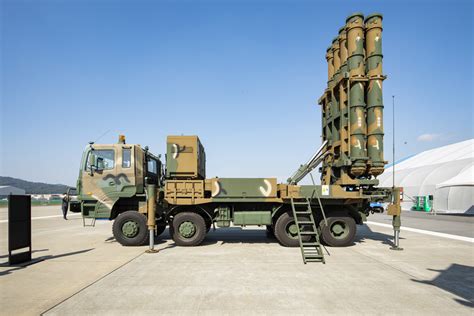
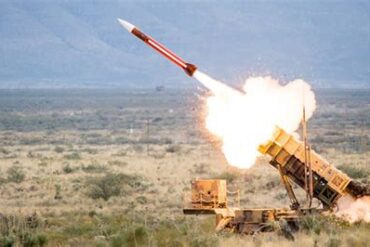
Within this complex defensive network, the Cheongung II medium-range surface-to-air missile system played a crucial role. Integrated alongside U.S.-supplied Patriot missile defense batteries, the South Korean platform reportedly engaged and destroyed at least one incoming ballistic missile. Although Patriot systems remain the backbone of Gulf missile defense architecture, the successful interception by Cheongung II demonstrates how new defense technologies are increasingly integrated into multi-layered interception frameworks.
The First Combat Test of South Korea’s Cheongung II Missile Defense System
The engagement represents the first documented combat interception by a South Korean-developed air defense platform. While Cheongung II had undergone extensive testing during development, real combat conditions present vastly different challenges. Incoming missiles in wartime environments often travel at extreme speeds, follow unpredictable trajectories, and may be accompanied by electronic warfare measures designed to confuse radars and guidance systems.
Despite those complications, the Cheongung II battery deployed in the UAE successfully tracked and destroyed the incoming threat, validating years of development by South Korea’s defense industry. The achievement provides a powerful demonstration of the system’s reliability under operational conditions and reinforces Seoul’s growing reputation as a serious global supplier of advanced military technology.
For defense manufacturers, combat validation is the gold standard. Many sophisticated systems perform well in controlled testing environments but remain unproven until confronted with real hostile targets. The Cheongung II interception therefore represents not merely a tactical success but also a strategic milestone for South Korea’s expanding defense export sector.
How the Cheongung II System Works
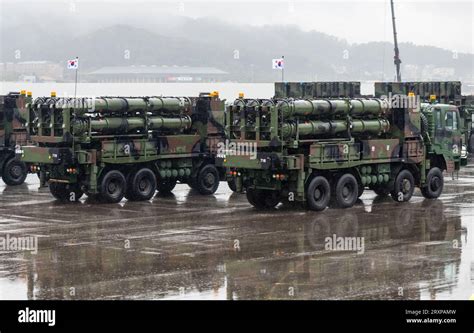
The Cheongung II, officially designated KM-SAM Block II, is a medium-range surface-to-air missile system designed to intercept aircraft, cruise missiles, and ballistic missiles during their terminal flight phase. The system forms the middle layer in a comprehensive air defense structure, bridging the gap between long-range strategic interceptors and short-range point defense systems.
Each Cheongung II battery is built around a modular architecture designed for mobility and rapid deployment. A typical battery includes:
- Four to six mobile launcher vehicles
- Eight interceptor missiles per launcher
- A multifunction fire-control radar
- A command-and-control vehicle coordinating engagements
This configuration enables the system to track dozens of targets simultaneously and engage multiple threats in rapid succession, an essential capability when facing coordinated missile or drone swarms.
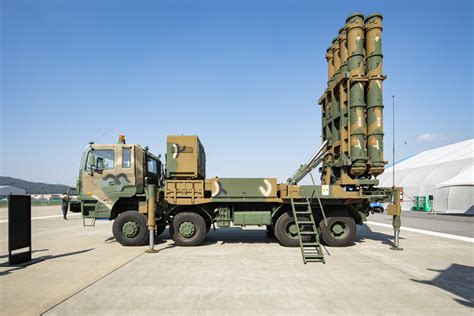
The interceptor itself weighs approximately 400 kilograms and employs a hit-to-kill interception method. Instead of relying on an explosive warhead, the missile destroys its target through direct kinetic impact, essentially colliding with the incoming missile at extremely high velocity. This approach increases interception precision and reduces the risk of unexploded debris falling onto protected areas.
The missile travels at speeds approaching Mach 5, equivalent to roughly 6,100 kilometers per hour. At these velocities, even small guidance errors could result in a miss, so the system relies on highly sophisticated tracking and guidance technology.
Radar Technology and Guidance Capabilities
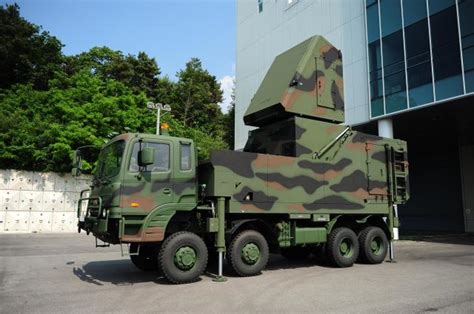
At the heart of the Cheongung II system lies an advanced X-band passive electronically scanned array radar. This radar is responsible for detecting incoming threats, tracking their trajectories, and guiding interceptor missiles toward their targets. The sensor rotates at approximately 40 revolutions per minute, scanning the sky continuously while maintaining coverage across a wide elevation range.
The radar can reportedly detect aerial targets at distances approaching 100 kilometers and track up to 40 objects simultaneously. This capability becomes particularly important during large missile attacks, where dozens of incoming projectiles may appear on radar screens within seconds.
Once a target is detected, the system initiates a complex guidance sequence. The interceptor initially navigates using inertial guidance, a navigation technique relying on internal sensors that track movement relative to the missile’s launch point. During midcourse flight, the missile receives data-link updates from the ground radar, refining its trajectory as the target continues moving.
In the final phase, the missile activates its own onboard active radar seeker, allowing it to independently track and collide with the incoming threat during the final seconds of interception. The entire engagement sequence—from detection to interception—may occur within minutes or even seconds depending on the target’s speed and altitude.
The Role of Cheongung II in Layered Air Defense
Modern missile defense systems operate on a principle known as layered interception, where multiple defensive systems cover different ranges and altitudes. This layered architecture ensures that if one system fails to destroy an incoming missile, another system may still intercept it at a different stage of flight.
In the United Arab Emirates, Cheongung II operates as the medium-range layer within this defensive network. Long-range interceptors such as Patriot batteries engage threats at higher altitudes and greater distances, while Cheongung II focuses on intercepting ballistic missiles during their terminal descent phase, when they are approaching defended targets.
The system also provides coverage against aircraft and cruise missiles, making it versatile enough to defend military bases, urban centers, and vital infrastructure such as oil facilities and ports.
Because the entire Cheongung II battery is mounted on mobile vehicles, it can be repositioned quickly depending on evolving threats. This mobility allows commanders to protect multiple strategic locations over time, rather than relying on fixed defensive installations.
Development of South Korea’s KM-SAM Program
The origins of the Cheongung II system date back more than two decades. South Korea began developing the KM-SAM program in 2001, seeking to replace the aging MIM-23 Hawk surface-to-air missile system that had protected the country’s airspace since the Cold War.
The program combined domestic engineering with foreign technical assistance, producing a modern missile defense platform tailored to South Korea’s evolving security environment. The Block I variant reached completion around 2011, while the more advanced Block II configuration entered operational service in 2017.
Block II introduced significant improvements, particularly in ballistic missile interception capability. The upgrade reflected growing concerns about regional missile threats and the need for a more sophisticated national air defense structure capable of countering both aircraft and ballistic weapons.
Development continues today. In 2024, South Korea launched work on the KM-SAM Block III, a next-generation variant expected to feature active electronically scanned array radar technology and a significantly extended interception range.
Expanding South Korean Defense Exports in the Middle East
The successful interception in the UAE also highlights the rapid expansion of South Korea’s defense exports, particularly in the Middle East. Over the past decade, Gulf states have increasingly diversified their procurement strategies, seeking alternatives to traditional Western defense suppliers.
The United Arab Emirates became the first foreign customer for Cheongung II in 2022, signing a $3.5 billion contract for ten batteries. The deal involved several major South Korean defense firms, including LIG Nex1, Hanwha Systems, and Hanwha Aerospace, all of which played key roles in developing the system.
At least two batteries have already been deployed within the UAE, where they now operate as part of the country’s integrated missile defense network.
The UAE purchase triggered additional regional interest. Saudi Arabia signed a $3.2 billion contract in 2024 to acquire the Cheongung II system, while Iraq followed with a $2.8 billion agreement, making it the third Middle Eastern operator.
This growing demand reflects both the rising missile threat environment in the Gulf and the desire among regional governments to diversify military procurement sources rather than relying solely on U.S. defense systems.
A Combat Milestone for South Korea’s Defense Industry
The successful interception over the UAE carries implications far beyond a single missile engagement. For South Korea, it demonstrates that domestically developed missile defense technology can perform effectively under real combat conditions, strengthening confidence among current and potential buyers.
For Gulf states facing frequent missile and drone attacks, the event underscores the value of multi-layered defense networks combining systems from multiple countries. Such diversification improves resilience and reduces strategic dependence on any single supplier.
In the complex chessboard of modern air defense, where missiles travel faster than sound and decisions unfold in seconds, the Cheongung II’s first combat interception represents a decisive proof of capability. It signals the arrival of South Korea as a serious player in the global missile defense market and highlights how rapidly the landscape of military technology suppliers is evolving in the twenty-first century.