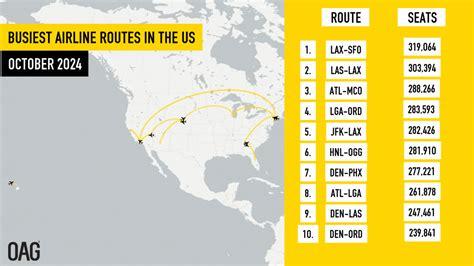
The United States boasts one of the most intricate and expansive domestic air travel networks in the world, serving a geographically vast and demographically diverse population. As of July 2025, the busiest airline routes in the country reveal a mix of high-frequency business corridors, leisure-heavy connections, and strategic inter-hub flights. While some names on the list are predictable, the third-busiest route may surprise even seasoned travelers — the short but potent Las Vegas to Los Angeles connection.
#1: New York LaGuardia (LGA) to Chicago O’Hare (ORD) — 306,970 Seats
Topping the chart is the LaGuardia to O’Hare route, a classic business-heavy corridor. With 306,970 scheduled seats, this route plays a vital role in connecting two economic powerhouses: New York City and Chicago. Operated by nearly every major U.S. airline, including American, Delta, and United, this air bridge remains a cornerstone for corporate travel, financial linkages, and political mobility. Frequent departures — sometimes as often as every 30 minutes during peak periods — demonstrate the relentless demand. LaGuardia’s proximity to Manhattan and O’Hare’s unrivaled Midwest connectivity make this pairing the very definition of a business-class workhorse.
#2: New York JFK to Los Angeles (LAX) — 306,621 Seats
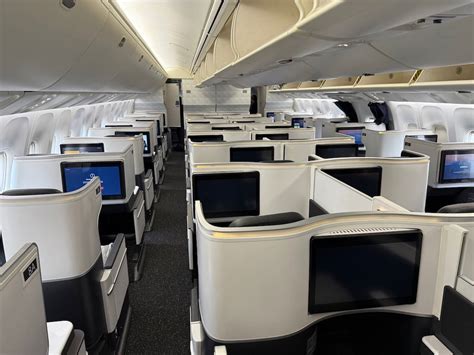
Just 349 seats behind the top route, JFK to LAX is the quintessential transcontinental flagship. With 306,621 seats scheduled in July 2025, this high-profile route offers the most premium cabin density of any domestic U.S. pairing. Flagship First, Delta One Suites, and United Polaris all make appearances here, underlining the prestige of the corridor. While LaGuardia and O’Hare serve short-haul suits, JFK-LAX is the stage for brand-defining products, complete with flatbeds, chef-curated meals, and branded lounges.
#3: Las Vegas (LAS) to Los Angeles (LAX) — 285,056 Seats
Here’s the surprise: Las Vegas to Los Angeles isn’t just a party shuttle — it’s the third-busiest domestic route in the U.S., handling 285,056 seats this month alone. This 45-minute hop connects two tourism titans and serves as a pipeline for both leisure travelers and frequent gamblers. What makes this surprising isn’t the demand, but the volume. It’s rare for such a short-distance leisure route to rival transcontinental flights and business trunk lines in scale.
Part of the explanation lies in frequency: Southwest Airlines, Spirit, Delta, United, and American all fight for dominance on this route, and fares are often cheaper than a tank of gas. The result? High turnover, high density, and a seat count that eclipses major inter-hub routes.
#4: Atlanta (ATL) to Orlando (MCO) — 280,840 Seats
The fourth busiest route connects Delta’s megahub in Atlanta with Florida’s family-favorite Orlando. With 280,840 seats, this corridor caters to theme park-bound tourists, business conventions, and southern leisure travelers alike. Orlando’s universal appeal — anchored by Walt Disney World and Universal Studios — keeps the route booming year-round. Delta dominates, but Southwest and Frontier are also significant players here.
#5: Los Angeles (LAX) to Chicago O’Hare (ORD) — 272,607 Seats
The LAX to ORD route is another busy trans-regional path with 272,607 seats, driven largely by airline hub-to-hub operations. With American and United maintaining major presences at both airports, this corridor becomes a frequent flyer playground and a key link for Midwest-to-Pacific traffic. Notably, LAX features on half of the top ten busiest domestic routes, reflecting its cross-regional centrality in the U.S. aviation network.
LAX’s Dominance: 5 Appearances in the Top 10
Los Angeles International Airport, with its strategic Pacific location and sprawling catchment area, appears five times in the U.S. top ten busiest route list:
- LAX to JFK
- LAX to Las Vegas
- LAX to Chicago O’Hare
- LAX to San Francisco
- LAX to Honolulu
This makes LAX the single most recurring airport on the busiest routes chart — a testament to its power as a coast-to-coast connector, Pacific gateway, and tourism magnet.
Intrastate Giant: Los Angeles to San Francisco — 268,365 Seats
Coming in at number six is California’s busiest internal route, LAX to SFO. With 268,365 scheduled seats, this pairing serves Silicon Valley commuters, state government traffic, and a large chunk of leisure travelers. Despite its relatively short flying time, the route remains one of the most critical air corridors in the U.S., particularly given the limited high-speed rail options between the two cities.
LAX to Honolulu: The Busiest Non-Contiguous Route — 259,642 Seats
The seventh place goes to LAX to Honolulu, clocking in at 259,642 seats — the most of any U.S. route beyond the Lower 48. This route is crucial for Hawaiian tourism, as California is the state’s largest visitor source. Airlines like Hawaiian, United, and American offer both premium cabin products and budget options, with some flights featuring widebody aircraft such as the Boeing 777 or Airbus A330.

Seattle to Anchorage: Alaska’s Lifeline — 256,738 Seats
In eighth place, the Seattle-Anchorage route with 256,738 seats represents more than just tourism; it’s Alaska’s vital connection to the continental U.S. Operated extensively by Alaska Airlines and supported by Delta, the route serves cargo, commuting oil workers, tourists, and residents alike. It’s the only route on the list where seasonal weather patterns and remote logistics can heavily influence capacity.
Island Hop: Honolulu to Kahului — 255,267 Seats
Number nine is a short-haul marvel: Honolulu to Kahului, clocking in with 255,267 seats. Despite being a small inter-island route, it consistently ranks among the top for frequency and total flights, given the lack of ferry infrastructure between Hawaiian islands. Hawaiian Airlines, Southwest, and Mokulele make dozens of daily hops between Oahu and Maui.
Chicago O’Hare to Denver — 230,670 Seats
Rounding out the top ten is ORD to DEN, connecting two United Airlines strongholds. With 230,670 seats, this route underscores the importance of Denver’s growing role as a central hub and ORD’s legacy as a crossroads of American aviation. It’s also the most western-Midwestern pairing in the top ten, threading together two cities with rising populations and expanding air traffic footprints.
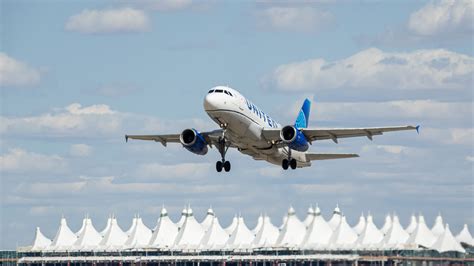
Why the U.S. Ranks Lower Globally Despite High Volume
Though the U.S. is the world’s largest aviation market, its domestic routes are surprisingly absent from the global top ten busiest domestic routes. This is largely due to airport dispersal and geographic spread. Cities like New York are served by multiple major airports (JFK, LGA, EWR), and sprawling metro areas often split traffic among various terminals. In contrast, countries like Japan, South Korea, and Vietnam operate in geographically compact, high-density zones, consolidating demand onto a few corridors.
As a result, routes like Seoul Gimpo to Jeju (1.2 million seats) and Tokyo Haneda to Sapporo (1.1 million) dwarf the U.S.’s busiest in sheer seat volume. The U.S. market is more fragmented and diversified, creating many busy routes but fewer mega-corridors.
Growth Trends: Capacity Swings and Airline Strategies
In 2025, several U.S. routes saw significant year-over-year changes:
- LGA to ORD rose 6% year-over-year
- JFK to LAX rose 10%
- LAX to ORD rose 9%
However, some saw declines:
- Anchorage to Seattle dropped by 12%
- Honolulu to Kahului declined by 11%
Airlines also increased their capacity in response to post-pandemic travel booms:
- United Airlines added 1.2 million seats (YoY)
- Delta Air Lines added 785,000 seats
- American Airlines added 640,900 seats
- Breeze Airways, though smaller, saw a 44% increase in capacity, adding 225,000 seats
Final Thoughts: A Snapshot of an Evolving Sky
The list of America’s busiest air routes in 2025 reflects a complex balance of business needs, leisure trends, airport infrastructure, and airline strategy. While New York, Chicago, and Los Angeles remain dominant, new surprises — like Las Vegas to Los Angeles — signal shifting patterns in how Americans travel. As airlines refine fleets and chase profits, the race to serve high-demand routes remains a critical battleground in the post-pandemic aviation economy.