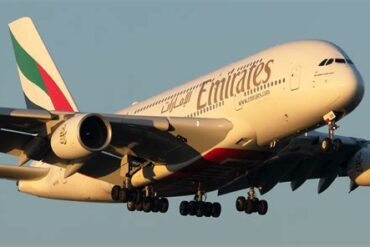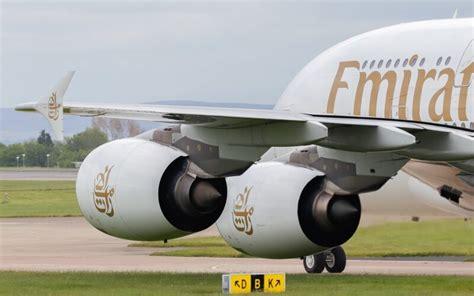
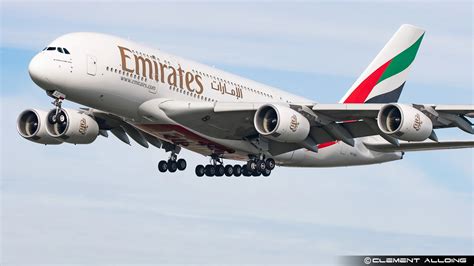
We present an in-depth exploration of Emirates’ Airbus A380 operations across the United States, examining how the world’s largest operator of the superjumbo continues to anchor premium long-haul capacity in several of the nation’s most influential aviation markets. The Airbus A380, once envisioned as a revolutionary solution for high-density long-haul travel, has evolved into a rare and distinguished presence in global skies. Emirates, however, has elevated the aircraft into a defining pillar of its long-haul strategy, positioning it as the flagship on routes where passenger demand consistently supports its immense seating and service capabilities.
The A380 program’s early struggles—production delays, rising operating costs, and a global shift toward more efficient twin-engine aircraft—led many airlines to move away from the type. Yet Emirates expanded its commitment over two decades, ultimately operating 118 A380s, with more than 150 active worldwide today. This unmatched scale has enabled the carrier to curate a global network where the superjumbo remains not only viable but commercially valuable, particularly in the United States.
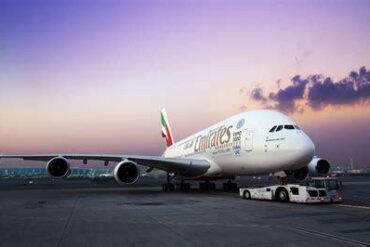
In the present network, Emirates operates the A380 daily to Washington Dulles International Airport, Houston Intercontinental, New York JFK, Los Angeles International Airport, and San Francisco International Airport, with JFK enjoying two daily A380 flights. These routes form the backbone of its American A380 footprint, connecting the Middle East with established business hubs and major long-haul markets.
New York JFK holds a special place in the airline’s A380 history. It became the first US airport to receive Emirates’ superjumbo, and for years stood as the carrier’s only A380 destination in the country. Today, JFK remains the busiest A380 market for Emirates, supported by robust business travel, steady inbound tourism, and the airline’s acclaimed fifth-freedom service between Milan Malpensa and New York JFK. This transatlantic link began with the Boeing 777 nearly a decade ago and matured into a high-yield corridor, prompting an upgrade to the A380 as demand strengthened.
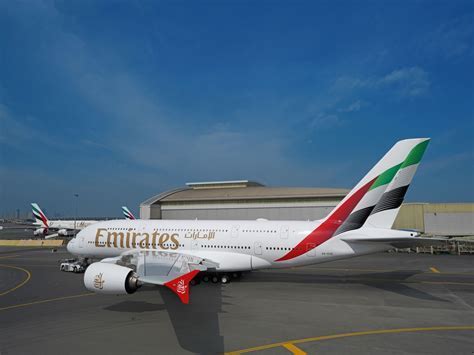
Los Angeles International Airport: West Coast Gateway for High-Density Demand
Emirates expanded its A380 network to Los Angeles International Airport (LAX) in 2013, tapping into one of the largest long-haul aviation markets in the world. LAX’s diverse passenger demographics—spanning entertainment industry travelers, Middle Eastern diaspora communities, and premium leisure demand—created a stable foundation for superjumbo operations. The route’s high stage length also aligns well with the aircraft’s capabilities, allowing Emirates to market one of the longest A380 flights in its network.
Houston Intercontinental: The Only Daily A380 Service Left in the Market
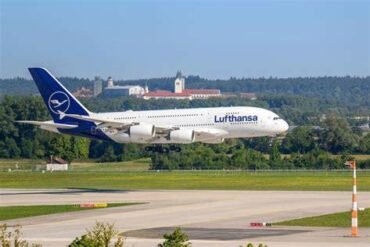
Among the most interesting A380 deployments is Emirates’ service to Houston Intercontinental, which stands today as the only daily superjumbo operation in a market that no longer sees regular A380 flights from other carriers. The airline launched its Houston service in 2007 using the Boeing 777-200LR, later transitioning to the A380 in December 2014. Lufthansa briefly operated the A380 to Houston in 2012, making Emirates the second carrier to bring the aircraft to the Texas hub.
The aircraft did not remain continuously on the route; from 2016 to 2018, Emirates temporarily reverted to the Boeing 777. Its restoration of the A380 reflects renewed demand and Houston’s strong mix of oil-industry travel, global commerce, and international connectivity.
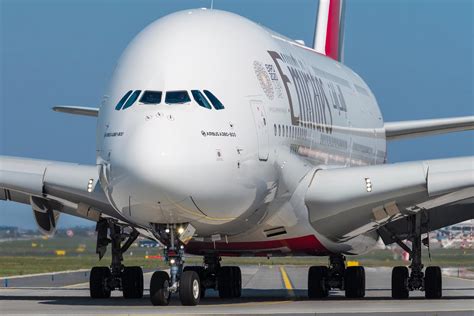
Washington Dulles International Airport: A Strategic Reinstatement
Washington Dulles (IAD) is the most recent addition to Emirates’ current A380 network in the United States. The carrier launched service to the US capital in September 2012 with the 777-200LR, later shifting to the 777-300ER. The A380 first arrived at IAD in February 2016, following a major change in local market dynamics. When United Airlines withdrew from the Washington–Dubai route in January 2016, a substantial capacity gap emerged. Emirates filled this void with the A380, strengthening its presence in a government-centric market with a high concentration of diplomatic and international travel.
Although there were suggestions in 2023 that Emirates might remove the A380 from the route, the aircraft was reinstated in 2024, reaffirming its strategic importance and the long-term viability of the market.
San Francisco International Airport: High-Tech Corridors and Long-Haul Demand
Emirates added San Francisco International Airport (SFO) to its A380 network in 2014, capitalizing on the Bay Area’s significant concentration of global technology firms, premium corporate traffic, and strong links to South Asia and the Middle East. The A380’s large upper-deck premium cabins are particularly well suited to SFO’s corporate travel base, while its high capacity helps Emirates match the region’s steady year-round demand.
Historical A380 Routes: Boston, Dallas/Fort Worth, Chicago, and Orlando
Beyond the current network, Emirates previously operated A380 services to Boston, Dallas/Fort Worth, Chicago, and Orlando, though these deployments varied in duration and commercial performance. Dallas/Fort Worth saw the A380 between October 2014 and February 2016, replacing the Boeing 777 and adding 446 more seats per day. While this expansion offered a remarkable increase in capacity, load factors shifted from 84% on the 777 to 66% on the A380, with several months dipping below 60%. The mismatch between demand and the aircraft’s scale ultimately led to the route’s downgrade.
Boston experienced a daily A380 service from June 2019 to January 2020, replacing the 777-300ER and increasing available capacity by more than 30%. Remarkably, the route maintained an 87% load factor—identical to the previous year’s performance—showing that the market could absorb the larger aircraft. Chicago and Orlando, by contrast, only saw single-event A380 appearances for inaugural ceremonies and infrastructure evaluations.
A380 Outlook: Emirates’ Continued Investment in a Rare Global Asset
The Airbus A380 has become increasingly rare in global operations, yet Emirates continues to treat the aircraft as a vital competitive asset. Its extensive cabin layout, signature onboard lounges, and unrivaled seating capacity allow the airline to differentiate itself in key long-haul markets where demand remains reliably high. In the United States, these five airports represent anchor points in the carrier’s transcontinental strategy and continue to reflect long-term commercial stability.
As the global fleet contracts and other airlines retire the type, Emirates’ A380 network stands out as a unique symbol of high-capacity, long-haul connectivity. Its sustained presence in the United States demonstrates both market strength and the airline’s commitment to offering one of the world’s most distinctive widebody travel experiences.