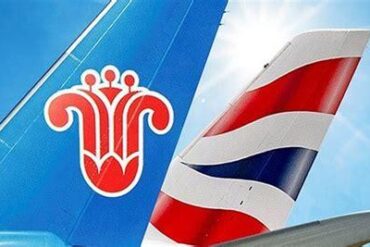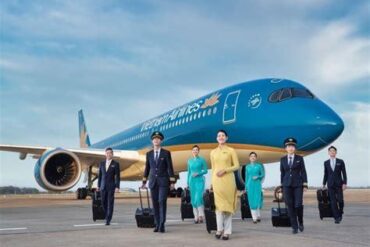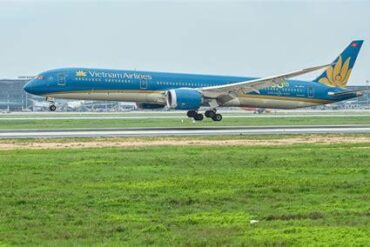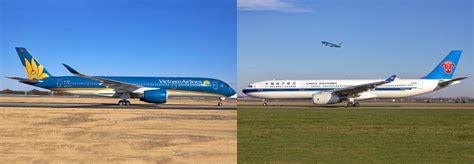
The skies between Vietnam and China are entering a transformative phase as Vietnam Airlines and China Southern Airlines officially kick off their much-anticipated joint venture beginning August 1, 2025. This unprecedented partnership marks the first formal aviation coalition between a Vietnamese and a Chinese carrier, signifying more than just shared air routes—it symbolizes a deepening geopolitical and commercial alliance between two of Asia’s fastest-growing economies.
For travelers and aviation analysts alike, this move signals a strategic pivot in regional connectivity, promising an era of seamless travel, increased flight frequencies, and elevated passenger services. More importantly, it unfolds a new layer of integration underpinned by the Belt and Road Initiative (BRI) and Vietnam’s own transnational economic vision.
Strategic Integration of Air Networks
The core objective of this joint venture is to build a unified and efficient flight network that not only expands the capacity between major hubs like Guangzhou, Hanoi, Ho Chi Minh City, and Shanghai, but also harmonizes operations through code-sharing, schedule synchronization, and shared airport resources.
Instead of competing over routes and frequencies, the two airlines are combining strengths to create a fluid schedule architecture. Passengers flying from Vietnam to China—or vice versa—will now benefit from more flight choices, shorter layovers, and better interline connectivity.
With over 160 weekly flights planned between the two countries, the enhanced service levels are tailored not just for the casual tourist, but for the frequent corporate traveler and the expanding base of cross-border students, entrepreneurs, and professionals.
Passenger-Centric Innovations and IATCI Benefits
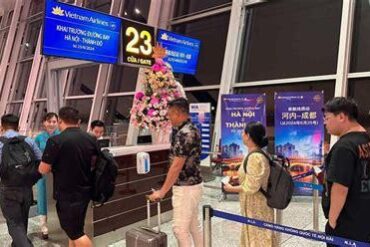
One of the most substantial upgrades for passengers is the implementation of Inter-Airline Through Check-in (IATCI). This technology allows travelers to check-in once for up to three consecutive flights involving both airlines, bypassing the need for re-check-ins during transit. It’s a game-changer for long-haul and multi-destination passengers, simplifying what was previously a disjointed travel experience.
Additional passenger enhancements include:
- Priority check-in and boarding for loyalty members and business class travelers.
- Increased baggage allowances for select ticket classes.
- Integrated frequent flyer programs, enabling point accumulation and redemption across both carriers.
- Streamlined boarding gates and optimized layover times at major hubs such as Guangzhou Baiyun International Airport and Noi Bai International Airport.
This joint investment in customer experience sets a new benchmark for intra-Asian air travel, especially for routes that have historically lacked seamless coordination.
Guangzhou–Nha Trang and the Rise of New Tourism Corridors
With routes connecting Nha Trang to Guangzhou, and newly aligned itineraries from Hanoi to Shanghai and Ho Chi Minh City to Guangzhou, the venture enables new leisure corridors to flourish. These routes not only cut down travel time significantly but also bolster local economies dependent on international visitors.

From Chinese travelers seeking Vietnam’s golden beaches and tropical islands, to Vietnamese tourists exploring the historical silk routes and modern skylines of eastern China, this strategic connection opens mutually beneficial tourism flows. The venture is expected to enhance visibility for secondary cities, promoting destinations beyond the mega metropolises.
Cultural Diplomacy in the Year of People-to-People Exchanges
The timing of the joint venture couldn’t be more symbolically potent. 2025 has been officially designated the China–Vietnam Year of People-to-People Exchanges, an initiative to foster bilateral cultural, economic, and societal bonds.
By aligning air travel with diplomatic messaging, the two governments are using aviation as a tool for soft power and regional solidarity. It dovetails with larger infrastructural ambitions such as:
- China’s Belt and Road Initiative (BRI): Enhancing maritime and air logistics.
- Vietnam’s “Two Corridors, One Economic Circle”: Strengthening ties with southern Chinese provinces.
Together, these frameworks form a regional blueprint for connectivity that’s both infrastructural and interpersonal.
Operational Efficiency and Future-Proofing Southeast Asian Air Travel
From an operational standpoint, this alliance enables both airlines to optimize fleet deployment, reduce redundant operations, and share ground-handling and maintenance resources at key terminals. Hubs like Hanoi, Da Nang, and Guangzhou will serve as strategic interchange points, carefully curated to accommodate timed layovers with minimum hassle.
The coordinated scheduling between the carriers ensures that flights are placed to allow near-seamless transfers, turning potential layovers into efficient pit stops. For instance, a traveler flying from Shanghai to Da Nang via Guangzhou might now experience a total layover of less than 90 minutes—a substantial improvement over past schedules.
In addition, shared airport lounges, faster immigration handling for transit passengers, and unified customer support platforms will add layers of comfort that frequent flyers will immediately recognize.
Geopolitical Undercurrents and Aviation Diplomacy
While this initiative is primarily economic, the strategic symbolism cannot be overlooked. China and Vietnam—nations with a complex historical backdrop—are engaging in aviation diplomacy as a tool for reconciliation and future cooperation.
In an era where air travel shapes economic gravity, regional joint ventures like this offer not only business benefits but national prestige and geopolitical alignment. This isn’t just about flight seats and check-ins—it’s about trust-building and economic interdependence.
The expansion of soft connectivity via aviation could serve as a precursor to broader infrastructure synergies, possibly influencing upcoming high-speed rail projects, cross-border digital logistics platforms, and regional tourism packages.
Corporate Travelers, Digital Nomads, and Cross-Border Business Gains
Business travelers will particularly welcome the new schedule design. Companies operating in both countries—especially those in technology, finance, and manufacturing sectors—can now benefit from early morning departures and late evening returns, enabling full working-day trips.
Vietnam’s growing popularity as a base for digital nomads and remote professionals also gains from the venture, offering them low-friction travel paths to the thriving tech and startup hubs in Shenzhen, Shanghai, and Guangzhou.
These improvements not only boost corporate productivity but also serve the growing MICE (Meetings, Incentives, Conferences, Exhibitions) travel segment, which has rebounded significantly in both countries since early 2024.
Looking Forward: A Model for ASEAN-China Aviation Cooperation
What Vietnam Airlines and China Southern Airlines have accomplished is likely a blueprint for regional aviation diplomacy. Other ASEAN members observing this partnership may soon pursue similar alliances with larger Chinese carriers, ushering in a new generation of integrated Southeast Asian airspaces.
Such integration supports the formation of a de facto ASEAN-China air travel corridor, marked by consistent service quality, unified booking systems, and harmonized airport experiences. If the current joint venture proves successful, the concept could expand into trilateral or multilateral frameworks with participation from Thailand, Malaysia, or Indonesia.
Conclusion: A Historic Flight Path to a Shared Future
This joint venture is more than a milestone—it’s a movement toward next-gen regional aviation. Vietnam Airlines and China Southern Airlines are not just transporting passengers; they’re transporting possibilities.
With shared values, technological integration, and a keen awareness of global air travel trends, this partnership is set to reshape how travelers experience the Vietnam–China air corridor—faster, smarter, and better connected than ever before.
As the inaugural flights take off this August, they do so not just with passengers on board—but with the hopes of two nations soaring into a cooperative future.