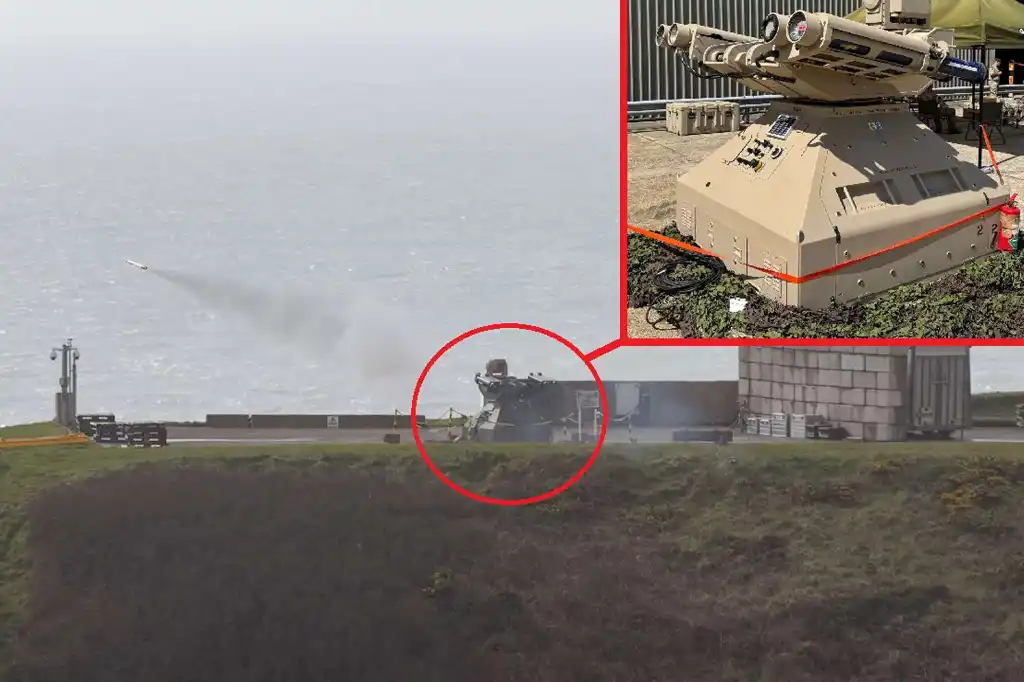
The United Kingdom has taken a decisive step in redefining modern airbase defense, deploying a multi-layered counter-drone architecture designed not merely to intercept threats, but to ensure uninterrupted air operations under pressure. At the center of this transformation is a tightly integrated system combining ORCUS detection, NINJA electronic warfare, and Rapid Sentry missile interception, forming a cohesive defensive shield for Royal Air Force installations.
This development signals a strategic pivot. Instead of reacting to drone incursions as isolated events, the UK is now engineering continuous protection ecosystems capable of identifying, managing, and neutralizing threats in real time. The emphasis is clear: protect the runway, preserve sortie generation, and deny adversaries the ability to disrupt airpower at its source.
A Strategic Shift Toward Airbase Survivability
The proliferation of low-cost, highly adaptable unmanned aerial systems has fundamentally altered battlefield dynamics. Lessons drawn from conflicts in Eastern Europe and the Middle East have demonstrated that even rudimentary drones can cripple high-value air assets, disrupt logistics, and force operational standstills.
Against this backdrop, the UK’s deployment is not a symbolic upgrade—it is a doctrinal evolution. The Royal Air Force is prioritizing airbase survivability as a core operational requirement, recognizing that control of the skies begins with securing the ground infrastructure that enables it.
This layered defense model ensures that threats are addressed at multiple points along the engagement spectrum, reducing reliance on any single system and increasing overall resilience. It reflects a deep understanding that modern warfare demands redundancy, adaptability, and precision under pressure.
ORCUS: The Intelligence Backbone of Counter-Drone Defense
At the foundation of this architecture lies ORCUS, a sophisticated detection system engineered to compress the decision-making timeline between threat identification and response. Rather than functioning as a standalone sensor, ORCUS integrates multiple technologies into a unified detection framework.
It combines:
- Advanced radar systems to identify low radar cross-section targets
- Radio-frequency detection to locate control signals and communication links
- Ultra-long-range thermal imaging for continuous visual tracking
This fusion enables operators to construct a high-fidelity air picture around protected airbases, distinguishing between benign activity and credible threats with remarkable speed.
The operational advantage is profound. By accurately classifying drone behavior early—whether reconnaissance, nuisance, or attack—defenders can implement proportionate responses rather than defaulting to costly or disruptive measures. This reduces false alarms, conserves resources, and maintains operational tempo.
In essence, ORCUS transforms detection from a passive function into an active decision engine, ensuring that every subsequent action is informed, timely, and precise.
NINJA: Precision Electronic Warfare in a Crowded Battlespace
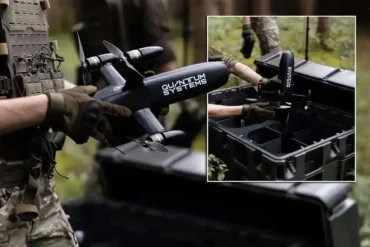
Sitting at the heart of the system’s response layer is NINJA, an advanced electronic warfare capability designed to neutralize threats without kinetic engagement whenever possible. This “soft-kill” approach represents both tactical efficiency and strategic restraint.
NINJA operates by:
- Detecting and analyzing drone communication links
- Disrupting control signals through targeted interference
- Potentially taking control of hostile drones, forcing them to land or divert
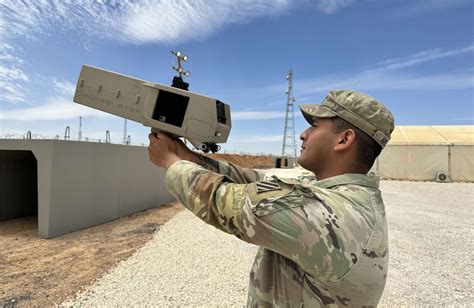
This capability is particularly valuable in complex environments where airbases coexist with civilian airspace, friendly aircraft movements, and coalition operations. A missile strike, while effective, carries inherent risks. Electronic disruption, by contrast, offers a surgical solution that minimizes collateral damage.
Beyond immediate threat neutralization, NINJA provides a critical intelligence advantage. Captured or diverted drones can be exploited for forensic analysis, revealing operator tactics, origin points, and technological signatures. This transforms each engagement into an opportunity to strengthen future defenses.
However, the system is not designed as a standalone solution. Electronic warfare has limitations, especially against autonomous drones or hardened communication links. This reality underscores the necessity of a layered approach.
Rapid Sentry: The Kinetic Endgame Capability
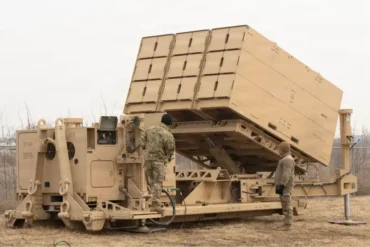
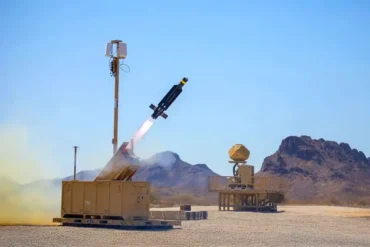
When electronic measures fail or when threats escalate beyond acceptable risk thresholds, Rapid Sentry delivers the final line of defense. This system integrates radar-guided targeting with the Lightweight Multirole Missile (LMM), providing a high-precision kinetic response.
The missile itself is engineered for modern engagement scenarios:
- Speed exceeding Mach 1.5, enabling rapid interception
- Range beyond 6 kilometers, extending defensive coverage
- Laser beam-riding guidance, ensuring pinpoint accuracy
- Optimized for low collateral damage, critical in dense operational zones
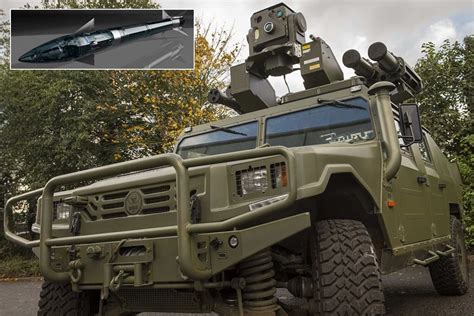
Unlike traditional air defense systems designed for large-scale threats, Rapid Sentry is tailored for precision engagements against small, agile targets. It is not intended to indiscriminately eliminate every drone, but to provide a reliable last-resort option against those that evade earlier layers.
This distinction is crucial. By reserving kinetic responses for high-risk scenarios, the system preserves missile stocks while maintaining credible deterrence against determined attacks.
Integrated Kill Chain: From Detection to Neutralization
What sets this deployment apart is not the individual capabilities, but their integration into a seamless operational workflow. The system embodies a compressed kill chain, where detection, identification, decision, and engagement occur in rapid succession.
ORCUS identifies and tracks. NINJA disrupts and exploits. Rapid Sentry destroys when necessary.
This synergy ensures that airbases are not forced into reactive shutdowns or excessive defensive postures. Instead, they maintain continuous operational readiness, even under sustained drone pressure.
The result is a defensive architecture that prioritizes efficiency over brute force, enabling commanders to allocate resources intelligently while maintaining control of the battlespace.
Coalition Interoperability and Global Relevance
The UK’s approach is not confined to national defense. These systems are actively integrated into coalition operations, working alongside allied forces to maintain a unified air picture and coordinated response framework.
Joint deployments and multinational exercises have demonstrated the importance of interoperability in counter-UAS operations, where fragmented responses can create vulnerabilities. By aligning its systems with allied architectures, the UK is contributing to a broader effort to establish standardized, scalable counter-drone defenses.
This cooperative model enhances situational awareness, accelerates response times, and ensures that allied airbases operate as mutually reinforcing nodes rather than isolated targets.
The Emerging Doctrine of Anti-Drone Economy
At its core, the UK’s deployment reflects a sophisticated understanding of what can be described as an anti-drone economy—a strategic balance between cost, capability, and operational impact.
The guiding principles are clear:
- Detect widely to maintain comprehensive awareness
- Disrupt cheaply to neutralize threats efficiently
- Destroy selectively to preserve resources and minimize risk
This framework acknowledges a fundamental reality of modern warfare: adversaries can deploy drones at scale and at low cost. Countering them requires not just advanced technology, but a sustainable operational model that avoids disproportionate expenditure.
Preparing for the Next Evolution of Drone Warfare
While the current system represents a significant leap forward, the challenge is far from static. Emerging threats include autonomous swarms, AI-driven targeting, and saturation attacks designed to overwhelm layered defenses.
The UK’s architecture is inherently adaptable, but its long-term effectiveness will depend on continued innovation, integration, and scaling. Future developments may include enhanced automation within the kill chain, expanded sensor networks, and deeper integration with cyber and space-based assets.
What is already evident, however, is that the battlefield has shifted. Air superiority is no longer determined solely by advanced aircraft, but by the ability to protect the infrastructure that sustains them.
The deployment of ORCUS, NINJA, and Rapid Sentry marks a decisive step in that direction—transforming airbase defense from a reactive necessity into a proactive, resilient system designed for the realities of drone warfare.