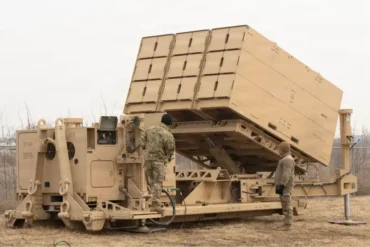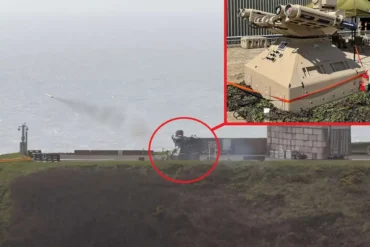
The United States has quietly but decisively strengthened the protection of its forward-deployed forces in the Middle East with the operational deployment of the Electronic Advanced Ground Launcher System (EAGLS), a mobile counter-drone air defense solution tailored for today’s most persistent battlefield threat: low-cost unmanned aerial systems. Confirmed by U.S. Central Command (CENTCOM) on January 18, 2026, the move reflects a broader shift in American force protection strategy, one that favors precision, adaptability, and cost-effective interception over reliance on high-end missile defenses alone.
Small drones have transformed from niche reconnaissance tools into ubiquitous instruments of harassment and attack. Armed groups across the region now employ commercially available or improvised systems to probe base defenses, collect intelligence, and, in some cases, deliver explosive payloads. These threats operate in the uncomfortable gray zone below the engagement threshold of traditional air defense systems, forcing militaries to rethink how they defend fixed sites, logistics hubs, and dispersed units.
The deployment of EAGLS is part of that rethink. Rather than attempting to swat inexpensive drones with million-dollar interceptors, the Pentagon is introducing a system designed to restore a favorable cost-exchange ratio while preserving layered air defense depth.
Adapting Force Protection to a Drone-Saturated Battlespace
The Middle East has become a proving ground for counter-unmanned aircraft systems, and not by choice. Persistent drone activity has demonstrated how even crude platforms can generate strategic effects by disrupting operations, exhausting defenses, and forcing constant vigilance. Traditional solutions such as Patriot PAC-3 or THAAD remain essential against ballistic and cruise missile threats, but they are ill-suited for daily drone engagements.
EAGLS addresses this gap directly. Developed by MSI Defense Solutions, the system is optimized for short-range air defense against small, slow, and low-flying aerial targets. Its purpose is not to replace existing systems, but to complement them, creating a layered defensive architecture where each interceptor is matched appropriately to the threat.
By deploying EAGLS to multiple operational sites, U.S. forces are effectively adding a close-in precision shield that can respond rapidly to drone incursions without draining high-value missile inventories.
EAGLS Design: Precision Through Simplicity
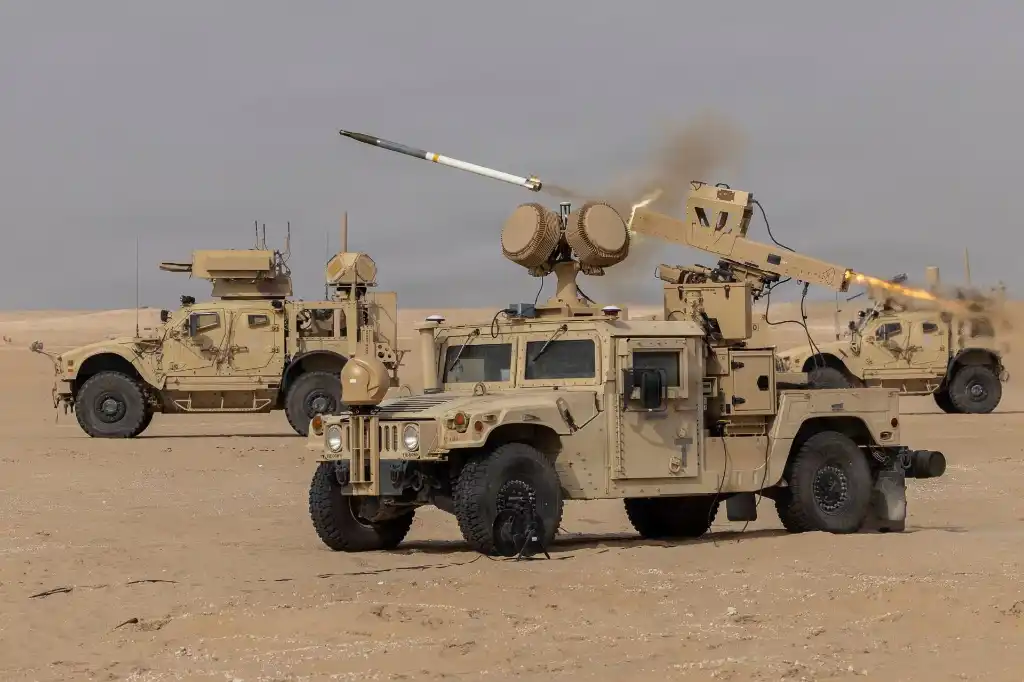
At the heart of EAGLS is a deceptively simple concept: adapt a proven rocket system for air defense and give it guidance precise enough to hit aerial targets. The launcher is built around a 70 mm rocket pod, a familiar sight on attack helicopters and ground vehicles, repurposed here for counter-drone missions.
What transforms this launcher from a blunt instrument into a precision system is its use of laser-guided munitions, specifically the Advanced Precision Kill Weapon System II (APKWS II). This guidance kit converts the standard Hydra 70 rocket into a semi-active laser-guided interceptor, capable of engaging small aerial targets with high accuracy at a fraction of the cost of traditional surface-to-air missiles.
The engagement envelope, measured in several kilometers, is well-matched to Group 1 and Group 2 drones, which typically operate at low altitudes and moderate speeds. For commanders facing frequent drone contacts, this balance of range, precision, and affordability is the system’s defining advantage.
Sensor Fusion and Fire Control at Short Range
Precision interception depends as much on sensing as it does on munitions. EAGLS integrates a layered sensor suite designed to detect, track, and engage small aerial threats that often evade conventional radars.
A key component is the Leonardo DRS RPS-40 radar, a compact surveillance system capable of detecting low-flying targets at ranges of up to 10 kilometers. This radar provides early warning and cueing, allowing the system to rapidly acquire drones that may appear with little notice.

Complementing the radar is an electro-optical and infrared sensor turret, which supports visual tracking, target confirmation, and laser designation. This combination enables EAGLS to operate autonomously or as part of a broader air defense network, sharing tracks and engagement data through existing command-and-control systems.
The result is a system that can respond quickly, discriminate effectively, and engage precisely, even in cluttered environments where small drones attempt to blend into background noise.
Mobility and Integration in Forward Areas
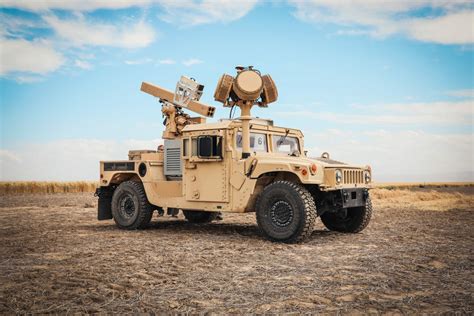
One of EAGLS’s most important attributes is its mobility. The launcher and sensor package are typically mounted on a tactical vehicle, allowing rapid repositioning as threat vectors change. This mobility is critical in the Middle East, where bases range from well-established installations to temporary or semi-austere sites.
EAGLS can escort maneuver units, defend logistics nodes, or reinforce vulnerable sectors with minimal setup time. Its integration with existing U.S. air defense architecture ensures it does not operate in isolation, but rather as part of a multi-tiered defense system that includes electronic warfare assets, higher-tier missile defenses, and manned aviation.
This flexibility makes EAGLS particularly valuable in scenarios where adversaries seek to overwhelm defenses through volume rather than sophistication.
Lessons From Recent Conflicts
Confidence in the APKWS-based approach has grown through real-world operational experience. In 2025, Ukrainian forces reported intercepting a Kh-69 cruise missile using an APKWS-derived solution, an engagement that underscored the adaptability of laser-guided rockets when paired with effective sensors and fire control.
While such high-end interceptions remain exceptional, they reinforce the underlying logic of EAGLS: precision-guided rockets can fill roles once reserved for far more expensive systems, provided expectations are aligned with their design limits.
Strategic Implications and Recognized Constraints
From a strategic perspective, the deployment of EAGLS signals a shift toward sustainable air defense in an era of persistent, low-cost threats. By preserving high-end interceptors for complex targets and using guided rockets for routine engagements, U.S. forces can maintain readiness without bleeding resources.
There are, however, acknowledged limitations. Laser guidance requires a clear line of sight and can be degraded by dust, smoke, or adverse weather, all common features of Middle Eastern operating environments. The system’s short-range focus also restricts its effectiveness against higher-altitude or high-speed targets.
These constraints reinforce EAGLS’s role as a close-in defensive layer, not a standalone solution.
A Measured but Meaningful Shift in U.S. Air Defense Posture
The fielding of EAGLS across Middle Eastern bases reflects a pragmatic adaptation to modern warfare’s asymmetries. Rather than chasing technological overmatch at any cost, the Pentagon is investing in systems that deliver practical effectiveness, economic sustainability, and operational flexibility.
As drone threats continue to evolve, lessons learned from EAGLS deployments in the Middle East are likely to influence force protection strategies far beyond the region. In that sense, EAGLS is not just a new weapon system, but a signal of how future air defense will balance precision, affordability, and resilience in an increasingly crowded sky.