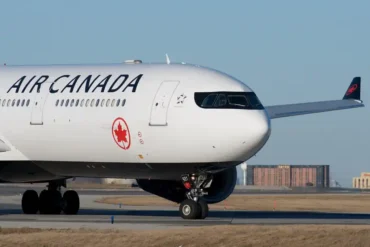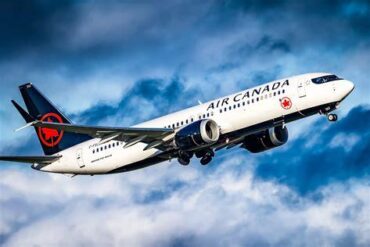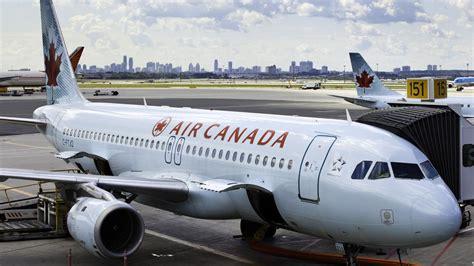
Air Canada has abruptly canceled its planned seasonal nonstop service between Montréal–Trudeau International Airport (YUL) and Seattle-Tacoma International Airport (SEA), withdrawing the route roughly two months before it was scheduled to resume on May 1, 2026. The quiet removal of the flights from booking channels has caught industry observers and passengers off guard, particularly given the route’s previously published capacity and frequency data.
The service was set to operate using the Airbus A220-300, one of Air Canada’s most efficient and modern narrowbody aircraft. Designed for thin transcontinental and transborder markets, the A220 is tailored for routes like Montreal to Seattle—long enough to demand range efficiency, yet not dense enough to justify larger widebody jets. The cancellation suggests deeper structural or political pressures influencing airline planning decisions rather than aircraft performance constraints.
Schedule data from Cirium had projected nearly daily frequencies in May and June 2026. In May alone, Air Canada had been expected to operate 27 roundtrip flights, offering approximately 3,699 seats. June capacity was only marginally lower, with around 3,562 seats planned across 26 flights. Those numbers reflected confidence in demand recovery—confidence that has now clearly evaporated.
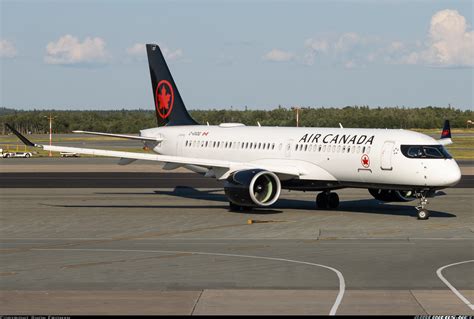
Air Canada’s Silent Route Withdrawal Raises Questions
Notably, the airline has made no formal public announcement explaining the cancellation. The absence of press statements underscores how airlines increasingly manage network adjustments behind the scenes, allowing booking engines to quietly reflect strategic recalibrations.
Travelers searching for Montreal–Seattle itineraries are now offered connection options instead. Air Canada reroutes passengers via Vancouver International Airport (YVR) or Toronto Pearson International Airport (YYZ), extending total travel time while preserving network connectivity. Another alternative involves a codeshare partnership with United Airlines, connecting through Chicago O’Hare International Airport (ORD) before continuing onward to Seattle.
While these alternatives maintain route access, they eliminate the competitive advantage of a nonstop flight—a critical factor for business travelers. Direct service between Quebec’s largest city and the U.S. Pacific Northwest had positioned Air Canada to capture corporate demand tied to technology, aerospace, and trade sectors linking Montreal and Seattle.
The originally scheduled seasonal window was expected to run from May 1 through October 13, 2026. Pulling the route entirely rather than trimming frequency signals a broader shift rather than minor demand volatility.
Political Headwinds and the Cross-Border Chill
The deeper story appears inseparable from deteriorating U.S.–Canada political relations. Since early 2025, cross-border travel demand has weakened significantly amid heightened trade tensions and aggressive tariff policies introduced by the Trump administration.
Canadian consumer sentiment toward the United States has shifted dramatically. Travel data suggests a measurable cooling effect, with Canadian bookings to U.S. destinations dropping by as much as 75% for certain summer periods in 2025. Year-over-year comparisons into early 2026 show roughly a 24% decline in cross-border travel.
The economic repercussions have been substantial. The U.S. travel industry reportedly lost $4.5 billion in 2025 due to reduced Canadian tourism. Some segments have been disproportionately affected—Canadian bookings for U.S. National Park tours, for example, reportedly fell by over 90%.
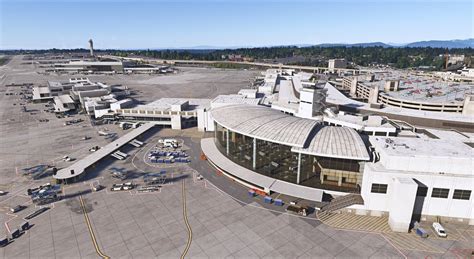
Montreal–Seattle may have fallen victim to this broader contraction. Seattle traditionally draws Canadian visitors for tech conferences, cruise departures to Alaska, and leisure travel. Yet if Canadian demand for U.S. travel softens structurally rather than cyclically, seasonal secondary routes become vulnerable.
The so-called #ElbowsUp movement, symbolizing Canadian resistance to U.S. trade policies, has influenced consumer behavior beyond retail products. Surveys indicate a strong preference among Canadians to substitute domestic or non-American travel alternatives. In that context, airlines must rapidly adapt capacity to avoid flying half-empty aircraft.
Airline Industry Ripple Effects Across North America
Air Canada’s decision does not stand in isolation. WestJet has suspended flights to multiple U.S. cities for the current season. Air Canada itself has signaled a 10% capacity reduction to several American leisure markets, while other Canadian carriers have trimmed or eliminated U.S. exposure.
Airlines operate on razor-thin margins. When demand softens by even single-digit percentages, profitability evaporates quickly. Seasonal routes—by definition—carry additional risk, as they rely heavily on concentrated peak demand. If forward bookings fail to materialize by winter planning cycles, airlines redeploy aircraft to stronger markets.
The Airbus A220-300 offers exceptional fuel efficiency, yet even the most advanced aircraft cannot overcome macroeconomic and political headwinds. Airlines plan schedules six to twelve months in advance, but they also retain flexibility to withdraw if booking curves fail to meet thresholds.
The Broader Geopolitical Undercurrent
The cancellation unfolds against an unusually tense backdrop for what has historically been the world’s most stable and integrated bilateral border. Rhetoric suggesting economic coercion, tariff escalation, and even symbolic references to annexation have amplified uncertainty.
Infrastructure cooperation has also entered a more fragile phase. The new $4.5 billion bridge connecting Detroit and Windsor has reportedly faced political pressure. On the defense front, questions surrounding Canada’s planned acquisition of 88 Lockheed Martin F-35 stealth fighters have fueled debate about long-term military alignment within NORAD, the North American Aerospace Defense Command.
While aviation routes are commercial decisions, airlines operate within geopolitical ecosystems. Trade disputes affect corporate travel. Currency volatility alters leisure demand. Political rhetoric influences consumer confidence. The Montreal–Seattle route exists within that ecosystem.
What This Means for Travelers
For passengers, the immediate consequence is longer travel time and reduced convenience. Nonstop flights compress time zones and eliminate missed-connection risk. Reintroducing layovers introduces complexity, especially during peak summer congestion.
For Seattle, the loss represents a modest but symbolic reduction in Canadian connectivity. For Montreal, it removes a direct link to a West Coast innovation hub. The route may return if demand stabilizes, but seasonal routes are often trial balloons. Once deflated, they are not always reinflated quickly.
Air Canada’s quiet withdrawal highlights a larger reality: aviation networks are living systems. They respond instantly to shifts in economics, politics, and passenger psychology. When consumer sentiment shifts across borders, even sophisticated fleet planning cannot insulate airlines entirely.
The Montreal–Seattle cancellation may ultimately prove temporary. Yet it stands as a precise indicator of how swiftly geopolitics can ripple through commercial aviation. In an industry measured in seat miles and load factors, political climate can matter as much as fuel price.
Air travel has long symbolized the openness of the U.S.–Canada relationship. The disappearance of a single seasonal route does not dismantle that bond—but it does reveal how fragile even the most stable corridors can become when winds change direction.