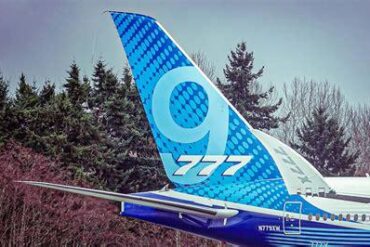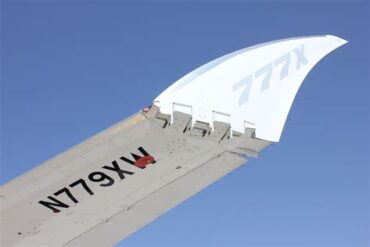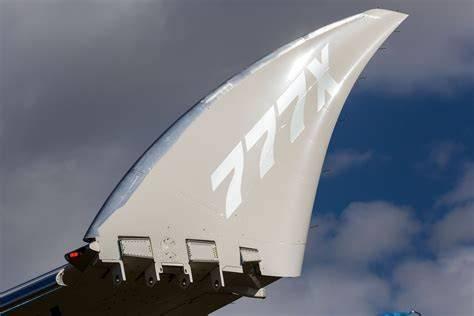
The Boeing 777X represents one of the most ambitious upgrades ever attempted for a successful widebody aircraft family. While the aircraft introduces new GE9X engines, an advanced carbon-fiber composite wing, and updated cabin technology, one of its most recognizable features is also one of its most unusual: folding wingtips.
At first glance, the idea seems like a modern solution created specifically for the 777X. However, Boeing actually studied folding wingtips for the original Boeing 777 program in the 1990s. The concept existed decades before the 777X entered development, but technology, airline demand, and airport requirements were not aligned enough to make it practical.
The story of Boeing’s folding wingtip is therefore not simply about engineering capability. It is about timing. A solution that was unnecessary and overly complex in the 1990s became an essential feature in the era of ultra-efficient long-range aircraft.
The Boeing 777X Needed A Larger Wing For Better Efficiency
The original Boeing 777 became one of the most successful commercial aircraft ever built. Introduced in the 1990s, it quickly became the preferred choice for airlines operating long-distance routes because it combined excellent range, strong reliability, and lower operating costs compared with four-engine aircraft.
However, aviation technology continued to advance. The arrival of aircraft such as the Airbus A350 and Boeing 787 Dreamliner changed expectations for fuel efficiency. These newer aircraft used lightweight composite materials, highly efficient engines, and optimized aerodynamic designs.
To compete in this environment, Boeing needed a major improvement for the 777 family. The answer was the 777X, especially the larger 777-9 variant, which received a completely redesigned wing.
The new wing was designed to improve aerodynamic efficiency during cruise, where long-range aircraft spend most of their flight time. A longer wingspan reduces induced drag and improves lift-to-drag performance, allowing an aircraft to burn less fuel.
However, there was a major problem.
A larger wing creates airport compatibility issues.
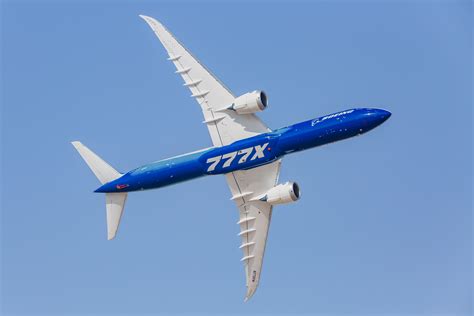
The Boeing 777X wing measures 235 feet 5 inches (71.8 meters) across, making it the widest wing ever installed on a Boeing commercial aircraft. It is even wider than the Boeing 747-8.
While this massive wingspan provides significant aerodynamic benefits, it pushes the aircraft beyond the limits of many existing airport gates.
Airport Gate Restrictions Created The Folding Wingtip Challenge
Airports are designed around standardized aircraft size categories. The International Civil Aviation Organization (ICAO) classifies aircraft according to wingspan, with Code E gates accommodating aircraft up to approximately 213 feet (65 meters).
The existing Boeing 777 family was designed to fit comfortably within this category. The original 777-200 and 777-300 variants could operate from many airports without requiring special infrastructure.
The 777X, however, would normally fall into the larger Code F category, which includes aircraft such as the Airbus A380 and Boeing 747-8.
This creates a significant operational disadvantage.
Airlines do not simply choose aircraft based on performance. They also consider where those aircraft can fly. An aircraft that requires specialized gates, taxiway modifications, or airport upgrades becomes less flexible.
The Airbus A380 demonstrated this challenge clearly. Although technically impressive, its size limited its airport compatibility. Many airports had to invest heavily in infrastructure upgrades, while some destinations could not accommodate it at all.
Boeing wanted to avoid creating the same problem with the 777X.
The solution was surprisingly simple: keep the aircraft’s large wing for flight but reduce its size on the ground.
How The Boeing 777X Folding Wingtip System Works
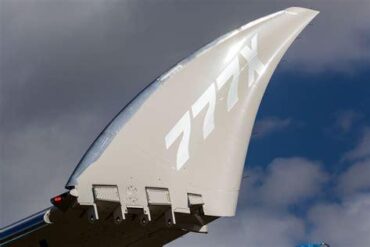
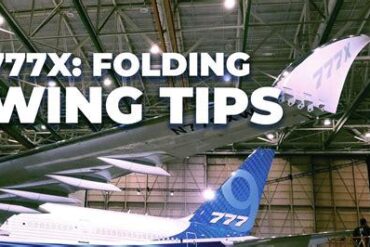
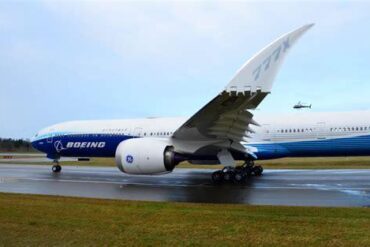
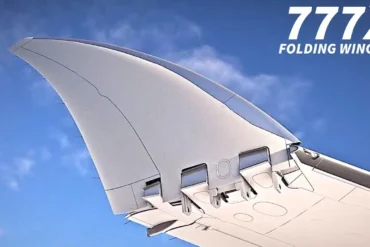
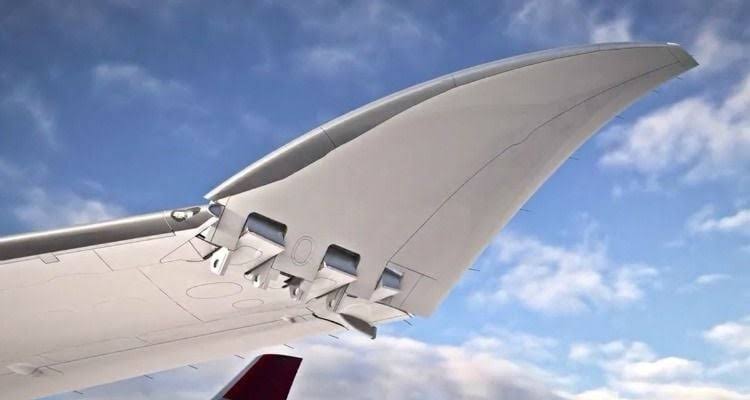
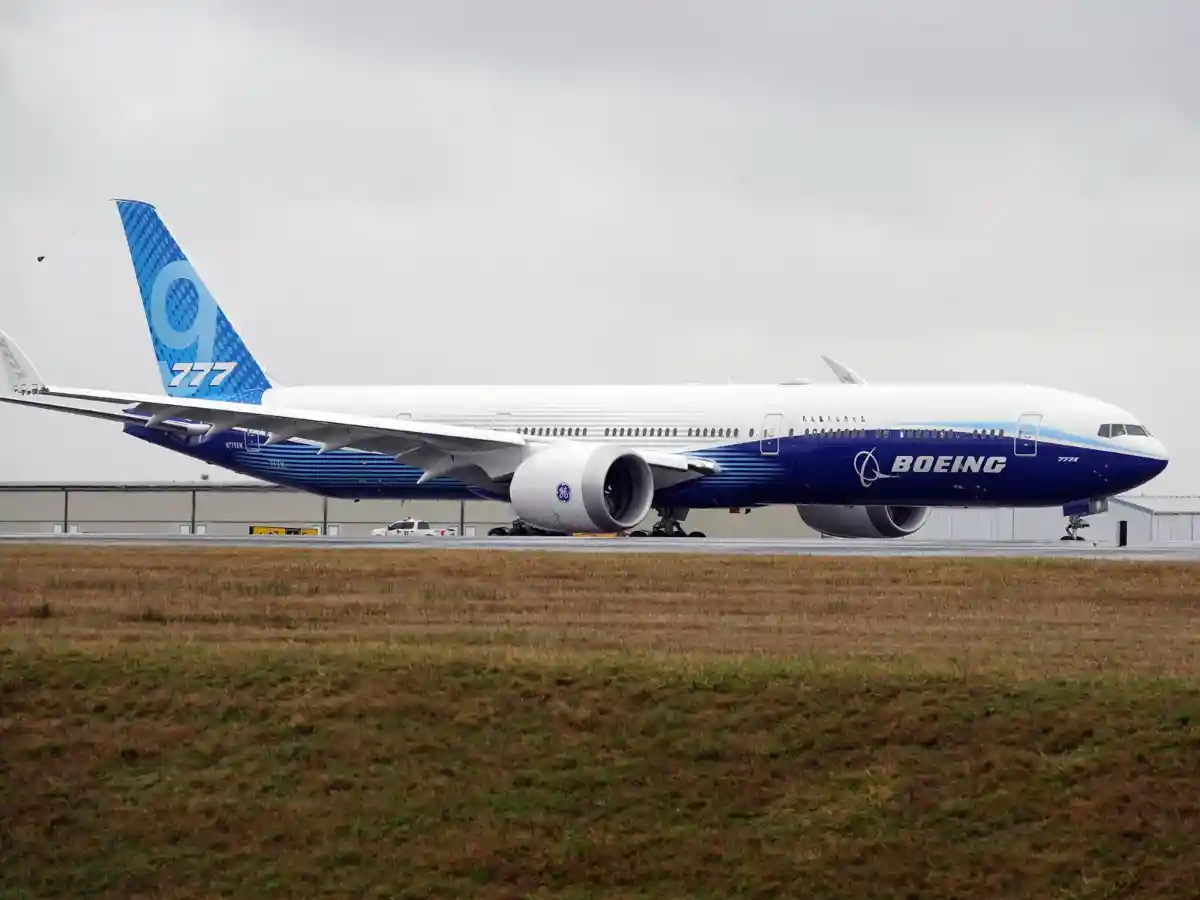
The Boeing 777X folding wingtip system allows the outer section of each wing to rotate upward after landing.
Each wingtip section measures approximately 11 feet 4 inches (3.45 meters) and folds upward using a hydraulic actuator. When extended during flight, the wing reaches its full 235-foot wingspan. When folded, the aircraft’s wingspan decreases to approximately 212 feet 9 inches (64.8 meters).
This allows the 777X to operate using existing Code E airport gates designed for earlier 777 models.
The system is controlled directly from the flight deck. After landing, the wingtips automatically fold once the aircraft slows below approximately 50 knots. Before takeoff, pilots extend the wingtips again as part of the departure procedure.
Safety is ensured through mechanical locking systems. Locking pins prevent accidental movement during flight, ensuring the wing behaves as a conventional fixed structure while airborne.
One reason the 777X system was possible is that the folding section is located in the outer wing area. Unlike the original 1990s proposal, the modern design does not require major changes to critical flight-control systems.
The wingtip essentially functions as an aerodynamic extension rather than a major structural control surface.
Boeing Already Considered Folding Wingtips For The Original 777
The surprising part of the 777X story is that Boeing had already considered this technology more than 30 years earlier.
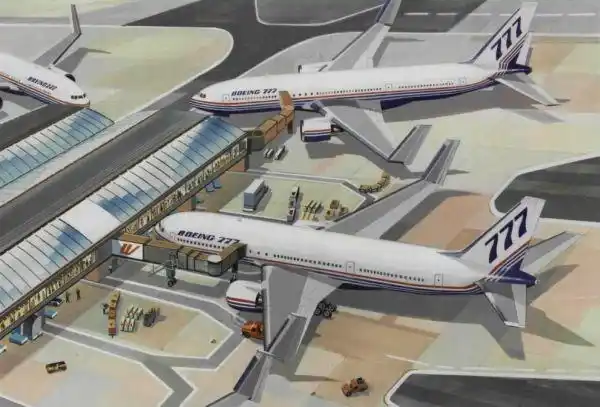
During the early development of the Boeing 777 in the 1990s, the company offered airlines an optional folding wingtip system. Some early aircraft designs even included structural provisions for the mechanism.
However, the original concept was very different from the 777X solution.
The first 777 folding wingtips would have been much larger. Each wingtip section would have extended approximately 21 feet (6 meters). More importantly, the folding area would have included the aircraft’s ailerons.
This created a much more complicated engineering challenge.
The ailerons are essential flight-control surfaces that help pilots control aircraft roll. Moving these systems through a folding mechanism would have required additional control routing, increased weight, and greater maintenance complexity.
At the time, the technology was possible, but the benefits were limited.
Why Airlines Rejected Folding Wingtips On The First Boeing 777
The original Boeing 777 had a different mission compared with the 777X.
When Boeing launched the 777 program in 1990, the company initially targeted aircraft that could replace older widebody jets such as the McDonnell Douglas DC-10 and Lockheed L-1011 TriStar.
The early 777-200 was intended partly as a high-capacity aircraft for shorter, high-demand routes. A folding wingtip would have allowed it to operate from airports with smaller gates.
But airline demand changed.
Instead of using the 777 primarily as a short-haul widebody, airlines quickly adopted it as a long-range aircraft. The 777-200ER became the most successful early variant, receiving far more orders than the original 777-200.
Long-haul operations typically used major international airports that already had infrastructure designed for large aircraft, including the Boeing 747.
As a result, the original 777’s wingspan was not a serious problem.
The folding wingtip became unnecessary.
Airlines also preferred simplicity. The additional weight, maintenance requirements, and engineering complexity offered little operational advantage for most customers.
One example was American Airlines, which considered a 777-200 with folding wingtips for operations from New York LaGuardia Airport. However, regulatory restrictions prevented the airline from using an aircraft as large and heavy as the 777 from that airport.
The business case disappeared.
Without strong airline demand, Boeing removed the folding wingtip provisions from later 777 aircraft.
Why The 777X Folding Wingtip Finally Made Sense
The difference between the original 777 and the 777X comes down to one key factor: the value of a larger wing increased dramatically.
In the 1990s, Boeing could achieve sufficient performance without creating an extremely large wing. The aircraft did not need maximum aerodynamic efficiency because competition and fuel prices were different.
By the 2010s and 2020s, fuel efficiency became one of the most important factors in airline economics.
The 777X needed a much larger wing to compete against newer aircraft. Without the increased wingspan, Boeing could not achieve the fuel savings required to justify a new-generation aircraft.
The folding wingtip was no longer an optional feature.
It became the technology that allowed Boeing to combine two conflicting goals: maximum aerodynamic performance in the air and airport compatibility on the ground.
The modern system also benefited from decades of advances in materials, hydraulics, computer controls, and aircraft design.
What was once a complicated engineering compromise became a practical solution.
The Future Of Folding Wing Technology In Commercial Aviation
The Boeing 777X may be the first major commercial aircraft to introduce folding wingtips, but the idea is likely to spread.
Future aircraft designs face the same challenge: longer wings improve efficiency, but airports have fixed infrastructure.
Airbus has also researched folding wingtip technology as part of future aircraft development. Projects such as the company’s advanced wing research programs have explored ways to create longer, thinner wings while maintaining airport compatibility.
This trend is especially important for future narrowbody aircraft. As airlines increasingly operate single-aisle jets on longer routes, manufacturers may need larger wings to improve fuel efficiency.
A future aircraft replacing models such as the Airbus A321neo or Boeing 737 MAX could potentially require folding wing technology to balance aerodynamic performance with airport limitations.
Boeing’s 777X Folding Wingtip Shows That Timing Matters In Aviation
The history of Boeing’s folding wingtip demonstrates that good engineering ideas are not always adopted immediately.
The concept existed in the 1990s, but the market did not need it. The original 777 was successful without it, and airlines saw little reason to accept additional complexity.
Three decades later, the aviation industry faced a different challenge. Aircraft needed larger wings to achieve greater efficiency, but airports could not easily expand their infrastructure.
The 777X folding wingtip became the bridge between those two realities.
It is not simply a clever mechanical feature. It represents how commercial aviation evolves through a combination of engineering innovation, airline economics, and operational necessity.
A technology can wait decades before becoming useful. In the case of Boeing’s folding wingtip, the idea was not ahead of its time. It was waiting for the right aircraft.