Russia’s evolving arsenal in its full-scale invasion of Ukraine continues to surprise military analysts, but one of the most curious developments is the repurposing of 1990s-era Dan-M target drones as attack UAVs. These drones, originally intended for air-defense training exercises, are now being used in combat roles, raising questions about Moscow’s strategic calculations, military capacity, and psychological warfare aims.
The Dan-M Drone: From Target Practice to Tactical Weapon
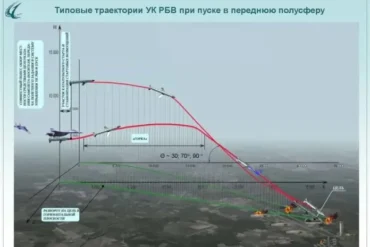
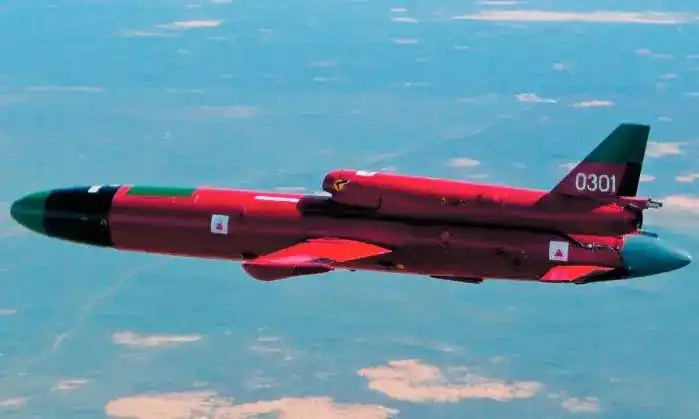
Originally developed by the Sokol Design Bureau in the early 1990s, the Dan-M drone was built to emulate the flight characteristics of Western cruise missiles, particularly the American Tomahawk. With a maximum flight duration of around 40 minutes, jet-powered propulsion, and high subsonic speeds, the Dan-M provided a cost-effective tool for Russian air-defense crews to simulate real threats and hone their interception capabilities.
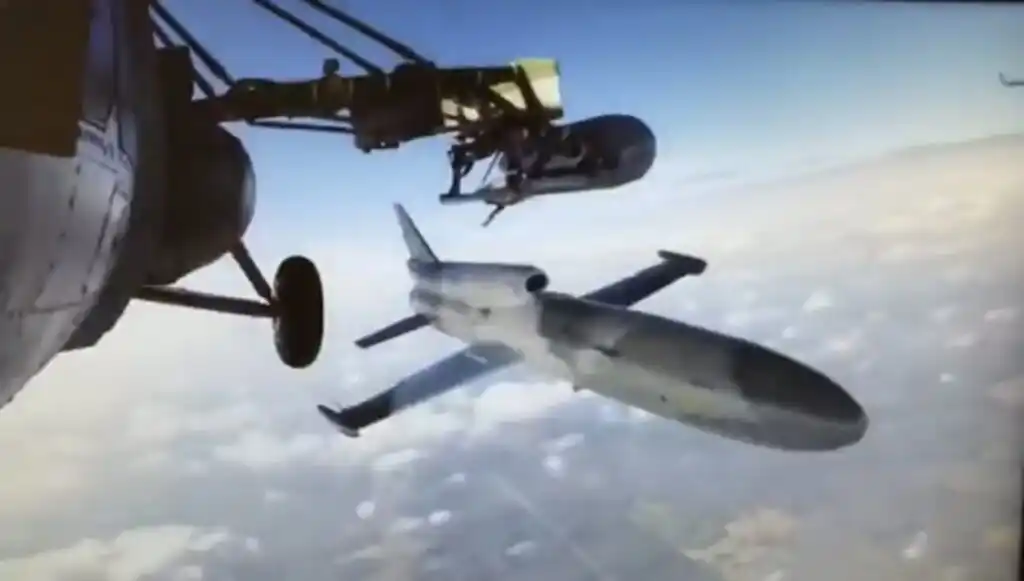
In its original role, the Dan-M was launched from either ground platforms or aircraft and programmed to fly low and fast. If it survived the exercise, it would deploy a parachute for recovery and be reused, with a typical lifespan of up to ten flights. Its red paint and lack of explosive payload made its purpose purely instructional.
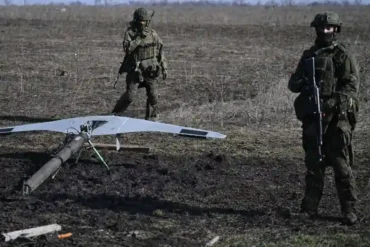
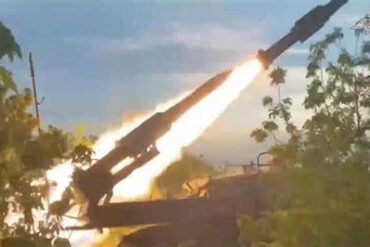
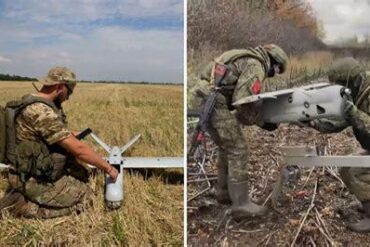
However, the shift from reusable target drone to one-way strike UAV has transformed the Dan-M into a crude but functional weapon. Images and field reports now show these drones repainted in muted tones, stripped of parachutes, and apparently fitted with improvised warheads—likely explosive loads added in place of the recovery system. This adaptation bears striking similarity to Ukraine’s own early-war use of modified Tu-141/143 reconnaissance drones, which were turned into suicide drones out of necessity.
Why Retrofit Obsolete Drones?
The key question that arises is why Russia would deploy such outdated technology in its 2025 campaign, particularly when its high-end precision munitions such as Kh-101, Kh-555 cruise missiles, and Shahed drones remain in active use.
One explanation, offered by Ukrainian drone expert Serhii “Flash” Beskrestnov, points to redundancy. “We did this because we did not have cruise missiles and long-range attack UAVs,” he wrote, referring to Ukraine’s early war strategy. “And why Russia made this modification is unclear.”
It’s plausible that Russia possesses substantial stockpiles of Dan-M drones rendered obsolete by the war’s modern dynamics. Russian air-defense units are now regularly engaging real aerial threats from Ukrainian forces. In such a context, the Dan-M’s training value may have diminished, making it a candidate for conversion into a live munition. Instead of letting them sit in storage, Russia appears to have opted to recycle them into expendable weapons.
Technical Simplicity Meets Psychological Warfare
From a tactical standpoint, converting Dan-Ms into kamikaze drones is relatively simple. These drones already possess the aerodynamics and guidance capabilities of cruise missiles. Adding a basic explosive payload—and removing the parachute recovery system—makes them a one-way weapon.
While not technologically advanced or precise, these converted drones can serve a different role: psychological disruption. Russia’s intensifying campaign of aerial terror targets Ukrainian civilians and infrastructure with indiscriminate munitions. In that sense, each Dan-M drone is not merely a munition but part of a broader effort to sow chaos, fear, and fatigue.
Not a Sign of Shortages—Yet
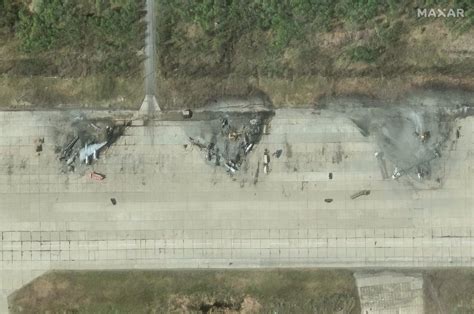
Some have speculated that Russia’s repurposing of Dan-M drones could indicate depletion of advanced weaponry, but this assumption is likely incorrect. On the contrary, Russian forces appear to be expanding their missile and drone inventories despite extensive Western sanctions.
In May 2025 alone, Russian forces conducted two of the largest aerial offensives of the entire war, unleashing over 700 missiles and drones over two nights against Kyiv, Kharkiv, and Odesa. These strikes included Kh-series missiles, Iranian-designed Shahed drones, and KAB guided bombs—sophisticated weaponry with long-range precision capabilities.
The Institute for the Study of War (ISW) noted that these barrages were not just tactical but psychological. “Russian strikes against Ukraine continue to disproportionately impact civilians and civilian infrastructure,” ISW reported, pointing out the cognitive warfare aspects aimed at undermining Western support and domestic Ukrainian resolve.
In this context, the Dan-M doesn’t substitute for high-tech munitions—it supplements them. Its role may be marginal in terms of physical destruction, but meaningful as part of an unrelenting strategy of exhaustion.
Ukraine’s Early Drone Modifications: A Strategic Parallel
The Russian approach to converting old training drones bears clear resemblance to Ukraine’s own efforts in early 2022 and 2023. Facing limited access to high-grade missiles, Ukrainian forces retooled Soviet-era Tu-141 and Tu-143 drones, replacing reconnaissance equipment with explosives to carry out deep strikes on targets across the Russian border.
But unlike Russia, Ukraine’s improvisation stemmed from necessity. It was a transitional strategy until purpose-built systems could be developed and mass-produced. Today, Ukraine operates a growing fleet of indigenous strike drones, including the UJ-22 and various FPV attack drones, rendering the old Tu-series drones obsolete. Russia’s adoption of the Dan-M for combat purposes, by contrast, appears to be more of a strategic augmentation rather than a last resort.
The Real Threat: Volume Over Precision
Where the Dan-M drones lack in technological sophistication, they compensate through sheer numbers and disruption potential. A single modified drone might not take out a key infrastructure node, but in swarm tactics—especially amid coordinated missile attacks—they can overwhelm air defenses, distract radar operators, or sneak through during lulls in anti-air coverage.
This tactic is particularly effective when used alongside waves of cruise missiles and ballistic threats. By saturating air defenses, Russia forces Ukraine to expend valuable interceptor resources on relatively low-value targets like Dan-Ms, while preserving more advanced munitions to penetrate deeper or hit high-value targets.
Conclusion: A Weapon of Psychological and Tactical Efficiency
The use of Dan-M drones as attack UAVs is a reflection of Russia’s multi-layered strategy. It’s not necessarily a sign of desperation, nor is it a breakthrough in drone warfare. Instead, it’s a chillingly pragmatic use of otherwise idle assets, turned into expendable weapons of terror.
Each Dan-M launched toward a Ukrainian city may lack the guidance systems or precision of a modern cruise missile, but it contributes to the wider Russian doctrine of attritional warfare—wear down air defenses, stretch resources thin, and keep Ukrainian cities under constant psychological pressure.
The story of the Dan-M is more than just a footnote in the war; it’s a symbol of how 1990s relics are being fused with 21st-century strategy to wage a new kind of warfare—one where every flying object, no matter how obsolete, becomes a tool of terror.
In the long view, Ukraine’s ability to maintain layered air defenses, secure Western support, and continue technological innovation will determine whether such tactics remain nuisances or strategic failures. But for now, every Dan-M in the skies is a reminder that in modern warfare, nothing is too outdated to kill.