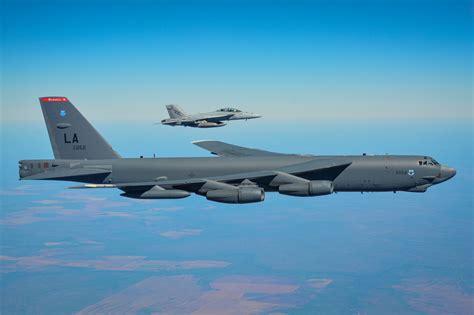
The Boeing B-52 Stratofortress and the Lockheed Martin F-22 Raptor occupy opposite ends of American military aviation history, yet both remain indispensable to the United States Air Force. At first glance, conventional wisdom would suggest that the newer aircraft should be easier to modernize. After all, the F-22 first entered service in the 21st century, while the B-52 dates back to the Eisenhower administration. Surprisingly, the exact opposite has proven true. Today, the Air Force finds it considerably easier—and often more cost-effective—to upgrade a bomber designed in the early 1950s than a stealth fighter conceived during the late Cold War.
The explanation lies not in technological sophistication but in engineering philosophy. The B-52 was built around adaptability, generous internal volume, and conservative structural margins. The F-22, by contrast, was engineered to maximize performance, stealth, and sensor integration within an exceptionally compact airframe. Every design choice that made the Raptor revolutionary also made future modifications extraordinarily complicated. As military technology evolves at an unprecedented pace, these contrasting design philosophies have become one of the clearest demonstrations that future upgrade potential can be just as important as cutting-edge capability at the time of introduction.
Both aircraft continue serving vital but vastly different missions. The B-52 remains America’s premier long-range heavy bomber, capable of delivering conventional and nuclear weapons across intercontinental distances. Meanwhile, the F-22 remains the world’s premier dedicated air superiority fighter, tasked with defeating advanced enemy aircraft and suppressing threats before bombers such as the B-52 enter contested airspace. Their continued relevance depends heavily on modernization, yet the complexity of those upgrades differs dramatically.
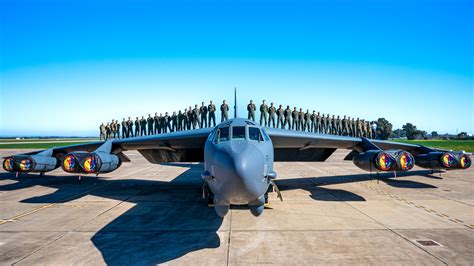
Why The B-52 Was Built With Room To Grow
When Boeing engineers designed the B-52 during the early Cold War, electronics occupied enormous amounts of physical space. Vacuum tubes, analog navigation equipment, radar systems, communications gear, and bombing computers filled entire equipment racks throughout the aircraft. Designers anticipated future maintenance and upgrades, resulting in a remarkably spacious fuselage with significant unused volume and generous access panels.
Ironically, advances in electronics have continuously worked in the B-52’s favor. Equipment that once filled cabinets now occupies compact digital modules only a fraction of their original size. Each modernization cycle has effectively created additional empty space inside the aircraft, allowing engineers to install new communications equipment, electronic warfare suites, networking hardware, mission computers, secure data links, and modern navigation systems without requiring extensive structural redesign.
This abundance of internal volume is accompanied by equally generous reserves in electrical power, cooling capacity, payload allowance, and structural strength. Unlike highly optimized modern fighters, the Stratofortress rarely approaches the physical limits of these supporting systems. Consequently, integrating new hardware usually involves replacing existing equipment rather than redesigning large portions of the aircraft.
The aircraft’s immense size also makes maintenance substantially easier. Technicians can physically access components without dismantling major structural sections, reducing both labor costs and aircraft downtime. Every modernization program benefits from this practical accessibility.
A Conservative Airframe That Refuses To Grow Old
One of the greatest misconceptions surrounding the B-52 is that age automatically translates into structural fatigue. In reality, the bomber’s operating profile has significantly contributed to its extraordinary longevity.
Strategic bombers typically cruise between 35,000 and 50,000 feet, where thinner air produces less aerodynamic loading, lower turbulence, and reduced structural stress than aircraft routinely maneuvering at low altitude or under high-G conditions. While tactical fighters regularly endure violent maneuvering and repeated high-load cycles, the B-52 spends much of its operational life cruising efficiently across long distances.
Flight-hour accumulation further illustrates this difference. Many B-52 airframes have accumulated approximately 15,000 to 30,000 flight hours spread across several decades. Commercial airliners, by comparison, frequently exceed 80,000 to 120,000 hours during much shorter service lives while conducting multiple takeoffs and landings every day.
Because operational hours are distributed relatively evenly across the fleet, structural fatigue has progressed more slowly than many observers might expect. This has enabled the Air Force to confidently plan for continued operations well beyond the bomber’s centennial anniversary.
The F-22 Was Designed For Perfection, Not Constant Evolution
Unlike the B-52, the F-22 emerged during an era when American defense planners believed technological superiority would remain overwhelming for decades.
The Advanced Tactical Fighter program focused on defeating Soviet aircraft that, in many cases, never entered operational service following the collapse of the Soviet Union. Engineers prioritized stealth, unmatched maneuverability, supercruise capability, integrated avionics, and sensor fusion. At the time, these technologies represented such a dramatic leap that many believed only software improvements would be necessary throughout the aircraft’s career.
This assumption fundamentally shaped the aircraft’s architecture.
Rather than leaving generous physical margins for future hardware, designers optimized virtually every cubic inch of the airframe. Components were densely integrated, wiring harnesses carefully routed, cooling systems precisely balanced, and electronic architecture tightly interconnected. Every subsystem depended upon multiple others to maintain peak performance.
That integration delivered exceptional combat capability but significantly reduced flexibility for future modifications.
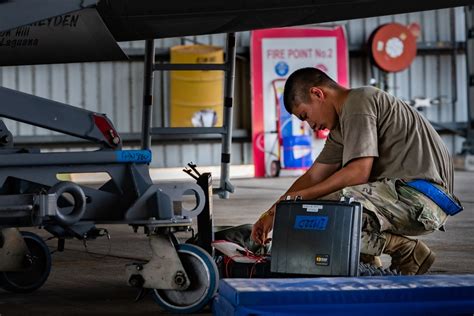
Stealth Makes Every Upgrade More Difficult
Stealth is far more than simply coating an aircraft with radar-absorbing materials. The F-22’s low observable characteristics result from a delicate combination of precisely aligned surfaces, carefully shaped panel edges, specialized materials, internal weapons storage, embedded antennas, and highly controlled manufacturing tolerances.
Changing even one seemingly minor component can affect radar signature.
Installing new antennas may alter electromagnetic reflections. Adding external sensors risks increasing radar cross section. Even relocating internal equipment can influence thermal management or electromagnetic compatibility. Engineers must therefore conduct extensive computational analysis, wind tunnel testing, radar signature evaluation, and flight certification before approving modifications.
These constraints dramatically increase both modernization cost and development timelines.
Unlike conventional aircraft, where replacing a sensor may involve relatively straightforward engineering work, modifications to stealth aircraft frequently require reengineering multiple interconnected systems simultaneously.
Modern Threats Demand New Capabilities
The operational environment facing the F-22 has changed substantially since the aircraft’s original development.
During the 1990s, stealth itself represented a revolutionary advantage. Today, increasingly sophisticated integrated air defense networks combine long-range surveillance radars, passive detection systems, electronic intelligence platforms, airborne early warning aircraft, and advanced surface-to-air missiles into highly networked defensive architectures.
Systems such as Russia’s S-400 Triumf and China’s HQ-9, when connected through integrated command-and-control networks, present challenges that extend well beyond individual missile performance. These Anti-Access/Area Denial (A2/AD) environments require aircraft capable of enhanced electronic warfare, resilient communications, advanced networking, and passive target detection.
Consequently, the Air Force has increasingly prioritized improvements to the F-22’s connectivity, electronic protection, sensor integration, and weapons compatibility.
However, implementing these improvements remains constrained by the aircraft’s tightly integrated physical design.
Weight, Power, And Cooling Become Hidden Obstacles
Every modernization program introduces additional hardware. New processors demand greater electrical power. Advanced sensors generate more heat. Modern electronic warfare equipment requires increased cooling capacity. Enhanced communications consume additional electrical loads.
Large aircraft generally possess reserve capacity for these expanding requirements.
The B-52 enjoys abundant margins in electrical generation, internal volume, structural loading, and cooling infrastructure. Engineers can integrate new systems while maintaining acceptable aircraft performance.
The F-22 possesses far smaller reserves.
Because every pound affects acceleration, maneuverability, fuel efficiency, and stealth characteristics, engineers must carefully balance every hardware addition against overall aircraft performance. Sometimes installing one new subsystem requires removing another or redesigning supporting equipment simply to remain within acceptable operating limits.
These hidden engineering challenges often consume more resources than the new equipment itself.
Recent F-22 Modernization Efforts Demonstrate The Challenge
Despite these constraints, the Air Force continues investing heavily in keeping the Raptor operational until the arrival of the next-generation F-47.
One major initiative involves the fleet’s Pratt & Whitney F119 engines. In 2025, Pratt & Whitney received a sustainment contract valued at approximately $1.5 billion covering logistics support, engineering, manufacturing, forecasting, and spare parts for roughly 400 engines. Rather than dramatically increasing performance, this investment focuses primarily on maintaining fleet readiness and long-term reliability.
Another particularly noteworthy development involves external low-observable sensor pods observed on certain F-22 test aircraft.
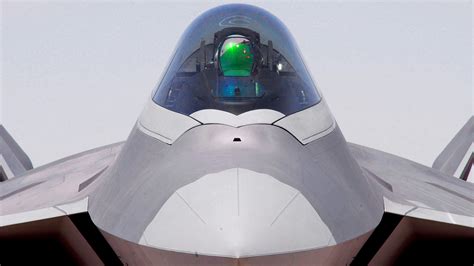
These pods are widely believed to house Infrared Search and Track (IRST) equipment, allowing passive detection of aircraft through heat signatures instead of radar emissions. Such capability significantly enhances the Raptor’s ability to locate low-observable targets without revealing its own position through active radar transmissions.
Integrating IRST represents an important capability enhancement, but the fact that it appears in external pod form illustrates just how difficult internal modifications have become. Ideally, such systems would be fully integrated inside the airframe, yet available internal space remains exceptionally limited.
The B-52 Modernization Program Is Essentially Creating A New Bomber
While the F-22 struggles with limited growth potential, the B-52 continues undergoing one of the most ambitious modernization programs in aviation history.
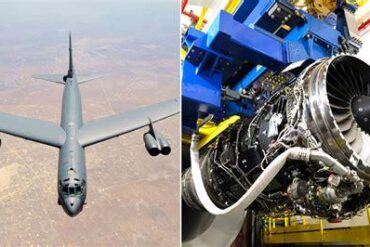
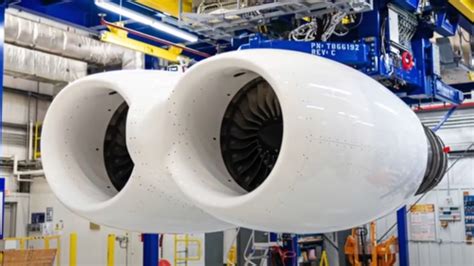
Perhaps the most visible improvement is the Commercial Engine Replacement Program, which replaces the bomber’s eight aging engines with modern Rolls-Royce F130 turbofans. Derived from proven commercial engine technology, the F130 promises significantly improved fuel efficiency, reduced maintenance requirements, increased reliability, and extended operational life.
The Air Force expects these engines to support bomber operations well into the 2050s, if not beyond.
Equally transformative is the installation of a modern Active Electronically Scanned Array (AESA) radar developed by Raytheon Technologies. Replacing the aging mechanically scanned AN/APQ-166 radar dramatically improves navigation, weather avoidance, precision targeting, and long-range situational awareness while increasing overall system reliability.
Additional upgrades include modern cockpit displays, advanced mission computers, improved communications systems, enhanced nuclear command-and-control capabilities, upgraded networking architecture, electronic warfare improvements, and expanded weapons integration.
Collectively, these modifications are so extensive that upgraded aircraft will receive the new designation B-52J.
Different Design Philosophies Created Different Modernization Futures
The contrasting modernization experiences of the B-52 and F-22 reveal an enduring lesson in aerospace engineering.
The B-52 prioritized flexibility, structural robustness, generous operating margins, and long-term adaptability. Although those characteristics made the bomber physically larger and less technologically optimized at introduction, they have allowed engineers to reinvent the aircraft repeatedly across seven decades.
The F-22 pursued maximum performance within strict constraints. Every system was optimized for air dominance at the moment it entered service. That optimization delivered extraordinary combat capability but left relatively little room for future expansion.
Neither philosophy was inherently wrong. Each reflected the strategic assumptions of its era.
The B-52 emerged during an age when technology evolved gradually over decades. The F-22 entered development during a period when planners believed its technological superiority would endure for generations without requiring substantial redesign.
History has demonstrated that technological change now occurs much faster than anticipated.
Why Both Aircraft Will Remain Critical For Years To Come
Although the Air Force faces very different modernization challenges for these iconic aircraft, neither platform is approaching retirement in the immediate future.
The F-22 will remain America’s premier air superiority fighter until the F-47 reaches operational service, providing unmatched capabilities against advanced enemy aircraft while integrating new sensors, networking technologies, and survivability improvements wherever practical.
Meanwhile, the B-52 continues proving that intelligent modernization can dramatically extend the usefulness of an exceptionally well-designed airframe. As the B-1 Lancer gradually retires, the Stratofortress will remain America’s largest conventional and nuclear payload carrier, capable of launching stand-off weapons, supporting global strike missions, and operating alongside fifth-generation aircraft for decades.
The remarkable irony is unmistakable. The Air Force’s oldest combat aircraft has become its most adaptable. The B-52’s spacious architecture, conservative engineering margins, and upgrade-friendly design have transformed a bomber conceived in the early 1950s into one of the military’s most future-proof platforms. Meanwhile, the technologically revolutionary F-22 illustrates that engineering brilliance can sometimes come with an unexpected tradeoff: the more perfectly optimized an aircraft is at birth, the more difficult it may become to evolve as the battlefield changes.