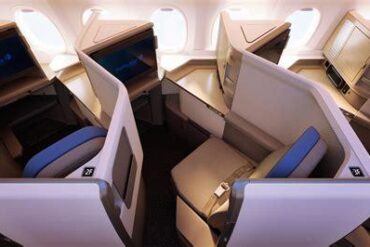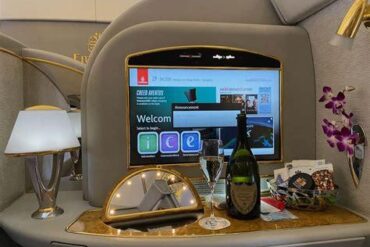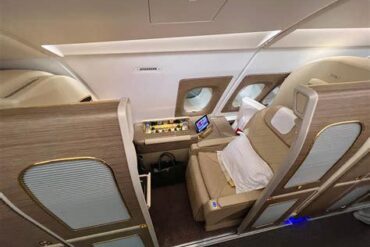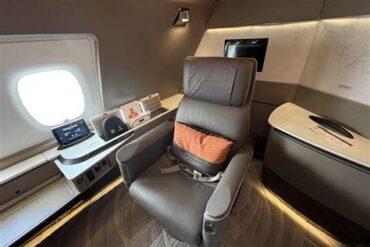
Flying first class across the Pacific has become one of the most exclusive experiences in commercial aviation. What was once simply a premium way to travel has evolved into something closer to a private luxury club in the sky, complete with enclosed suites, onboard fine dining, limousine transfers, designer bedding, and airport lounges that resemble five-star hotels more than airline terminals. On some routes, the price of a single first class seat now rivals the cost of a compact car.
For travelers considering the leap from economy or business class into the world of international first class, the biggest question is straightforward: how much does it actually cost to upgrade on a transpacific flight? The answer depends heavily on the airline, route, booking class, loyalty status, and timing. In some rare cases, passengers score upgrades for a few thousand dollars. In others, the jump to first class exceeds $15,000 each way.
The modern transpacific market has become a fascinating battleground where prestige matters almost as much as profitability. Airlines are intentionally shrinking their first class cabins to create scarcity, while simultaneously investing enormous amounts into making those few seats feel more luxurious than ever before.
For passengers flying between North America and Asia or Australia, the numbers can be staggering.
A one-way first class ticket between Tokyo and New York can easily cost between $14,000 and $20,000. Routes between Sydney and Los Angeles frequently exceed $18,000 round-trip. Even “cheaper” premium first class fares on newer carriers often start near $9,000.
The result is a cabin that exists less for mass-market travelers and more as a brand statement — a flying showroom demonstrating an airline’s absolute best product.
After all, nobody posts a viral social media video about economy class chicken pasta.
By contrast, a fully enclosed suite with caviar service and champagne flowing at 35,000 feet becomes global marketing overnight.
Why Transpacific First Class Is So Expensive
Transpacific flights are among the longest and most operationally expensive routes in commercial aviation. Flights between the United States and Asia regularly exceed 12 hours, while Australia-US services can approach 15 hours or more depending on winds and routing.
Airlines operating these flights face enormous fuel costs, premium catering expenses, high airport fees, and the need for multiple flight crews. First class amplifies those expenses dramatically.
Unlike business class, which may contain 40 to 70 seats on a widebody aircraft, international first class cabins are intentionally tiny. Many airlines now install only four to eight suites on an entire aircraft.
That limited capacity creates exclusivity, but it also means airlines must charge exceptionally high fares to justify the space consumed by those seats.
A modern first class suite can occupy the same floor area as three or even four business class seats.
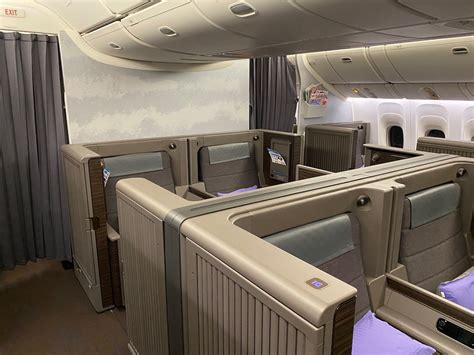
The onboard experience itself is also remarkably expensive to provide. Premium champagne selections alone can cost airlines hundreds of dollars per passenger. Add luxury amenity kits, designer pajamas, multi-course dining, premium wines, lounge access, chauffeur transfers, and personalized service, and the economics become even more extreme.
For airlines, first class is no longer merely transportation. It is branding.
That branding matters because the existence of an ultra-premium cabin elevates the perceived status of the entire airline. Travelers booking economy tickets may never fly first class themselves, but they still associate the carrier with luxury and prestige.
How Much Airlines Charge for First Class Across the Pacific
The cost of upgrading to first class depends on whether passengers purchase the cabin outright, use miles, bid for upgrades, or receive last-minute airport offers. However, understanding full ticket pricing helps explain why upgrades themselves are often expensive.
Among Star Alliance carriers, three airlines dominate the transpacific first class market: Air China, ANA, and Singapore Airlines.
Singapore Airlines operates one of the world’s most prestigious premium products on its Singapore–Tokyo–Los Angeles service. Fully booked first class itineraries frequently exceed $11,000 one-way for the complete journey. Even shorter sectors between Tokyo and Los Angeles regularly cost more than $9,000.
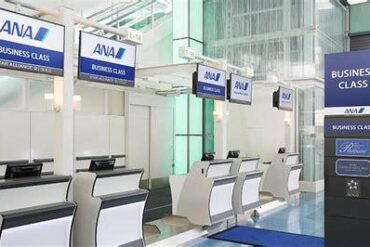
ANA’s acclaimed “The Suite” product has become one of aviation’s benchmark first class experiences. Operating primarily on Boeing 777-300ER aircraft, these suites fly between Tokyo and major American gateways including New York, Chicago, and San Francisco.
One-way fares on ANA routinely fall between $14,000 and $16,000, though occasional round-trip promotional pricing may reduce the effective cost considerably.
Air China, meanwhile, prices its first class products similarly despite offering a less globally celebrated onboard experience. Flights from Beijing to cities like Los Angeles, San Francisco, and New York often range between $14,000 and $16,000 each way.
Why Upgrade Prices Can Vary Wildly
One of the strangest aspects of airline pricing is that upgrades are often disconnected from the original ticket cost.
Two passengers sitting beside each other in first class may have paid radically different amounts.
One traveler may have purchased a discounted business class ticket and upgraded with miles. Another may have paid cash at check-in. A third could have redeemed a full award ticket using loyalty points accumulated over years.
Airlines use dynamic pricing systems that constantly adjust upgrade offers based on demand forecasts, route profitability, and cabin availability.
If first class demand appears weak on a particular flight, airlines may aggressively discount upgrades close to departure. If demand is strong, upgrade offers may remain astronomically expensive until boarding closes.
For example, a business class passenger flying from Los Angeles to Tokyo might receive a mobile-app upgrade offer for $2,500 a few days before departure. On another date, the same route could cost over $8,000 to upgrade.
Timing is everything.
Korean Air and the Importance of Origin Pricing
Korean Air demonstrates one of the clearest examples of geographic fare manipulation in international aviation.
Passengers beginning journeys in Seoul often see dramatically lower first class fares than travelers originating in the United States. A first class round-trip ticket from Seoul to Los Angeles may cost slightly above $9,000, while an identical itinerary originating in America could approach $24,000.
This pricing strategy reflects regional competition, local purchasing power, and demand patterns.
For upgrade hunters, this creates opportunities.
Experienced travelers sometimes position themselves to Asia first, then purchase premium tickets originating there to take advantage of lower fares. While not practical for everyone, it highlights how airline pricing is influenced as much by market strategy as by operational cost.
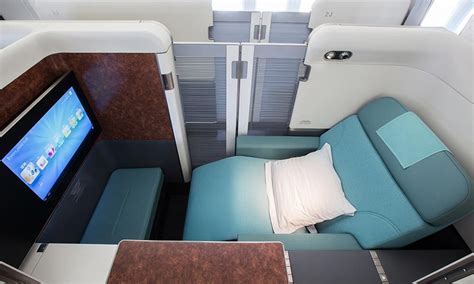
Korean Air’s Kosmo Suites remain among the more recognizable first class products crossing the Pacific, particularly aboard the airline’s Boeing 747-8 and Airbus A380 fleets.
The airline’s pricing range is enormous. Some one-way itineraries appear near $5,000, while others surpass $16,000 depending on routing and origin.
Cathay Pacific, Japan Airlines, and Qantas Push Luxury Even Further
Among oneworld carriers, Cathay Pacific, Japan Airlines, and Qantas continue to treat first class as a flagship luxury experience.
Cathay Pacific’s first class suites on select Boeing 777-300ER aircraft are especially renowned for spacious design and personalized service. Flights between Hong Kong and New York or Los Angeles frequently command fares between $12,000 and $21,000 one-way.
Japan Airlines has aggressively modernized its premium offerings with the Airbus A350-1000 and updated Boeing 777 cabins. First class pricing on routes connecting Tokyo with New York, Dallas, Chicago, and Los Angeles regularly exceeds $20,000 round-trip.
Qantas arguably pushes pricing into the most extreme territory on some Pacific routes.
Flights between Sydney and Los Angeles or Dallas aboard the Airbus A380 can reach nearly $20,000 one-way during peak demand periods.
Round-trip fares above $30,000 are no longer unusual.
At that point, passengers are not simply buying transportation. They are purchasing privacy, exclusivity, comfort, status, and time efficiency wrapped into a single experience.
The Rise of Boutique Luxury Airlines Like STARLUX
One of the newest players reshaping premium Pacific travel is STARLUX Airlines, the Taiwanese carrier founded in 2020.
Despite its youth, STARLUX entered the market with an aggressively premium strategy centered around luxury branding and upscale onboard experiences.
Its Airbus A350 fleet serves destinations including Los Angeles, Seattle, San Francisco, Phoenix, and Ontario, California.
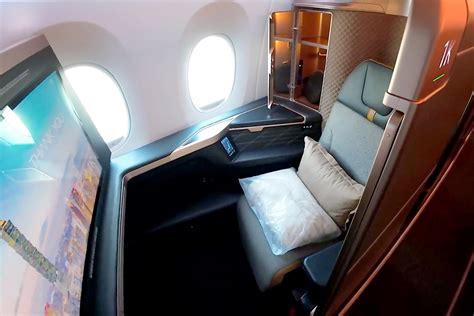
Unlike legacy airlines with sprawling networks and alliance partnerships, STARLUX positions itself as a boutique luxury airline.
Its first class fares typically range from $9,000 to over $10,000 one-way, with round-trip pricing between $14,000 and $17,000.
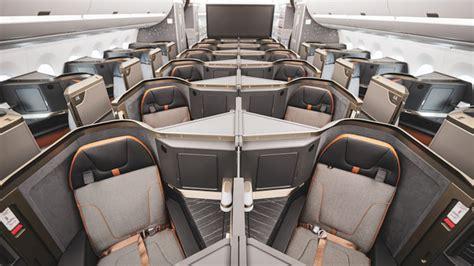
Interestingly, STARLUX uses modified versions of the same Collins Aerospace Elements seat platform found in its business class cabin. The distinction comes through increased privacy, enhanced service, larger screens, and additional personal space rather than an entirely separate seat architecture.
That detail reveals an important trend in modern aviation.
Business class has become so advanced that airlines increasingly struggle to create enough differentiation for first class. As a result, airlines now focus heavily on exclusivity, personalization, and prestige rather than simply seat comfort alone.
Is Upgrading From Business Class Worth It?
For many travelers, business class already delivers an experience that feels exceptionally luxurious.
Flat beds, direct aisle access, premium dining, lounge access, and priority services have become standard across many international carriers.
The jump from economy to business class is transformative.
The jump from business class to first class is more nuanced.
Passengers upgrading to first class are often paying thousands more for incremental advantages:
- Larger suites
- Better food and beverage selections
- More attentive cabin service
- Exclusive ground services
- Fewer passengers in the cabin
- Additional privacy
- Higher-end bedding and amenities
For travelers who value privacy, uninterrupted sleep, or prestige, the difference can absolutely feel worthwhile.
For others, especially on overnight flights where much of the journey is spent sleeping, business class may represent the smarter financial choice.
The Cheapest Ways to Upgrade to Transpacific First Class
The most effective strategies for securing first class upgrades without paying full fare usually involve airline loyalty programs and strategic timing.
Frequent flyer miles remain the single most powerful tool.
Programs tied to ANA, Japan Airlines, Singapore Airlines, Cathay Pacific, and Korean Air occasionally offer upgrade award space that dramatically reduces out-of-pocket costs.
However, availability has become increasingly limited as airlines protect premium cabin revenue more aggressively.
Another option involves operational upgrade offers near departure.
Airlines sometimes release discounted paid upgrades 24 to 72 hours before flights if premium cabins remain unsold. These offers may appear through airline apps, online check-in systems, or airport kiosks.
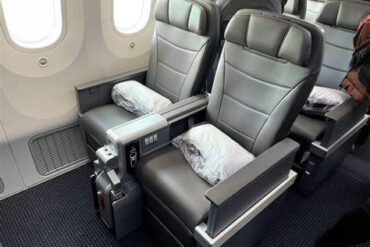
Travelers already holding premium economy or business class tickets generally receive the best offers.
Certain routes also experience seasonal pricing swings. Flying during lower-demand periods can reduce first class fares substantially, especially outside major holiday windows.
Flexibility remains one of the biggest advantages for travelers chasing luxury cabin deals.
Why Airlines Continue Investing in First Class
Despite shrinking demand, airlines continue unveiling increasingly extravagant first class cabins because the product serves a purpose beyond direct profitability.
First class creates aspiration.
It generates headlines, social media exposure, and brand prestige in ways business class alone often cannot.
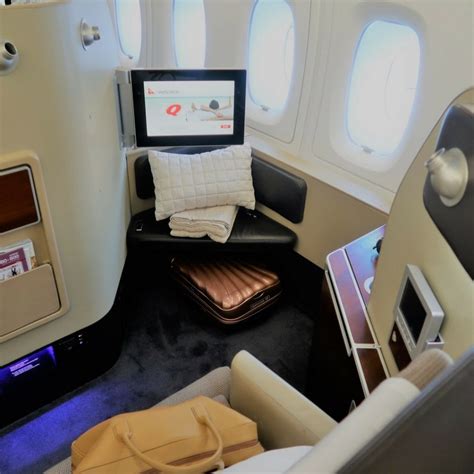
A single viral video showcasing a luxury airline suite can generate millions of views and enormous marketing value. Travelers fascinated by those experiences may ultimately book cheaper cabins on the same airline simply because the brand now feels more premium.
That halo effect matters enormously in global aviation competition.
The irony is that the future of first class may become even more exclusive precisely because business class has improved so dramatically.
As business cabins approach near-first-class comfort levels, airlines are repositioning first class less as a transportation product and more as a luxury statement aimed at affluent travelers seeking experiences unavailable anywhere else onboard.
For most passengers, transpacific first class remains an aspirational indulgence rather than a routine purchase.
But for those willing to spend the money — or master the art of strategic upgrades — the experience still represents the absolute peak of commercial air travel.