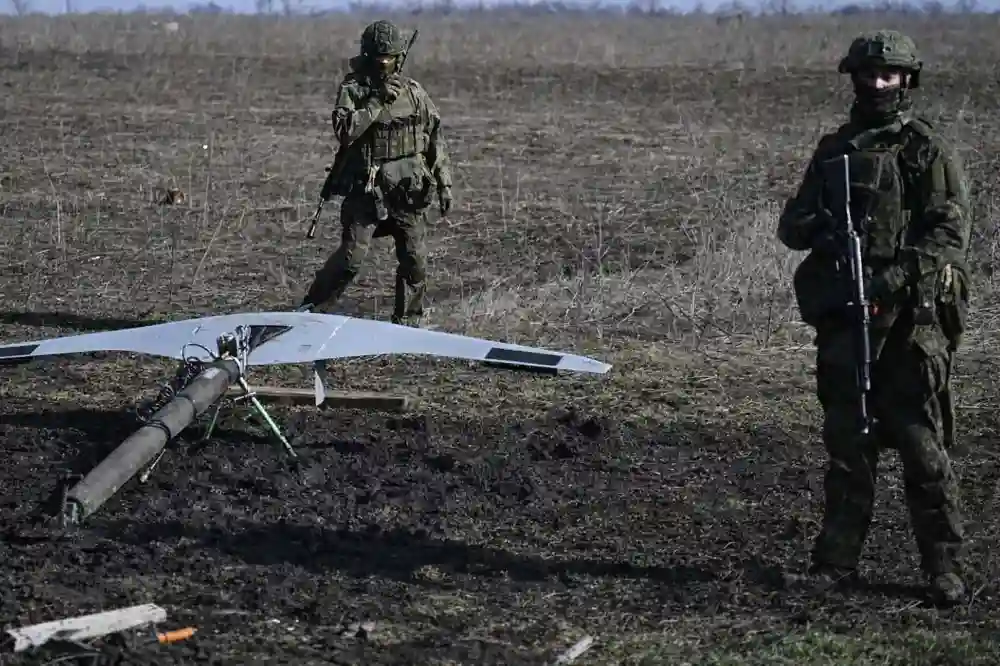
Russia is intensifying its use of tactical intelligence, surveillance, and reconnaissance (ISR) drones as the conflict in Ukraine continues to evolve into a technology-driven artillery war. Recent developments indicate that Russian forces are actively training specialized crews to operate the Supercam 350M tactical reconnaissance drone, aiming to accelerate artillery targeting cycles and improve battlefield awareness along critical front lines.
The training initiative, conducted by units within Russia’s Center Group of Forces, focuses on expanding real-time reconnaissance capabilities along the Dnepropetrovsk operational axis, a region where artillery duels and rapid counter-battery engagements often determine the outcome of engagements. In modern high-intensity warfare, the difference between striking first and becoming the target often comes down to a matter of minutes. By improving the speed at which drones detect and relay target coordinates, Russian forces are attempting to reduce the time between detection and strike—commonly known as the sensor-to-shooter cycle.
According to imagery and reports released by Russian state media sources, dedicated drone detachments are undergoing combat-oriented training exercises to master the deployment and operation of the Supercam 350M. These exercises simulate real battlefield conditions, including operating under electronic warfare interference, managing communication links, and rapidly relaying targeting information to artillery batteries.
Supercam 350M: A Modernized Tactical ISR Platform
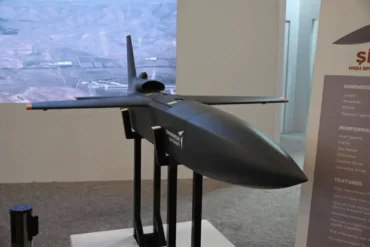
The Supercam 350M represents a significant evolution of the earlier Supercam 350 series, a family of fixed-wing reconnaissance drones that have seen widespread use by Russian forces during the war in Ukraine. Developed with support from Russia’s defense industrial base, including entities associated with the Rostec state corporation, the 350M variant introduces aerodynamic and technological upgrades designed to enhance operational efficiency.
Engineers redesigned several core elements of the airframe, including the wings and control surfaces, to improve flight stability and endurance. Equally important is the modernization of the drone’s ground control station, which incorporates more automated mission planning tools and improved software interfaces. These updates are intended to reduce operator workload and enable faster training of new drone crews.
In a war where attrition extends beyond equipment to trained personnel, this focus on simplified operation carries strategic significance. A sophisticated drone is only effective if skilled operators can deploy it quickly, manage its sensors, and deliver actionable targeting data in real time.
Design and Technical Specifications
The Supercam 350M belongs to the light tactical unmanned aerial vehicle (UAV) category. Despite its relatively compact size, the drone is engineered for long-duration reconnaissance missions that extend far beyond the reach of small quadcopter drones commonly used near the front lines.
Published specifications for the platform include:
- Wingspan: approximately 3.2 meters
- Maximum takeoff weight: around 15 kilograms
- Propulsion: electric motor with low acoustic signature
- Flight endurance: up to 4 hours
- Operational range: command and telemetry link up to 100 kilometers
- Typical cruising speed: 72–120 km/h
- Operational altitude: roughly 150 to 5,000 meters
- Operating temperature range: –45°C to +45°C
These characteristics allow the drone to operate effectively in diverse climates, from freezing winter conditions to hot summer environments.
Another defining feature is the drone’s field deployment capability. The aircraft can be launched using a portable catapult system and recovered using a parachute, eliminating the need for a runway. This means small teams can deploy the drone from forest clearings, rural roads, or improvised forward positions, allowing reconnaissance units to remain mobile and difficult to detect.
Advanced Optical Sensors for Day-Night Reconnaissance
The real power of the Supercam 350M lies not in its airframe but in its optical-electronic sensor payload, which is optimized for persistent surveillance. Mounted beneath the fuselage is a gyrostabilized gimbal system capable of maintaining steady imagery even while the aircraft maneuvers in windy conditions.
Typical payload configurations include:
- High-resolution still cameras ranging from 20 to 60 megapixels
- Daylight video cameras with optical zoom capabilities between 10× and 33×
- Thermal imaging systems for night operations
- Modular sensor mounts for mission-specific equipment
These systems enable operators to detect and identify targets such as artillery positions, armored vehicles, supply convoys, and troop concentrations from significant distances.
Thermal imaging is particularly valuable during nighttime operations. Engines, generators, and recently used artillery pieces emit heat signatures that stand out clearly against cooler surroundings. By identifying these signatures, drone crews can guide artillery fire onto targets that would otherwise remain hidden in darkness.
Some open-source reports suggest that certain configurations may also integrate laser target marking systems, which could support guided munitions if compatible weapons are available. This capability would allow drones not only to observe targets but also to direct precision strikes with greater accuracy.
Operating Under Electronic Warfare Pressure
One of the defining characteristics of the war in Ukraine is the heavy use of electronic warfare (EW) systems by both sides. Jamming signals attempt to disrupt drone communications, severing the link between the aircraft and its operators.
The Supercam 350M addresses this challenge through a multi-layered communication architecture designed to maintain connectivity even under interference. Open sources indicate the drone uses frequency-hopping transmission technology, which rapidly switches between multiple radio frequencies to avoid being jammed.
Additional reports describe the use of:
- Multiple communication channels between the drone and ground station
- Wideband frequency options for command and telemetry links
- Improved software algorithms to stabilize the data link
These features allow operators to maintain control and continue transmitting video even when adversaries attempt to disrupt signals.
Russian defense companies have also implemented a continuous software update cycle for the system. Engineers reportedly introduce regular improvements to the ground control station interface and communication protocols based on feedback from combat units. This rapid development process reflects a wartime adaptation model where technology evolves directly in response to battlefield conditions.
Extending Reconnaissance Beyond the Front Line
While small quadcopters dominate close-range reconnaissance near the front lines, they suffer from limited range and endurance. The Supercam 350M fills a different operational niche by providing deep reconnaissance capabilities that extend tens of kilometers beyond immediate combat zones.
By flying long racetrack patterns above contested territory, the drone can monitor:
- Suspected artillery firing positions
- Logistics convoys moving along supply routes
- Temporary vehicle staging areas
- Camouflaged equipment and defensive structures
This extended surveillance allows Russian artillery units to conduct hunt-and-strike operations, where drones search for targets while artillery batteries remain ready to fire as soon as coordinates are confirmed.
Endurance of up to four hours enables a single sortie to cover multiple sectors, increasing efficiency and reducing the number of drones required for persistent monitoring.
Integration with Russia’s Reconnaissance-Strike Complex
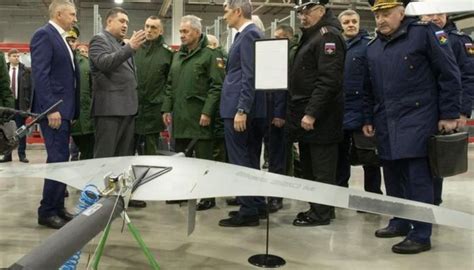
Modern Russian military doctrine increasingly emphasizes the concept of a reconnaissance-strike complex, a system in which sensors, command networks, and weapons platforms operate as an integrated whole. In this model, drones like the Supercam 350M serve as the eyes of the artillery, continuously feeding targeting information into fire control networks.
Once a drone identifies a target, the information can be transmitted to artillery batteries equipped with tube artillery, multiple launch rocket systems, or precision munitions. The faster this process occurs, the less time an enemy unit has to relocate or seek cover.
Recent statements from defense industry representatives suggest that the Supercam 350M has also been paired with loitering munitions, including systems such as the KUB-2 guided drone. In such configurations, reconnaissance drones locate and track targets while loitering munitions wait nearby to strike once coordinates are confirmed.
This combination effectively merges reconnaissance and strike capabilities into a single operational loop, further reducing response time against time-sensitive targets.
Training Crews for a Drone-Driven Battlefield
The current training program highlights a broader transformation in Russian military operations. Rather than treating drones as auxiliary tools, Russia increasingly deploys dedicated UAV units embedded within artillery and maneuver formations.
Training focuses on several key competencies:
- Mission planning and route programming
- Maintaining communications in contested electronic environments
- Real-time target identification and coordinate transmission
- Artillery fire adjustment and battle damage assessment
By institutionalizing these skills, Russian forces aim to create a sustainable pipeline of trained drone operators capable of supporting frontline units.
This approach reflects lessons learned during the conflict, where trained crews often prove more valuable than the aircraft themselves. Drone platforms can be replaced relatively quickly, but skilled operators require extensive training to interpret sensor data and make accurate targeting decisions under pressure.
Strategic Implications for the War in Ukraine
The expansion of Supercam 350M training underscores the central role of ISR drones in modern artillery warfare. As Ukrainian forces adopt dispersed formations, camouflage techniques, and electronic countermeasures, locating and tracking targets becomes increasingly difficult.
Long-endurance reconnaissance drones provide the persistence required to overcome these challenges. By remaining airborne for hours, they can monitor suspicious areas until movement or heat signatures reveal hidden positions.
This persistent surveillance also enables rapid battle damage assessment, allowing commanders to confirm whether a strike successfully destroyed its target or if additional fire missions are required.
In practical terms, drones like the Supercam 350M serve as the connective tissue between sensors and weapons, ensuring that artillery fire remains accurate and timely.
The Expanding Role of Tactical ISR Drones
The widespread use of drones has transformed the battlefield in Ukraine into one of the most technologically dense conflicts in modern history. Both sides deploy thousands of unmanned systems ranging from small quadcopters to larger fixed-wing reconnaissance aircraft.
Within this ecosystem, the Supercam 350M occupies a vital role as a persistent tactical ISR platform capable of operating far beyond the immediate front lines. Its endurance, sensor capabilities, and electronic resilience make it well suited for the type of artillery-centric warfare that dominates the conflict.
As long as artillery remains the primary source of battlefield casualties, the demand for accurate and continuous reconnaissance will continue to grow. For Russia, expanding the number of trained Supercam 350M crews represents a practical step toward tightening the reconnaissance-to-strike loop, ensuring that artillery units receive targeting information quickly enough to exploit fleeting opportunities on a dynamic battlefield.
In the evolving landscape of drone warfare, systems like the Supercam 350M illustrate how unmanned reconnaissance platforms have become indispensable components of modern military operations, shaping the speed and precision of combat across the front lines of Ukraine.