
Air Canada has entered a pivotal leadership transition as Michael Rousseau announces his retirement following a wave of criticism tied to remarks about a fatal incident at LaGuardia Airport. The decision, confirmed by Air Canada’s board on March 30, 2026, marks a defining moment for the airline as it balances operational resilience with reputational repair.
The timing of Rousseau’s departure has drawn intense scrutiny. While the airline has not explicitly linked his retirement to the controversy, the sequence of events has made the connection difficult to ignore. In an industry where public trust and safety perception are inseparable, even subtle missteps in communication can cascade into significant corporate consequences.
Crisis Communication Under Fire After LaGuardia Incident
The controversy stems from comments made in relation to Air Canada Express Flight 8646, an incident that shocked the aviation community and triggered an investigation involving the National Transportation Safety Board. The crash, which resulted in fatalities, placed immediate pressure on the airline’s leadership to respond with clarity, empathy, and accountability.
Instead, Rousseau’s remarks were widely perceived as poorly timed and lacking the expected tone of sensitivity, igniting backlash across media platforms and among industry observers. In aviation, where crisis communication is almost as critical as operational response, leadership messaging must strike a precise balance between transparency and compassion. This episode underscored how quickly that balance can unravel.
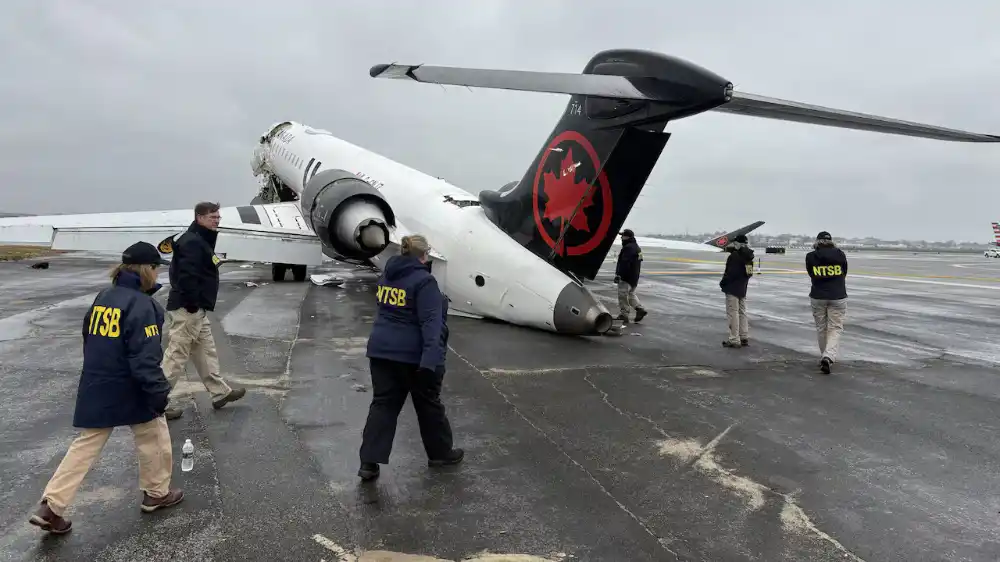
The fallout highlights a broader industry reality: executive statements during crises are no longer confined to press releases. They are dissected in real time, amplified globally, and judged not only for content but for tone, timing, and intent.
Board Response Signals Strategic Damage Control
The board of directors, led by Chair Vagn Sørensen, formally accepted Rousseau’s retirement while emphasizing continuity and stability. In its official statement, the board acknowledged his long tenure and contributions, including steering the airline through the global financial crisis and the COVID-19 pandemic.
Rousseau’s career trajectory—from Chief Financial Officer to CEO—was marked by aggressive restructuring, strategic acquisitions, and a renewed focus on profitability. Notably, his leadership played a central role in consolidating the airline’s loyalty ecosystem through the acquisition of Aeroplan, a move widely viewed as transformative for long-term revenue streams.
Yet, the board’s measured tone suggests a careful attempt to contain reputational fallout while preserving institutional credibility. By avoiding a direct link between the controversy and the retirement, Air Canada appears to be managing both internal optics and external perception simultaneously.
A Leadership Legacy Shaped by Crisis and Recovery
Rousseau assumed the CEO role in 2021, inheriting an airline grappling with the aftermath of the COVID-19 pandemic. Under his leadership, Air Canada pursued a multi-pronged recovery strategy that included:
- Network expansion into high-demand international routes
- Cost restructuring to stabilize financial performance
- Fleet modernization initiatives to improve efficiency
- Enhanced customer experience programs
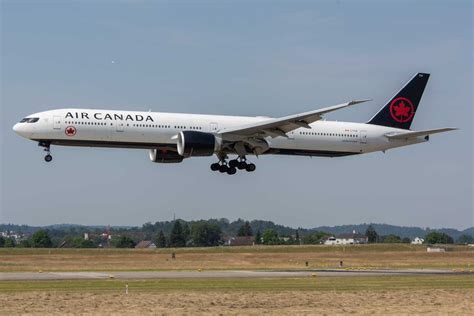
These efforts culminated in a return to profitability and a stronger competitive position in North American and transatlantic markets. However, aviation leadership is uniquely unforgiving. Successes built over years can be overshadowed by a single moment of perceived misjudgment, particularly when safety incidents dominate headlines.
The LaGuardia episode serves as a stark reminder that leadership in aviation extends beyond operational excellence into the realm of public accountability. Executives are not only decision-makers but also the voice of the airline during its most vulnerable moments.
Industry-Wide Implications for Aviation Leadership
The incident has sparked broader conversations about crisis communication standards across the aviation sector. Airlines operate in an environment where safety is paramount, and any incident—regardless of cause—demands a response that reinforces trust.
Organizations such as the International Air Transport Association have long emphasized the importance of coordinated communication strategies during crises. This includes:
- Immediate acknowledgment of the event
- Clear, factual updates as information becomes available
- Demonstrated empathy toward affected individuals
- Consistent messaging across all channels
Failure in any of these areas can lead to erosion of public confidence, regulatory scrutiny, and investor concern. In this context, Air Canada’s leadership transition is not an isolated event but part of a larger pattern seen across global carriers facing similar reputational challenges.
Search for a New CEO Begins Amid High Stakes
Air Canada has confirmed that a formal search for Rousseau’s successor is underway, with both internal and external candidates under consideration. The timing is critical, as the airline approaches a peak summer travel season that will test its operational capacity and customer service capabilities.
The next CEO will inherit a complex landscape defined by:
- Heightened expectations around safety communication
- Ongoing fleet and network optimization strategies
- Evolving passenger demand patterns
- Increased competition from global carriers
More importantly, the incoming leader will be tasked with rebuilding narrative control. In modern aviation, brand perception is shaped not only by performance metrics but by how effectively an airline communicates during adversity.
A Defining Moment for Air Canada’s Corporate Direction
Rousseau’s departure marks the end of a consequential chapter for Air Canada, but it also opens the door to strategic recalibration. Leadership transitions of this magnitude often signal a shift in corporate priorities, whether in governance, communication, or operational focus.
Stakeholders—including investors, regulators, and passengers—will be watching closely for signals of continuity or change. The airline’s ability to navigate this transition smoothly will determine whether it can sustain its recovery momentum while restoring public confidence.
Ultimately, the episode reinforces a fundamental truth in aviation: trust is the industry’s most valuable currency. It is built over decades but can be tested in moments. How Air Canada responds in the months ahead will shape not only its leadership narrative but its standing in a fiercely competitive global market.