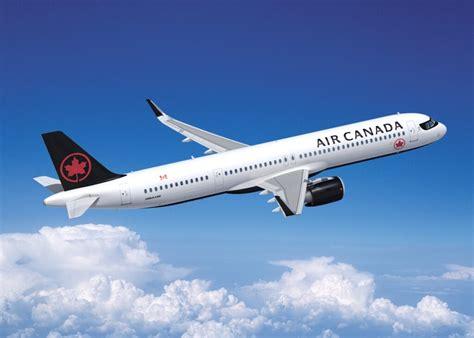
Air Canada is preparing to open a new chapter in its transatlantic strategy with the first-ever deployment of the Airbus A321XLR on flights to London Heathrow in 2026, marking a decisive shift in how the airline connects Canada with Europe’s most competitive aviation market. The move is more than a fleet update; it reflects a recalibration of capacity, risk, and network flexibility at a time when long, thin routes are becoming strategically vital.
The upcoming introduction of the A321XLR, Airbus’s longest-range single-aisle aircraft, gives Air Canada a tool it has never had before. With transatlantic range previously reserved for widebody aircraft, the XLR enables the carrier to right-size demand without sacrificing frequency or premium positioning. London Heathrow, one of the world’s most slot-constrained airports, is the ideal proving ground for this capability.
The initial filing shows a time-limited Toronto–Heathrow service, currently scheduled for late summer. While brief on paper, the significance is structural. It signals Air Canada’s intent to normalize long-haul narrowbody operations into its core hub strategy, particularly at airports where slot access and yield discipline matter more than sheer seat volume.
A Strategic Narrowbody Debut at Heathrow
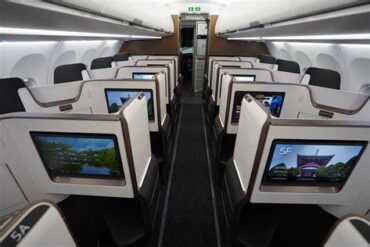
Air Canada’s planned A321XLR operation to Heathrow would make it one of the few airlines worldwide to operate the type into the UK’s busiest airport. Heathrow has traditionally favored widebody aircraft due to demand density and slot scarcity, but the XLR’s economics are rewriting those assumptions. With approximately 182 seats, the aircraft will temporarily replace the airline’s 297-seat Airbus A330-300, dramatically reducing capacity while maintaining a nonstop link.
This substitution has immediate implications. The XLR configuration removes premium economy entirely and trims both business and economy class inventory. From a commercial perspective, this creates a sharper focus on yield optimization rather than volume, allowing Air Canada to test specific departure times and traffic flows without committing a large aircraft to uncertain demand.
Operationally, the aircraft’s range allows Toronto–Heathrow to be flown comfortably while still meeting payload requirements. The route will also become the longest A321XLR service at Heathrow, underscoring just how far narrowbody long-haul capability has advanced.
Restoring the Toronto–Heathrow Daytime Concept
A central motivation behind the XLR deployment lies in Air Canada’s long-standing interest in restoring a daytime Toronto–London service, a rarity in modern transatlantic schedules. Historically, Air Canada operated non-red-eye flights to Heathrow using a wide array of widebody types, from the Boeing 767-300ER to the 787 Dreamliner family.
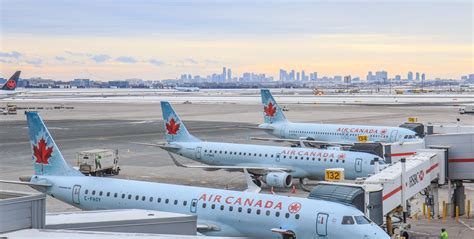
The last such daytime service ended in early 2020. Reintroducing it with a lower-capacity aircraft significantly reduces financial exposure while testing whether premium-heavy daytime demand still exists. Daytime transatlantic flights require strong local traffic, minimal reliance on connections, and customers willing to trade overnight convenience for productivity. Toronto, with its deep corporate base and financial ties to London, fits that profile precisely.
Air Canada executives have openly acknowledged that the A321XLR is the enabling aircraft for bringing this concept back in a sustainable way. While the initially filed schedule is limited, it lays the groundwork for broader experimentation once operational readiness improves.
Why Montreal Leads the A321XLR Rollout
Despite Toronto’s prominence, Montreal is set to become the primary launch hub for Air Canada’s A321XLR fleet. Of the ten routes currently planned, nine originate from Montreal, connecting the city with destinations such as Berlin, Dublin, Edinburgh, and Toulouse. This is not a statement about demand hierarchy but about operational pragmatism.
According to Air Canada leadership, Montreal presents lower training and staffing risk, allowing the airline to scale XLR operations without disrupting existing pilot bases. Toronto, by contrast, requires a larger and more complex training ramp-up before it can support regular long-haul narrowbody flying.
The temporary Toronto–Heathrow filing suggests that this transition is already underway. By late summer, Air Canada expects to have Toronto-based A320-family pilots fully qualified for extended overwater operations, a critical prerequisite for sustained XLR growth.
Competitive Implications for the North Atlantic
The introduction of the A321XLR on a flagship route like Heathrow sends a clear message to competitors. Narrowbody long-haul aircraft are no longer niche tools reserved for secondary cities. They are becoming core strategic assets capable of defending premium markets with precision.
For Air Canada, the XLR unlocks flexibility across seasons, enables experimentation with unconventional schedules, and strengthens its hand at congested airports where every slot must earn its keep. London Heathrow is merely the opening move. As the fleet grows, the ripple effects will be felt across the North Atlantic network, reshaping how capacity is deployed and how risk is managed in an increasingly fragmented demand environment.
In 2026, when the A321XLR touches down at Heathrow in Air Canada colors for the first time, it will represent more than a new aircraft on a familiar route. It will mark a structural shift in transatlantic aviation, where efficiency, adaptability, and precision finally outrank brute force capacity.