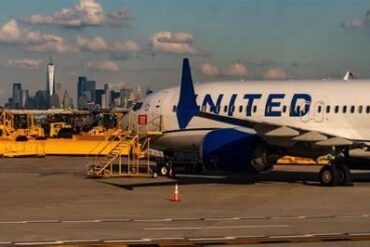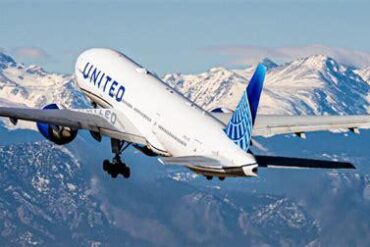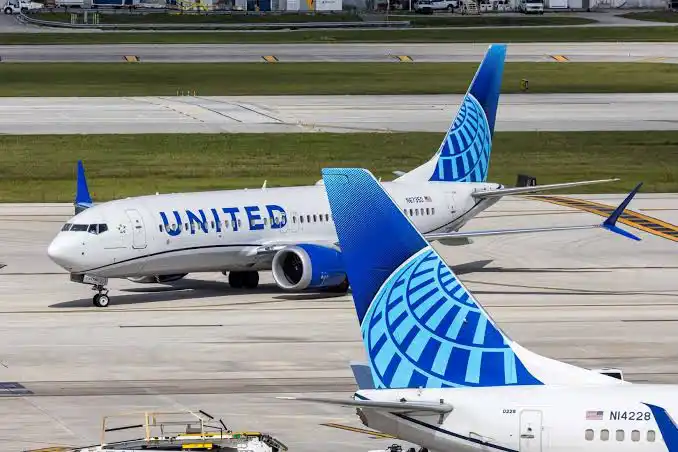
United Airlines is expanding its presence at Newark Liberty International Airport (EWR) with 18 new and returning nonstop routes covering the 2026 and 2027 schedules. The additions range from a daily Boeing 787-9 service to Seoul to seasonal flights serving smaller European destinations such as Ljubljana, Marseille and Terceira. Together, they show how United is reshaping Newark around a broader mix of major international markets, regional connections and destinations that previously had limited or no nonstop access from the United States.
The expansion is notable not simply because of the number of routes, but because of the variety of markets United is willing to serve. Four European routes began during spring 2026, while another 14 services are launching or returning between September 2026 and June 2027. The network includes Europe, Asia, the Caribbean and several smaller U.S. cities, giving Newark a wider role as both an international gateway and a domestic feeder hub.
United Airlines’ 18 New Newark Routes: Full List
United’s Newark expansion includes four routes launched in 2026 that are scheduled to return next summer, as well as a larger group of new services beginning later in 2026 and throughout 2027. The international portion is particularly significant, with United targeting destinations across Croatia, Italy, Spain, Scotland, Slovenia, Luxembourg, France and Portugal.
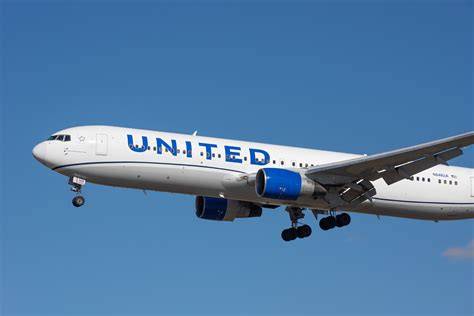
The first wave began with Split, Croatia, on April 30, followed by Bari, Italy, on May 1. Glasgow began on May 8, while Santiago de Compostela launched on May 27. Each operates seasonally and is scheduled to return in summer 2027. Their continued presence suggests United sees enough demand and network value in these markets to justify another summer season.
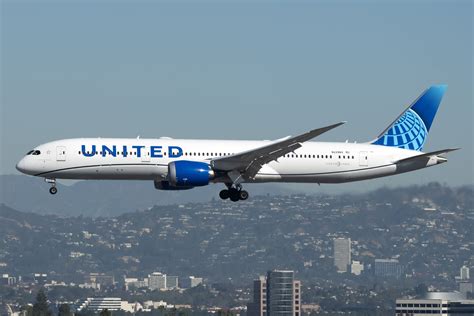
The next major addition was Seoul Incheon, which began daily service from Newark on September 4, 2026, using the Boeing 787-9. Unlike the European leisure markets, Seoul is a year-round long-haul route and represents a much larger strategic commitment. The route strengthens Newark’s position as a global gateway and adds another important Asian destination to United’s international network.
Four domestic routes also returned to Newark on September 24. Charlottesville, Virginia; Knoxville, Tennessee; Northwest Arkansas; and Omaha, Nebraska are not international headline destinations, but their importance lies in the connecting traffic they can feed into United’s enormous Newark operation.
| Destination | Start date | Frequency | Aircraft | Operation |
|---|---|---|---|---|
| Split, Croatia | April 30, 2026 | 3x weekly | 767-300ER | Summer seasonal |
| Bari, Italy | May 1, 2026 | 4x weekly | 767-300ER | Summer seasonal |
| Glasgow, Scotland | May 8, 2026 | Daily | 737 MAX 8 | Summer seasonal |
| Santiago de Compostela, Spain | May 27, 2026 | 3x weekly | 737 MAX 8 | Summer seasonal |
| Seoul Incheon, South Korea | September 4, 2026 | Daily | 787-9 | Year-round |
| Charlottesville, Virginia | September 24, 2026 | Daily | CRJ550 | Year-round |
| Knoxville, Tennessee | September 24, 2026 | 2x daily | CRJ550 | Year-round |
| Northwest Arkansas | September 24, 2026 | Daily | E175 | Year-round |
| Omaha, Nebraska | September 24, 2026 | Daily | E175 | Year-round |
| St. Croix, U.S. Virgin Islands | October 31, 2026 | Weekly | 737-700 | Winter seasonal |
| Luxembourg City, Luxembourg | April 2, 2027 | Daily | A321XLR | Year-round |
| Ljubljana, Slovenia | May 12, 2027 | 4x weekly | 767-400ER | Summer seasonal |
| Olbia, Sardinia, Italy | May 27, 2027 | 3x weekly | 767-300ER | Summer seasonal |
| Catania, Sicily, Italy | May 28, 2027 | 4x weekly | 767-300ER | Summer seasonal |
| Ibiza, Spain | May 31, 2027 | 4x weekly | A321XLR | Summer seasonal |
| Valencia, Spain | June 2, 2027 | 3x weekly | A321XLR | Summer seasonal |
| Marseille, France | June 4, 2027 | Daily | A321XLR | Summer seasonal |
| Terceira, Azores, Portugal | June 9, 2027 | 3x weekly | 737 MAX 8 | Summer seasonal |
The schedule reveals a deliberate division between high-volume international markets and thinner point-to-point destinations. United is not relying on one aircraft type or one passenger profile to make the expansion work. Instead, the airline is matching capacity to expected demand across a remarkably broad collection of markets.
Newark Expansion Strengthens United’s Domestic Feed
The four domestic additions beginning in September 2026 may attract less attention than Seoul or Ibiza, but they are strategically important for United’s Newark hub. Charlottesville, Knoxville, Northwest Arkansas and Omaha connect smaller metropolitan areas directly to one of the airline’s largest international gateways.
Several of these routes also represent restorations after long gaps. Knoxville and Omaha last had regular United service from Newark in 2020, while Northwest Arkansas last had service in 2022. Charlottesville has an even longer history, with Continental Airlines having last served the market in 1997.
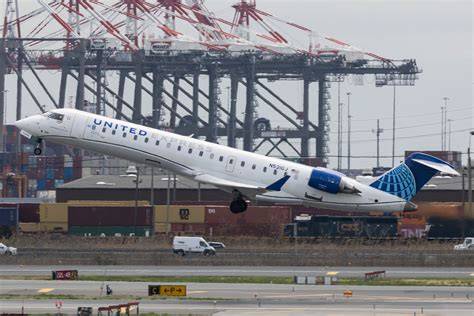
That makes the expansion more than a simple route-count increase. Regional flights create additional passenger flows into Newark’s international departure banks, helping United fill aircraft flying to Europe, Asia and other long-haul destinations. A passenger beginning in Knoxville, for example, can use Newark as the first step of a journey far beyond the domestic network.
The same logic applies to United’s winter addition of St. Croix. Beginning October 31, the Saturday-only service will operate through March 27, 2027, using a Boeing 737-700. The route gives United another leisure-oriented Caribbean option from Newark while taking advantage of stronger winter demand.
With St. Croix included, United’s Newark network will reach 23 Caribbean destinations, illustrating how the hub can switch emphasis as demand changes throughout the year.
Twelve of the 18 Newark Routes Are Seasonal
Perhaps the clearest characteristic of the expansion is its heavy reliance on seasonal flying. Twelve of the 18 routes are seasonal, with most concentrated around summer European demand.
This approach allows United to deploy aircraft where passenger demand is strongest rather than maintaining the same network structure in every season. The four European services introduced in spring 2026—Split, Bari, Glasgow and Santiago de Compostela—will all return in summer 2027.
Those four routes alone represented 17 weekly Newark departures during their peak 2026 schedules. When European demand declines during the winter, United can redeploy the aircraft toward other regions where demand remains stronger.
That flexibility is particularly useful at Newark, where the airline operates a substantial long-haul network. A 767-300ER that is heavily utilized on European routes during July does not need to remain tied to the same market in January. It can instead support Caribbean or Latin American flying while European schedules contract.
United Senior Vice President of Global Network Planning Patrick Quayle has described the approach as part of the airline’s broader confidence in its new-market strategy. The fact that all four 2026 European additions are returning suggests United believes the routes have delivered sufficient performance or strategic value to justify another season.
The A321XLR Opens Smaller European Markets
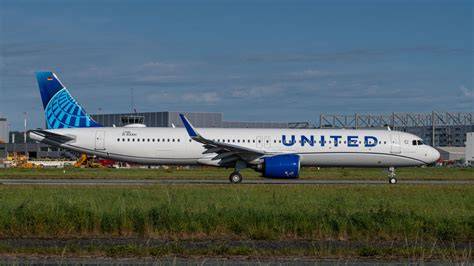
The most important aircraft behind United’s next stage of Newark expansion may be the Airbus A321XLR. The long-range narrowbody gives United the ability to serve markets that might not generate enough demand to support a larger widebody throughout the year.
That is particularly clear in the 2027 schedule. United plans to operate A321XLR services from Newark to Luxembourg, Ibiza, Valencia and Marseille. Luxembourg will operate year-round, while the other three routes are planned as summer seasonal services.
The aircraft carries 150 seats in United’s configuration, including 32 premium seats consisting of 20 Polaris suites and 12 Premium Plus seats. This gives United the ability to provide a genuine long-haul premium cabin while maintaining a much smaller overall capacity than a Boeing 767 or 787.
The economics matter. A widebody provides more seats and cargo capacity, but it also requires stronger demand to operate consistently. The A321XLR allows United to experiment with destinations where demand may be substantial but remains too thin for a larger aircraft.
Luxembourg is especially revealing. The market’s year-round schedule demonstrates how a smaller city can become viable from Newark when the airline has an aircraft capable of reaching Europe efficiently without the capacity of a widebody.
United Is Targeting Destinations Beyond Europe’s Biggest Gateways
United’s 2027 European expansion goes well beyond the traditional London, Paris, Frankfurt or Rome model. Ljubljana, Olbia, Catania, Ibiza, Valencia, Marseille and Terceira represent a different approach to transatlantic network planning.
These destinations can appeal to travelers specifically because they are not the obvious European gateways. United can use its large customer base, extensive domestic network and Newark hub to make destinations accessible to passengers who might otherwise need a connection through another European airport.
Eight of the 10 international cities announced for 2027 have no competing nonstop service from another U.S. carrier, according to the supplied network data. That gives United an opportunity to make the nonstop itself part of the destination’s appeal.
The strategy also changes the question an airline asks when evaluating a new route. Instead of focusing exclusively on existing passenger demand, United can consider whether its network can stimulate additional demand by making the destination easier to reach.
That is particularly relevant for cities such as Ljubljana. Historical traffic figures may not immediately justify a nonstop service, but a nonstop flight can change traveler behavior. Once customers know they can reach a destination directly from Newark, the market may become substantially more attractive.
Newark Is Becoming a Laboratory for United’s International Growth
Taken together, the 18 routes show that United’s Newark strategy is not built around one type of expansion. Seoul represents global year-round connectivity, St. Croix represents winter leisure demand, the four domestic restorations strengthen hub feed, and the European additions demonstrate how United is using seasonality and smaller aircraft to reach thinner international markets.
The fleet strategy is equally important. Boeing 767s and 767-400ERs provide the capacity for stronger seasonal European markets such as Split, Bari and Ljubljana. Boeing 737 MAX 8 aircraft can serve shorter and thinner transatlantic markets such as Glasgow, Santiago de Compostela and Terceira. Meanwhile, the A321XLR opens another category of long-range destinations where widebody economics could be difficult.
That combination gives Newark an unusually flexible international network. United can add a major Asian market with a 787-9, restore domestic spokes with regional jets, shift widebodies toward seasonal demand and use the A321XLR to test smaller European markets without committing to larger aircraft.
The result is a Newark network increasingly defined not only by the number of destinations it serves, but by how precisely United matches aircraft, seasonality and passenger demand to each market. With 18 new and returning routes across 2026 and 2027, the airline is expanding the role of Newark from a traditional transatlantic gateway into a hub capable of supporting both established global markets and destinations that are only beginning to emerge on the U.S. travel map.