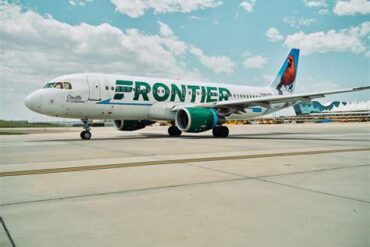
Frontier Airlines is dramatically reshaping its network for the peak 2026 summer travel season, launching 38 new routes while simultaneously trimming dozens of underperforming services. The strategy highlights a major shift in how the ultra-low-cost carrier is pursuing growth, focusing less on expanding its overall footprint and more on increasing frequencies in markets where demand remains strong.
As the seventh-largest airline in the United States by passenger traffic, Frontier carried 33.7 million passengers during the twelve months ending March 2026. Approximately 93% of those travelers flew on domestic routes, reinforcing the carrier’s continued dependence on the vast U.S. market. While Frontier accounts for roughly 4% of domestic passenger traffic, it also maintains a significant presence on short-haul international routes connecting the United States with Mexico, Central America, and the Caribbean.
The airline’s latest expansion comes during a period of industry disruption following the disappearance of Spirit Airlines from the marketplace. Frontier has moved aggressively to capture opportunities left behind, particularly in routes where passenger demand already exists and competition has diminished.
After comparing Frontier’s July 2025 network with its scheduled operations for July 2026, a clear transformation emerges. The carrier has introduced 38 new routes, including 33 domestic services and five international connections. However, the expansion tells only part of the story.
Although dozens of new routes have appeared, Frontier has also removed 99 routes that were operating during the same period a year earlier. As a result, the airline’s total route network has become smaller overall. Frontier is scheduled to operate 293 routes in July 2026, representing an 18% reduction compared with the previous year.
Despite this apparent contraction, Frontier’s actual flying activity is reaching record levels.
The airline has embraced a strategy known as densification, increasing flight frequencies on existing routes rather than continuously adding new destinations. Under this approach, aircraft are deployed more intensively on markets where demand has already been proven, maximizing aircraft utilization and revenue potential.
As a result, Frontier plans an average of 701 daily round-trip flights during July 2026, a remarkable increase from 569 daily round-trips during July 2025. The 23% increase in flying activity is expected to make July 2026 the busiest month in the airline’s history.
By focusing on stronger route performance instead of network breadth, Frontier is attempting to create a more efficient operation while maintaining its reputation for low fares.
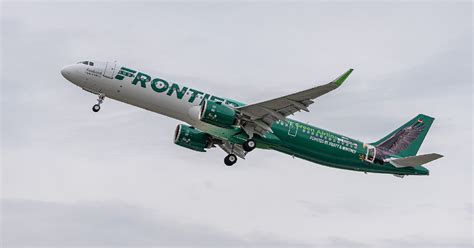
Frontier’s Domestic Route Growth Targets Former Spirit Markets
The bulk of Frontier’s expansion centers on domestic services, many of which either previously existed within Frontier’s own network or were recently abandoned by Spirit Airlines.
Several routes returned after temporary suspensions, while others are being reintroduced to capitalize on changing competitive dynamics. A notable pattern throughout the expansion is Frontier’s decision to enter markets where Spirit had already demonstrated customer demand.
Among the most significant additions are Newark to Orlando, Dallas/Fort Worth to New Orleans, Orlando to Pensacola, Fort Lauderdale to Raleigh-Durham, and Newark to Dallas/Fort Worth. Many of these routes were previously operated by Frontier years ago, allowing the carrier to return with established brand recognition and operational experience.
Chicago O’Hare to San Juan has also emerged as a notable addition, strengthening Frontier’s connectivity between the continental United States and Puerto Rico. Likewise, the launch of Nashville–Las Vegas, Kansas City–Las Vegas, and Memphis–Orlando reflects the carrier’s continued focus on leisure-oriented travel markets where price-sensitive travelers dominate demand.
A significant feature of these launches is that most already have established passenger traffic. Rather than creating entirely new travel flows, Frontier is stepping into markets that have historically supported low-cost competition.
For travelers, this often translates into lower fares as the airline attempts to stimulate demand through aggressive pricing. In many cases, Frontier’s arrival restores competition following Spirit’s departure, giving consumers additional options and potentially reducing ticket prices across affected markets.
International Expansion Focuses on Central America
While domestic growth dominates the expansion strategy, Frontier is also strengthening its international presence through five newly launched routes connecting the United States with Central America.
The airline has added service from Orlando to Guatemala City, San José, Costa Rica, and San Pedro Sula, Honduras, while Dallas/Fort Worth gains new connections to both Guatemala City and San Salvador, El Salvador.
All five international routes entered service during December 2025 and will operate throughout the peak summer season in 2026.
The Orlando-based expansion is particularly noteworthy because all three routes were previously served by Spirit Airlines. Following Spirit’s exit, some markets suddenly lacked nonstop service, creating ideal opportunities for Frontier to step in and capture demand.
Guatemala City and San Pedro Sula became especially attractive because passengers suddenly faced fewer direct travel options. By entering these markets quickly, Frontier gained access to established customer bases without needing to develop demand from scratch.
Only one of the new international routes—Orlando to San José—has previously been part of Frontier’s network. The remaining services represent entirely new opportunities for the carrier.
Among these markets, Orlando–San José stands out because of its size. Passenger booking data indicates that Orlando is the largest U.S. market connected to Costa Rica, generating approximately 326,000 annual round-trip local passengers. Frontier now joins a competitive field that includes JetBlue, Southwest Airlines, and Volaris.
A New Growth Strategy Built Around Efficiency
Frontier’s 2026 expansion reveals a carrier that is becoming increasingly selective about where it deploys aircraft. Rather than pursuing growth through sheer route count, the airline is concentrating resources on markets with demonstrated demand, stronger revenue potential, and opportunities created by competitor withdrawals.
The addition of 38 routes may grab headlines, but the more important story lies in the airline’s broader strategic shift. Frontier is operating fewer total routes than a year ago while simultaneously flying more frequently than ever before.
This approach allows the carrier to strengthen profitability, improve aircraft productivity, and offer more consistent schedules in key markets. The strategy also positions Frontier to absorb traffic previously carried by Spirit Airlines, particularly across leisure-focused domestic routes and underserved Central American destinations.
As July 2026 approaches, Frontier is preparing for what could become the most active summer season in its history. With a record number of daily flights, expanded connectivity, and a sharpened focus on high-demand markets, the airline is betting that smarter growth—not simply bigger growth—will define its next chapter.