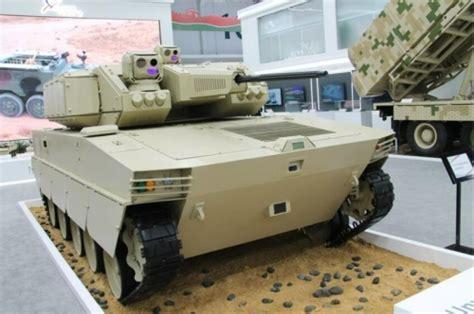
China has taken a bold leap forward in robotic land warfare with the public testing of the VU-T10 Unmanned Ground Vehicle (UGV). Developed by China North Industries Corporation (Norinco), the VU-T10 was officially showcased during the Zhuhai Air Show in 2024, but its battlefield potential only came to light with the July 20, 2025, release of live trial footage. The video, posted on Norinco’s official Weibo channel, shows the VU-T10 in action across rugged landscapes, targeting and eliminating hostile assets with lethal precision.
Unveiling the VU-T10: China’s Next-Gen UGV Enters the Arena
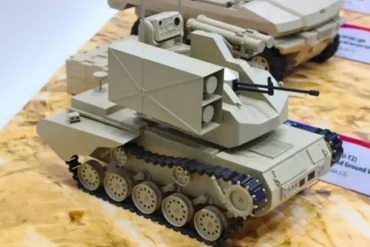
The VU-T10 is a tracked autonomous combat vehicle that blends robust armament with AI-powered remote operation. Measuring 3.8 meters long, 2.4 meters wide, and 2 meters tall, and weighing around 12 tons, it sits in the medium-heavy UGV class. Although controlled remotely from a mobile command-and-control unit, it is designed to be easily upgradable to full autonomy.
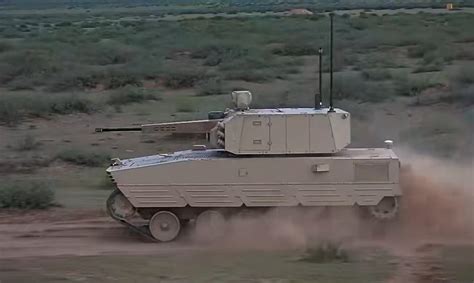
Its primary firepower comes from a 30 mm autocannon, supplemented by a 7.62 mm coaxial machine gun, and potentially, tandem anti-tank rockets. For heavier strike capabilities, the VU-T10 can also be armed with Red Arrow 12 anti-tank guided missiles, enabling it to hit fortified targets at extended ranges. Integrated smoke grenade launchers provide defensive camouflage when operating in high-risk zones.
Battlefield Versatility: A UGV Modeled After IFVs
What sets the VU-T10 apart is its hybrid role that mirrors the function of an infantry fighting vehicle (IFV). Unlike traditional remote-controlled tanks or small reconnaissance bots, the VU-T10 provides direct fire support for dismounted troops, penetrates enemy defenses, and clears the path for manned units. Its 30 mm cannon isn’t just for armored vehicles—it is versatile enough to engage light armor, enemy personnel, structures, and even low-flying drones.
This reflects a deep design philosophy prioritizing multifunctionality. Whether urban combat or open terrain, the VU-T10 is engineered to adapt. Its tracked chassis ensures mobility on rough landscapes, while its electric propulsion system allows stealth operations with low noise and heat signature, reaching a top speed of 60 km/h.
A Key Element in China’s Manned-Unmanned Teaming Strategy
The VU-T10 does not exist in isolation. It’s part of a larger strategic framework aimed at building a “complete chain of unmanned warfare equipment”, under the umbrella of MUM-T (Manned-Unmanned Teaming) doctrine. This initiative seeks to combine human decision-making with autonomous system precision, expanding combat effectiveness.
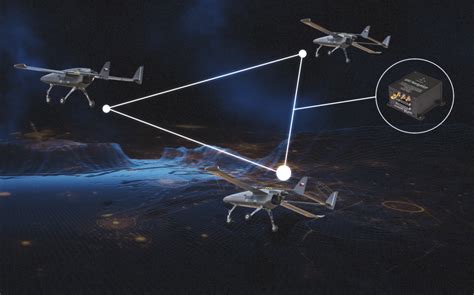
In the recent trial footage, the VU-T10 appears alongside various systems in Norinco’s growing robotic arsenal. These include:
- Machine Wolf, a quadruped robot for tactical scouting
- Counter-drone laser weapons
- Small and medium drones
- Multiple rocket launchers and howitzers
- Surface-to-air missile units
These systems function as a networked strike ecosystem, interconnected by ISR (Intelligence, Surveillance, Reconnaissance) platforms, all working towards algorithmic warfare supremacy. The seamless integration shown in trials hints at a unified C4ISR network (Command, Control, Communications, Computers, Intelligence, Surveillance, and Reconnaissance) under development by China’s military-industrial complex.
Technology Built for Export: Global Implications and Interest
Though no formal exports have been confirmed, China is clearly positioning the VU-T10 as a candidate for international markets. Norinco has actively promoted its UGV line at defense expos across Southeast Asia and the Middle East, suggesting ambitions to influence global unmanned warfare trends.
The modular design of the VU-T10 allows for country-specific customization. Whether outfitted for anti-armor roles, urban warfare, or ISR missions, the platform’s flexibility enhances its value proposition. Its electric propulsion, scalability, and network compatibility make it particularly attractive to nations seeking to modernize legacy armored units without investing in massive new inventories.
Redefining Fire Support in the Age of Automation
The VU-T10 isn’t just a product—it represents a paradigm shift in how modern militaries will approach fire support missions. By replacing or augmenting conventional IFVs with autonomous platforms, nations can reduce personnel risk, operate in degraded or denied environments, and execute rapid, coordinated strikes.
The real advantage lies in machine coordination and decision-making. With AI algorithms managing threat assessment, target prioritization, and battlefield awareness, the VU-T10 can dramatically shorten the kill chain, allowing for near-instantaneous response to emergent threats. In networked environments, it acts as a force multiplier, extending the reach and lethality of human commanders without sacrificing agility.
Challenges and Ethical Questions in Autonomous Warfare
While the VU-T10 marks a significant technical breakthrough, it also raises critical ethical and operational concerns. How will accountability be handled in the case of misidentification or collateral damage? Will autonomous weapons comply with international humanitarian laws, especially in scenarios lacking human oversight?
The Chinese government has maintained that human operators will retain ultimate control in combat environments. However, the ongoing push toward full autonomous engagement capabilities invites questions about transparency, battlefield accountability, and AI control protocols.
A Glimpse Into the Future of Ground Combat
The VU-T10 is more than an engineering achievement—it is a milestone in China’s grander vision for roboticized, data-driven warfare. This vision is underpinned by three key doctrinal themes:
- Informatization – leveraging sensors and networks to provide complete battlefield awareness.
- Intelligentization – enabling decision-making via artificial intelligence.
- Decentralization – allowing autonomous units to act independently within a larger strategic framework.
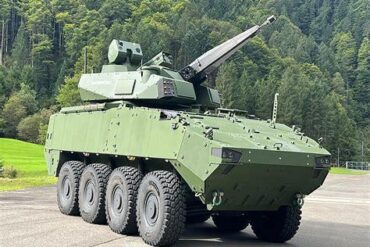
As Norinco ramps up production and integration of these systems, the PLA (People’s Liberation Army) is poised to become one of the most technologically sophisticated land forces globally. From logistics UGVs like the 8×8 “Mule” platform to battlefield AI swarms, the infrastructure is being laid for an unmanned-first battlefield doctrine.
Conclusion: Disruption at the Edge of the Battlefield
The unveiling and testing of the VU-T10 UGV is not just a step forward in Chinese defense capability—it’s a declaration of intent. China is not only investing in cutting-edge military robotics but is strategically embedding these systems within a wider doctrine of intelligent, integrated, and remote warfare.
As geopolitical tensions rise and military budgets shift toward tech-centric innovation, systems like the VU-T10 could redefine how wars are fought and who leads the charge. For now, the world watches as China accelerates toward a battlefield where the first shot may come from a machine, not a man.