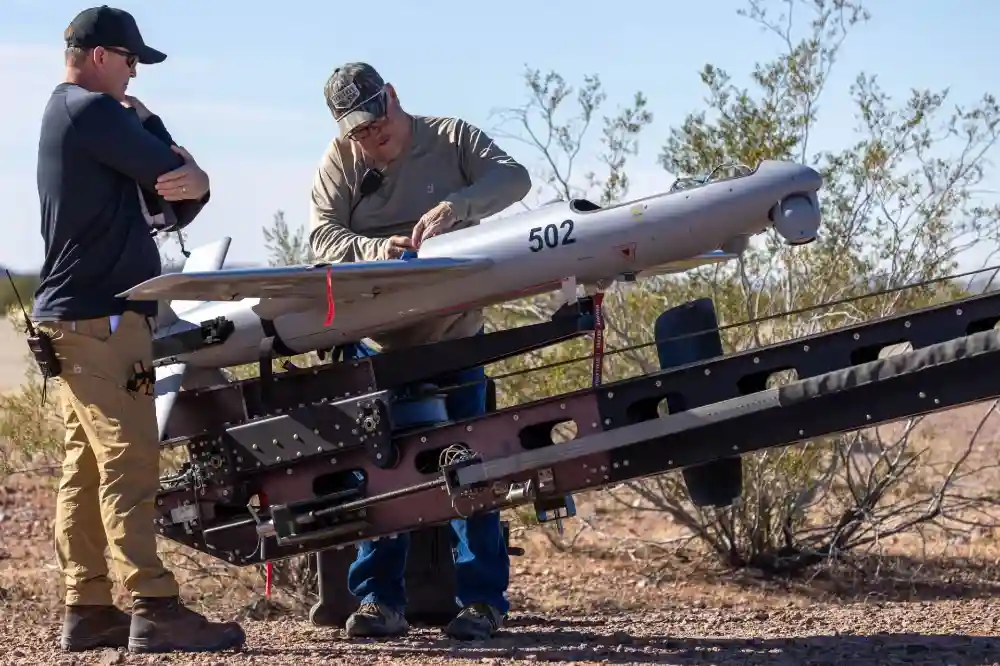
Modern warfare is increasingly defined by speed of decision and speed of strike. Armored formations that once relied primarily on artillery or air support now seek organic tools capable of detecting threats, analyzing targets, and delivering precision strikes in minutes rather than hours. In this evolving operational environment, the U.S. Army has conducted a significant operational demonstration of the SlingWorks launched effects system, a networked architecture developed by Elbit America designed to connect battlefield sensors, autonomous analytics, and loitering munitions into a unified strike capability.
The demonstration took place during the CDF CFWE 26 experimentation campaign at Yuma Proving Ground in Arizona, where soldiers from the 1st Armored Division evaluated how the SlingWorks system could shorten engagement timelines by linking reconnaissance data directly to strike-capable drones. The exercise explored how automated detection tools, sensor networking, and loitering munitions might transform battlefield operations by enabling units to move from detection to engagement with unprecedented speed.
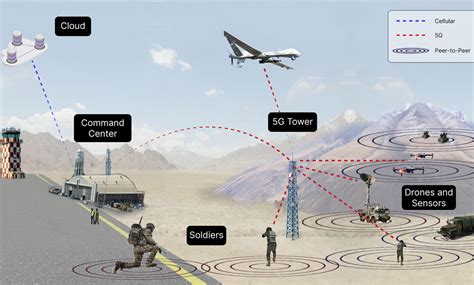
Unlike traditional targeting processes that rely on multiple layers of command approval and separate reconnaissance platforms, SlingWorks attempts to compress this sequence into a tightly integrated system. The platform connects distributed sensors, autonomous target recognition algorithms, and loitering munitions through existing Army digital command networks, allowing data collected by one platform to trigger action by another in near real time.
SlingWorks and the Concept of Launched Effects
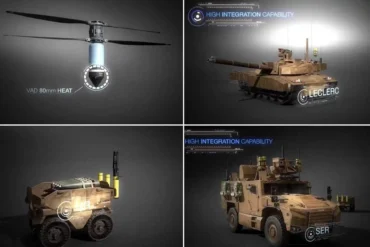
The SlingWorks platform belongs to a growing class of technologies known as “launched effects.” These systems deploy unmanned platforms—often small drones—from ground vehicles or launch points to perform a range of battlefield missions, including reconnaissance, electronic warfare, and precision strike.
Within the U.S. Army modernization framework, launched effects represent a crucial step toward distributed sensing and decentralized firepower. Instead of relying exclusively on centralized intelligence assets or distant aircraft, front-line units gain the ability to deploy their own autonomous reconnaissance and strike platforms.
SlingWorks acts as the digital backbone that ties these elements together. The architecture links battlefield sensors with autonomous targeting algorithms and strike assets while operating within the Army’s existing command-and-control infrastructure. This compatibility allows the system to integrate with current digital networks without requiring significant modifications to operational platforms.
The operational demonstration specifically evaluated whether SlingWorks could generate engagement-quality targeting data while functioning inside these existing networks. For commanders, this capability is essential because it determines whether sensor information can immediately translate into actionable targeting decisions.
Autonomous Target Recognition and Sensor Networking
At the heart of SlingWorks lies Automated Target Recognition (ATR) technology. ATR systems analyze sensor data—such as visual imagery and infrared signatures—to detect objects of military interest. The algorithms compare observed signatures with stored profiles to determine whether a detected object may represent a hostile vehicle, equipment system, or other tactical target.
The SlingWorks system demonstrated the ability to detect, classify, and track targets at extended ranges, providing battlefield units with valuable situational awareness. These capabilities rely on onboard processing that rapidly analyzes incoming sensor data while reducing the cognitive workload placed on human operators.
Instead of forcing soldiers to manually interpret every piece of reconnaissance data, the system highlights potential threats and generates targeting cues automatically. This process is commonly referred to as “tip and cue.” Once a potential target is detected, the system alerts other assets within the network, allowing them to focus sensors or weapons on the area of interest.
This automated coordination plays a crucial role in reducing the kill chain timeline—the sequence of events between detecting a target and engaging it with a weapon system. In modern combat scenarios where adversaries frequently use dispersed formations and rapid maneuver tactics, reducing this time window can significantly improve operational effectiveness.
Integrating SkyStriker Loitering Munition
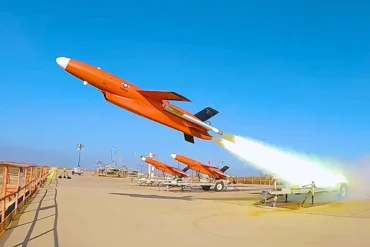
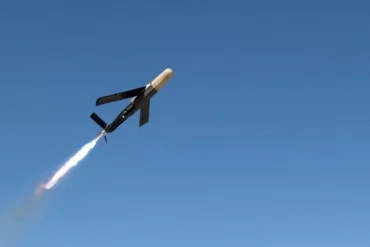
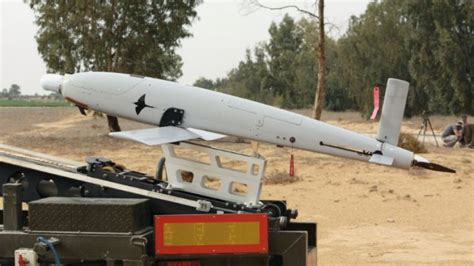
A major component of the SlingWorks demonstration involved the integration of the SkyStriker loitering munition, a precision strike drone developed by Elbit Systems. Loitering munitions combine characteristics of unmanned aerial vehicles and guided missiles, allowing them to search for targets while airborne before executing a strike.
The SkyStriker platform is electrically powered, providing quiet operation and extended endurance. Under typical mission profiles, it can remain airborne for up to approximately 140 minutes, giving operators ample time to observe an area of interest and wait for the optimal moment to engage a target.
The system also features a maximum operational range of about 265 kilometers, depending on mission configuration and launch conditions. Once a target is confirmed, the munition can accelerate into a terminal attack phase reaching speeds of roughly 260 knots, allowing for rapid engagement.
SkyStriker’s design allows operators to adjust strike angles between 30° and 75°, providing flexibility against different types of targets. Steeper angles can increase effectiveness against armored vehicles by striking vulnerable top surfaces, while shallower attack profiles may be useful for engaging fortified positions or other tactical structures.
Advanced Autonomy and Target Engagement Capabilities
The SkyStriker platform integrates several advanced autonomy functions that significantly enhance battlefield flexibility. Like SlingWorks itself, the munition incorporates Aided Target Recognition algorithms, enabling it to identify potential targets during loitering operations.
The system is capable of engaging both stationary and moving targets, including vehicles traveling at speeds of up to roughly 50 miles per hour. This capability expands the range of tactical scenarios where the munition can be deployed effectively.
SkyStriker also includes modular warhead configurations, allowing mission planners to tailor payloads according to operational needs. Available payload options include warheads weighing approximately 6.6 pounds or 17.6 pounds, enabling the platform to address a variety of targets ranging from lightly armored vehicles to fortified defensive positions.
In addition to its strike capability, the munition is designed to maintain operational effectiveness in contested electromagnetic environments. Modern battlefields increasingly involve electronic warfare systems that attempt to disrupt communications and navigation signals. To address this challenge, SkyStriker can operate in GPS-denied environments using onboard navigation logic validated through earlier operational testing.
Passive radio-frequency detection further supports target geolocation without actively emitting signals, allowing the system to remain stealthy while gathering information.
Accelerating the Sensor-to-Shooter Kill Chain
One of the most strategically significant aspects of SlingWorks is its alignment with the Joint All-Domain Command and Control (JADC2) concept. JADC2 aims to ensure that data collected by one platform—whether an aircraft, ground vehicle, or sensor system—can immediately support operations by another platform.
SlingWorks embodies this principle by allowing real-time targeting data to flow directly from sensors to strike assets. Once the system detects and verifies a target, the information can be transmitted across Army networks to trigger engagement by loitering munitions or other weapons systems.
This capability dramatically shortens the traditional targeting cycle. In conventional operations, reconnaissance units may identify a target but must relay information through multiple command layers before a strike can be authorized and executed. SlingWorks compresses this process by combining sensor detection, automated analysis, and strike coordination into a single digital ecosystem.
For frontline units operating in dynamic combat environments, this compression of the kill chain can mean the difference between neutralizing a threat quickly or losing the opportunity entirely.
Yuma Proving Ground as a Testbed for Future Warfare
The Yuma Proving Ground in Arizona has long served as one of the U.S. military’s primary locations for testing emerging battlefield technologies. Its expansive desert environment allows researchers to evaluate new systems under realistic operational conditions while maintaining controlled test parameters.
The CDF CFWE 26 experimentation event brought together operational units, defense industry partners, and Army research organizations to assess how emerging technologies might function in future conflicts. Exercises like these provide critical insights before new systems are considered for widespread operational adoption.
During the demonstration, the collaboration between soldiers and technology developers allowed evaluators to examine how SlingWorks performed in practical scenarios, including target detection, data transmission, and strike coordination.
The Growing Role of Organic Precision Strike Systems
The integration of loitering munitions into maneuver formations reflects a broader transformation in modern military strategy. Armed forces around the world are increasingly investing in organic precision strike capabilities that can be deployed directly by brigade or battalion-level units.
These capabilities reduce dependence on higher-level assets such as air support, long-range missile systems, or centralized artillery batteries. Instead, frontline commanders gain immediate access to reconnaissance and precision strike tools that can be deployed within minutes.
SlingWorks represents a potential step toward this operational vision. By combining networked sensing, autonomous analytics, and precision strike drones, the system could allow tactical units to conduct the entire cycle of reconnaissance, targeting, and engagement within a single integrated architecture.
The Aviation Future Capability Directorate, which oversees experimentation related to advanced aviation and unmanned technologies, continues to evaluate systems like SlingWorks as part of the Army’s long-term modernization strategy. As autonomous systems, networked warfare, and distributed sensing become increasingly central to military doctrine, technologies that accelerate decision-making and strike capability may shape the next generation of battlefield operations.