The U.S. Navy has taken a decisive step toward the future of air combat by successfully demonstrating autonomous air defense operations conducted by uncrewed jet aircraft under the command of a virtual fighter. The recent test confirms that autonomy within naval aviation is moving beyond experimental flight control into mission-level execution, where machines are trusted to interpret commander intent and react dynamically inside contested airspace.
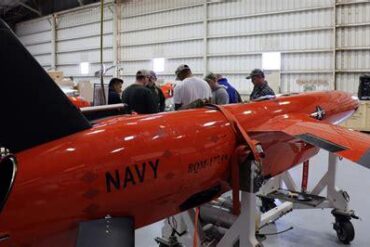
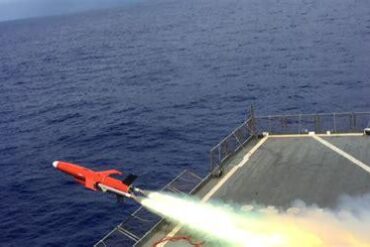
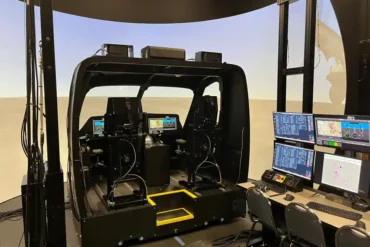
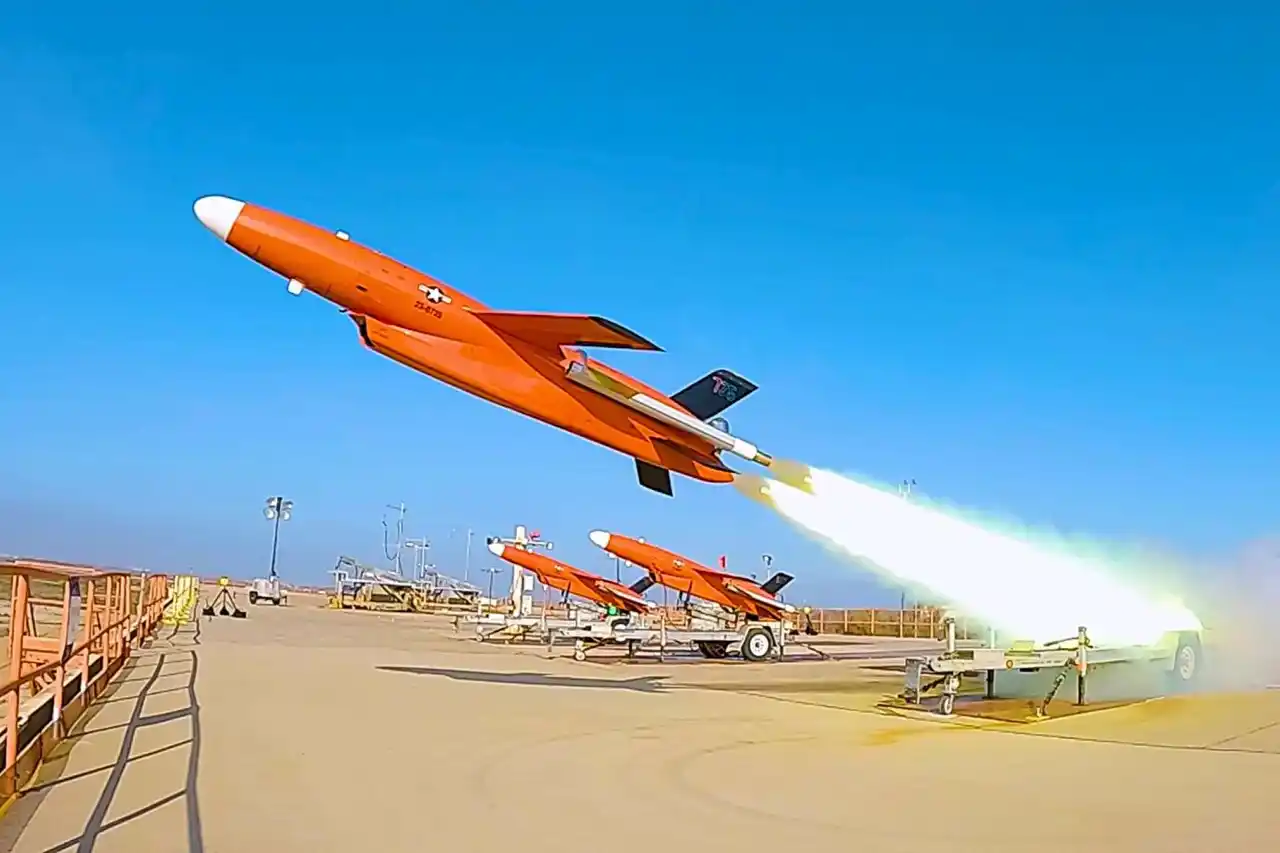
During a December test conducted off the coast of California, two BQM-177A jet target drones were flown fully autonomously while tasked with defending designated airspace sectors. Rather than being remotely piloted, the aircraft received mission directives from a virtual F/A-18 Super Hornet, operating beyond visual range within a Live Virtual Constructive environment. This structure allowed the Navy to stress advanced decision-making while deliberately keeping a human operator outside the immediate tactical loop.
The disclosure, made publicly in January 2026, highlights how rapidly Collaborative Combat Aircraft concepts are maturing. Instead of relying on scripted behaviors or constant human inputs, the BQM-177A drones demonstrated the ability to patrol, respond, and maneuver in accordance with predefined mission objectives as simulated adversaries attempted to breach protected airspace. The exercise was intentionally designed to mirror operational complexity rather than laboratory conditions.
At the core of the demonstration was a shift in command philosophy. A simulated F/A-18 was designated as mission commander, issuing defensive Combat Air Patrol assignments to the two live aircraft. Once launched, the autonomous jets interpreted these orders independently, coordinating their actions while responding to emerging threats inside the synthetic battlespace. Navy officials emphasized that this was not about perfect flight stability, but about validating autonomous tactical execution under realistic constraints.
This approach reflects a broader evolution in naval aviation thinking. Autonomy is no longer viewed solely as a means of reducing pilot workload or enabling optional unmanned flight. Instead, it is being positioned as a force multiplier capable of expanding reach, persistence, and mass without exposing human aircrew to the highest levels of risk. The December test marks one of the clearest demonstrations yet that the Navy is prepared to trust uncrewed systems with combat-relevant responsibilities.
Operational Context of the Point Mugu Demonstration
The test took place at the Point Mugu Sea Range, a critical facility for naval aviation experimentation. By integrating live aircraft with virtual command elements, the Navy created a tightly controlled but operationally representative environment. Virtual adversaries attempted to penetrate defended airspace, forcing the autonomous drones to make rapid decisions while adhering to mission boundaries set by higher-level command logic.
Crucially, the human role was reframed. Operators remained focused on safety oversight rather than micromanagement, allowing autonomy software to handle perception, maneuver selection, and engagement logic. This separation of intent from execution is fundamental to future air combat models, where manned aircraft act as commanders rather than sole executors of tactical tasks.
Why the BQM-177A Matters as an Autonomy Testbed
The selection of the BQM-177A is strategically revealing. Originally designed as a high-performance target drone, the aircraft replicates demanding threat profiles rather than benign flight conditions. Measuring approximately 194 inches in length with an 84-inch wingspan, and capable of approaching Mach 0.9 at very low altitude, the platform leaves little margin for indecision or unstable control laws.
Operating at jet speeds compresses reaction timelines and magnifies the consequences of flawed autonomy logic. By using such a demanding surrogate, the Navy ensured that success would be directly relevant to future operational aircraft rather than limited to slow or permissive environments. In effect, the BQM-177A served as a proving ground for autonomy intended to survive inside contested airspace.
Mission Autonomy Powered by Hivemind Software
At the heart of the demonstration was Shield AI’s Hivemind autonomy stack, which functioned as a mission-level decision layer rather than a scripted controller. Instead of following preplanned waypoints, the system continuously assessed the tactical situation and selected maneuvers aligned with commander intent. This architecture allowed the aircraft to adapt dynamically as simulated threats evolved during the engagement.
Navy representatives described the event as the first time a fully autonomous jet executed a mission beyond the visual range of its operator. That distinction matters because it signals reduced reliance on persistent data links, a critical vulnerability in high-end conflict. Autonomy capable of operating with degraded or denied communications represents a major leap in survivability and operational relevance.
Modular Architecture and the Autonomy Government Reference Framework
Equally important was the successful use of the Autonomy Government Reference Architecture during the test. By validating standardized interfaces, NAVAIR demonstrated a pathway toward modular autonomy integration that avoids vendor lock-in. This approach allows mission software to be adapted across multiple platforms without extensive bespoke redesign, preserving competition while accelerating innovation.
From a strategic perspective, decoupling autonomy from specific airframes enables the Navy to iterate at software speed. As behaviors improve, they can be fielded rapidly across the unmanned fleet, ensuring that tactical advantage evolves continuously rather than waiting for new aircraft production cycles.
Agile Development and Rapid Progression
The December flight built directly on an earlier August test that validated baseline autonomous control laws. The deliberate progression—from safe flight, to mission execution, to integrated manned-unmanned teaming—illustrates a disciplined development strategy. Navy officials noted that the program moved from contract award to live autonomous flight in roughly 16 months, a timeline that underscores the value of agile acquisition methods.
Such speed is not merely administrative efficiency. In an era of rapidly advancing peer capabilities, the ability to compress development cycles becomes an operational advantage. The Navy’s autonomy roadmap reflects this urgency, emphasizing iterative testing over prolonged perfection.
Implications for the Future Carrier Air Wing
The broader implications for carrier aviation are profound. A manned fighter commanding autonomous aircraft defending airspace previews a future where tactical mass can be increased without proportional increases in risk or cost. Autonomous wingmen could extend sensor coverage, absorb attrition, and maintain persistent patrols while human pilots focus on higher-order decision-making.
While the Point Mugu event does not represent a finished Collaborative Combat Aircraft capability, it establishes a critical foundation. Autonomous jets have now demonstrated the ability to execute mission intent at speed within a realistic combat construct. As additional exercises unfold through 2026, the Navy is clearly signaling that software-defined airpower will be central to maintaining dominance in contested skies.