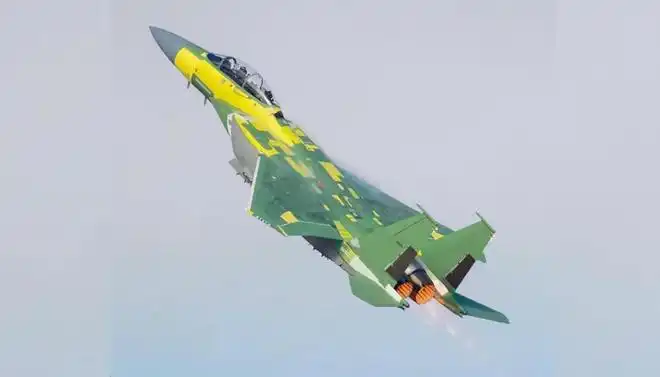
The F-15EX and the Su-35 are two of the most advanced fourth-generation fighter aircraft, representing the pinnacle of American and Russian military aviation technology. While both aircraft are formidable in their own right, their capabilities differ in several key areas. In this detailed analysis, we will compare these two jets across various dimensions such as radar systems, maneuverability, weaponry, stealth, survivability, and practical application in combat scenarios. By the end of this article, we will understand the strengths and weaknesses of the F-15EX and Su-35 and evaluate which one might have the upper hand in different combat environments.
Radar and Electronic Systems: The Battle of Sensors
F-15EX Radar and Sensor Systems
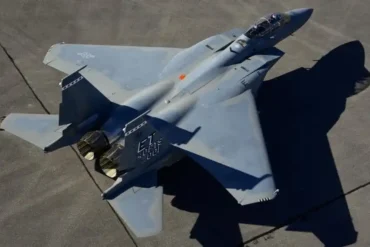
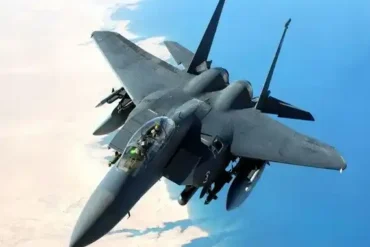
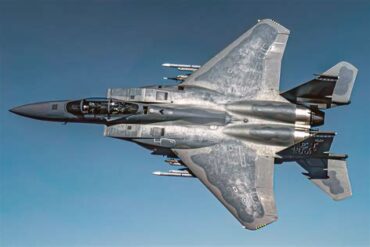
The F-15EX, the latest iteration of the venerable F-15, comes equipped with the cutting-edge AN/APG-82(V)1 AESA (Active Electronically Scanned Array) radar. This radar system has a detection range of up to 450 kilometers, allowing it to track 26 targets simultaneously while engaging four of them at once. This range and multi-target tracking capability give the F-15EX a significant advantage over the Su-35, especially in beyond visual range (BVR) combat scenarios.
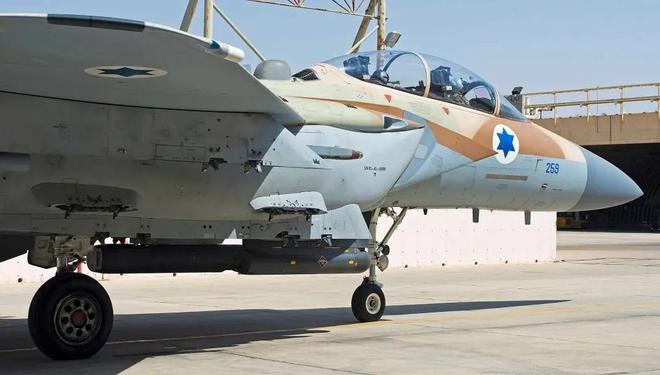
The F-15EX also features the Talon HATE pod, which integrates an IRST (Infrared Search and Track) system, providing the jet with enhanced capabilities for detecting and tracking stealth aircraft and low-observable targets. This makes the F-15EX highly effective in networked combat environments, especially when coordinating with stealth platforms like the F-22.
Su-35 Radar and Electronic Systems
The Su-35, on the other hand, uses the Irbis-E passive electronically scanned array radar, which has a detection range of around 400 kilometers. Although this range is slightly less than that of the F-15EX, the Su-35 compensates with the L175M Khibiny electronic countermeasure system, which can disrupt enemy radar-guided missiles, giving it a strong defense against hostile targeting.
Additionally, the Su-35 is equipped with an IRST system with a detection range of approximately 50 kilometers, which can be highly effective in close-range engagements, especially in environments where radar detection is limited or restricted.

Conclusion on Radar and Sensors
While both aircraft feature advanced radar and electronic systems, the F-15EX holds the advantage in long-range detection and multi-target engagement due to its superior radar range and the integration of the Talon HATE pod. However, the Su-35’s combination of radar and infrared search and track capabilities, along with its powerful electronic countermeasures, gives it an edge in close-range, high-intensity confrontations.
Maneuverability and Close-Combat Performance: Who Has the Edge?
Su-35 Maneuverability
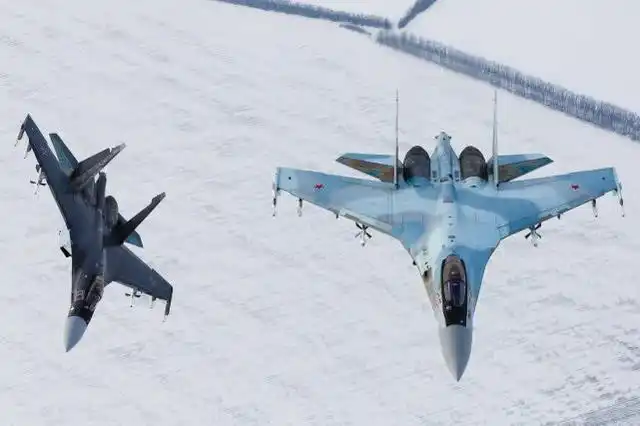
The Su-35 is a highly maneuverable aircraft, powered by the 117S vector thrust engine, which allows it to perform extreme maneuvers like the Cobra maneuver, Pugachev’s Cobra, and high-alpha turns. These maneuvers are critical in dogfights, where agility and the ability to outmaneuver an opponent can be the difference between life and death. The Su-35’s design and thrust vectoring capabilities give it an overwhelming advantage in close combat situations, particularly in low-speed dogfights.
F-15EX Maneuverability
While the F-15EX boasts a high thrust-to-weight ratio and a low wing loading that provides good maneuverability in certain situations, it lacks the advanced thrust-vectoring technology found in the Su-35. This limits its performance in close-range combat, especially in scenarios where rapid turns and high-angle maneuvers are necessary. That said, the F-15EX has received upgrades such as a helmet-mounted cueing system and compatibility with the AIM-9X Sidewinder missile, which improves its dogfighting capabilities to some extent.
Conclusion on Maneuverability
In close-quarters combat, the Su-35’s superior agility and thrust vectoring make it the clear winner. However, the F-15EX compensates for its lack of agility by relying on long-range missile engagements and the ability to coordinate with other aircraft, ensuring that it avoids entering close-range combat scenarios in the first place.
Weaponry and Payload Capacity: Power to Strike
F-15EX Weapons and Payload
One of the F-15EX’s most impressive features is its extensive weapon payload. With a maximum combat payload capacity of 13.4 tons, the F-15EX can carry up to 22 AIM-120D AMRAAM missiles or AGM-183A hypersonic missiles, making it an exceptionally versatile platform for both air-to-air and air-to-ground missions. This large payload capacity allows the F-15EX to overwhelm enemies with a saturation attack and engage multiple targets simultaneously, providing a significant tactical advantage in multi-role operations.
Su-35 Weapons and Payload
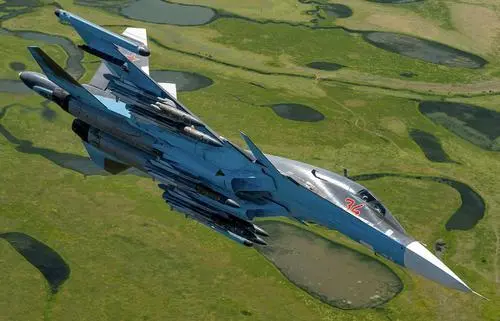
The Su-35, though slightly less versatile in terms of payload, is still an effective combatant. With a total payload capacity of around 8 tons, the Su-35 can carry a variety of air-to-air and air-to-ground ordnance. Its R-37M long-range missile (with a range of up to 400 kilometers) is especially notable, offering a significant threat to enemy early-warning aircraft, aerial refueling platforms, and other high-value assets. The Su-35 can also carry the R-73 close-range missile, which excels in dogfight scenarios.
Conclusion on Weaponry
The F-15EX holds the advantage in terms of payload capacity, offering more options for air-to-air and air-to-ground strikes. However, the Su-35’s long-range missiles like the R-37M give it a distinct edge when it comes to targeting enemy aircraft at extreme ranges.

Stealth and Survivability: Who Can Stay Undetected?
F-15EX Stealth Features
The F-15EX has incorporated some low-observable features such as radar-absorbing coatings, serrated edges on the fuselage, and reduced radar cross-section (RCS), which help to reduce its visibility to enemy radar. Its RCS is estimated to be around 1 square meter, which is significantly smaller than earlier variants of the F-15. However, it is still far from the stealth capabilities of fifth-generation aircraft like the F-22 or F-35.
Su-35 Stealth Features
The Su-35, while being a highly capable fighter, does not prioritize stealth in its design. Its RCS is estimated to be around 3 square meters, which is more visible to enemy radar than the F-15EX. While the Su-35 features advanced radar and electronic warfare systems, its lack of stealth makes it more vulnerable to detection, especially when facing modern radar systems.
Conclusion on Stealth and Survivability
Both aircraft are not fully stealthy by modern standards, but the F-15EX’s reduced radar cross-section provides it with a better chance of evading detection compared to the Su-35. However, in a highly contested electromagnetic environment, both aircraft will rely heavily on electronic warfare and situational awareness to survive.

Operational Use and Upgradability: Versatility and Future Potential
F-15EX: Upgrades and Long-Term Service
The F-15EX has undergone significant upgrades, including the integration of next-generation avionics, radar systems, and weapons. It is capable of carrying unmanned aerial vehicles (UAVs), which could extend its operational range and versatility. With continuous upgrades, the F-15EX is likely to remain relevant for decades to come, offering both air superiority and strike capabilities in a variety of roles.
Su-35: Limited Numbers but Highly Effective
The Su-35 has proven its effectiveness in several combat scenarios, including the Syrian Civil War, where it successfully engaged enemy aircraft and demonstrated its impressive infrared sensor and beyond-visual-range combat capabilities. However, the Su-35 is produced in limited numbers, with less than 200 units in service worldwide, and its high maintenance costs may limit its long-term viability in large-scale operations.
Conclusion on Operational Use
The F-15EX is designed for long-term service, with continuous upgrades and a proven multi-role capability. The Su-35, while a highly capable aircraft, faces limitations due to its small production run and higher maintenance costs, making it less versatile in the long term.
Combat Scenario Simulation: Who Comes Out on Top?
Beyond Visual Range Combat
In a beyond visual range (BVR) engagement, the F-15EX, with its superior radar and missile systems, would likely gain the upper hand. Its AIM-120D AMRAAM and AGM-183A hypersonic missile offer formidable long-range capabilities that would allow it to strike first, potentially before the Su-35 could get within firing range.
Close-Range Dogfighting
In a close-range dogfight, the Su-35 would likely have the advantage. Its thrust-vectoring capabilities, coupled with its agile airframe, make it a dominant force in low-speed, high-agility maneuvers. The F-15EX would have to rely on tactics like teamwork and long-range missile engagements to avoid entering a close-range engagement with the Su-35.
Integrated Combat Systems
In scenarios where both aircraft are operating within a networked environment, the F-15EX could leverage its data-sharing capabilities to work with other platforms such as AWACS (Airborne Warning and Control System) or stealth fighters like the F-35 to maximize its situational awareness and targeting precision. The Su-35, on the other hand, would likely depend on ground-based air defense systems or the support of other Russian assets like the Su-57.
Final Verdict: F-15EX vs Su-35
Both the F-15EX and Su-35 are exceptionally capable aircraft, each excelling in different areas. The F-15EX is superior in long-range engagements, payload capacity, and networked warfare, while the Su-35 holds the advantage in close-quarters dogfighting, electronic warfare, and maneuverability.
Ultimately, the outcome of an F-15EX vs Su-35 confrontation depends heavily on the operational context. The F-15EX is better suited for multi-role operations and networked combat environments, while the Su-35 is more effective in close combat and tactical solo operations.
Both aircraft represent the peak of fourth-generation fighter technology, and their differences highlight the divergent paths taken by the United States and Russia in their military aviation strategies.