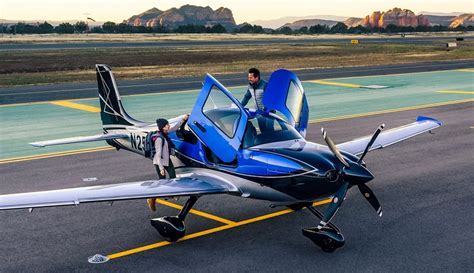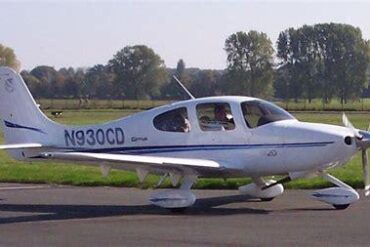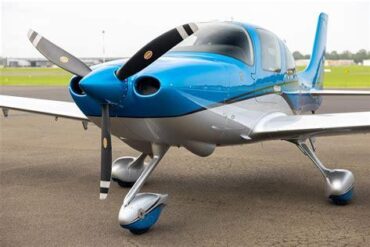
When evaluating Cirrus aircraft for personal ownership or training purposes, two names consistently rise to the top: the Cirrus SR22 and Cirrus SR20. While their appearances may seem nearly identical, their real-world capabilities tell two markedly different stories. For pilots—especially those with limited recent experience or looking to regain proficiency—the choice between these two platforms carries significant consequences in terms of safety, range, utility, and cost. In this extensive comparison, we explore the SR22 vs SR20 decision through empirical performance data, operational realities, and pilot testimony.
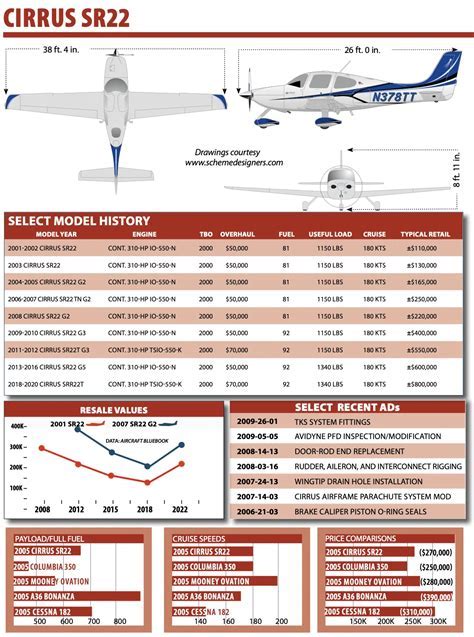
Performance Metrics: Climb, Speed, and Range
At the core of any aircraft comparison are the numbers—real-world performance data that often diverges from the optimistic specifications in marketing brochures. Let’s begin by examining the cruise speed and range capabilities.
The SR22, powered by a 310-horsepower Continental IO-550 engine, cruises at approximately 184 knots, compared to the SR20’s 200-horsepower IO-360, which yields a real-world cruise of around 142–147 knots. That difference translates directly into time saved over long distances:
- 373 nm trip: SR22 ~2.03 hr | SR20 ~2.40 hr (+23 minutes)
- 667 nm trip: SR22 ~3.63 hr | SR20 ~4.30 hr (+41 minutes)
- 948 nm trip: SR22 ~5.15 hr | SR20 ~6.12 hr (+58 minutes)
The SR22’s maximum range of 811 nautical miles at 75% cruise decisively outclasses the SR20’s 627 nm, giving the SR22 an edge on both nonstop cross-country capability and fuel stop planning.
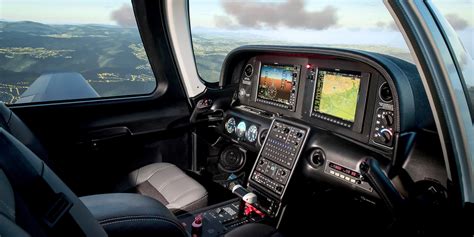
But the most decisive metric in flight performance is climb rate. The SR22 routinely delivers 1,000–1,200 feet per minute (fpm) at cruise climb, and can exceed 2,000 fpm when needed. By contrast, the SR20 often struggles to exceed 300 fpm at high density altitudes, especially under heavy loads or hot temperatures. Multiple pilots have reported climb rates of just 200–300 fpm on summer days with moderate payloads—conditions where the SR22 still performs confidently.
Operational Safety and Practical Use in Diverse Conditions
Climb performance isn’t just a matter of time—it’s a critical safety factor, especially during hot weather departures, short runways, or mountainous terrain. The SR20’s lack of cowl flaps and lower engine power limits cooling efficiency and makes heat management during climb a struggle. In contrast, the SR22 manages engine temperatures more effectively, giving pilots more control and margin in demanding environments.
At airfields with short runways (e.g., 2,205 ft), the SR20 is known to push its limits. Airport operators and instructors have openly expressed concern about the SR20’s ability to safely depart or land in such conditions. One user stated:
“I cringe every time a 20 comes in or out. Even a 22 is tight.”
These factors make the SR22 not only faster, but more versatile and forgiving, especially for Instrument Flight Rules (IFR) missions where quick climbs through weather layers are essential.
Flight Training vs Personal Ownership
The SR20 is commonly seen in flight schools, and for good reason—it is a solid training aircraft. Its lower performance threshold makes it suitable for students learning basic flight maneuvers and avionics handling. However, when the mission profile expands to longer-distance IFR travel, passenger comfort, and payload flexibility, the SR20 begins to show its limitations.
Payload capacity, another critical metric, favors the SR22 modestly. While both aircraft suffer from relatively modest useful loads, especially when full of fuel, the SR22’s higher gross weight enables it to carry more fuel, passengers, or baggage without compromise.
Moreover, the SR22 is less likely to have endured aggressive training use. Many SR20s on the market are former flight school aircraft with heavy usage, hard landings, and less meticulous maintenance—something a discerning buyer must weigh carefully.
Cost Considerations and Long-Term Value
For many prospective owners, especially those returning to aviation after a hiatus, cost becomes a deciding factor. At face value, the SR20 is less expensive to acquire, with older G3 models available at a significant discount compared to the SR22. It also burns less fuel—around 10–11 gallons per hour (GPH) versus the SR22’s 14–16 GPH, depending on configuration and engine management.
However, fuel is only one piece of the operational cost puzzle. Insurance premiums are often lower for the SR20, but maintenance and overhaul costs remain high due to the shared airframe and high-tech avionics found in both models. One SR20 owner noted:
“The annual fuel savings is a rounding error compared to the other costs to operate the aircraft.”
Crucially, the resale value and demand for the SR22 remain consistently higher, owing to its performance and broader utility. Pilots who initially bought SR20s often find themselves upgrading to the SR22 within a few years—or wishing they had.

IFR Training and Mission Suitability
For pilots looking to pursue IFR training, especially those planning cross-country missions, the SR22 offers superior tools. It can escape weather layers more quickly, reach smoother altitudes faster, and offers better load-carrying capacity for long-duration IFR flights. While the SR20 can complete these missions, it often requires more fuel stops, more climb management, and exposes the pilot to longer periods in suboptimal weather conditions.
Given the real-world mission profiles—frequent short trips and occasional long hauls—the SR22 offers greater mission flexibility. While the SR20 can meet these demands with compromises, the SR22 completes them with confidence and capability.
Pilot Sentiment and Real-World Ownership Feedback
Community feedback from experienced pilots, instructors, and aircraft owners is overwhelmingly in favor of the SR22. One former SR20 owner stated:
“The 20 climb is awful, you’ll miss the useful load… cruise lean of peak around 120 knots TAS… I upgraded to the SR22 and would never go back.”
Others echoed the same sentiments:
“I wouldn’t even consider buying a 20.”
“Every single SR20 owner I know either upgraded, is planning to, or wishes they could.”
This overwhelming consensus is not without reason. While the SR20 remains a viable option for budget-conscious pilots or those focused on short-hop VFR flying, the SR22 stands out as the definitive Cirrus experience—powerful, fast, safe, and long-legged.
Conclusion: Which Cirrus Should You Choose?
Ultimately, the Cirrus SR22 emerges as the superior aircraft for most use cases, particularly for pilots aiming to regain IFR proficiency, travel meaningful distances, and carry loads with greater safety margins. The SR20, while a competent trainer or VFR cruiser, demands compromise in climb performance, payload, and mission scope.
For those on the fence, the best advice remains consistent: fly both aircraft before deciding. Once you feel the difference in acceleration, climb rate, and cruise speed, the SR22 makes its case in the sky—not just on paper.
Frequently Asked Questions (FAQ)
Is the SR20 suitable for IFR training?
Yes, the SR20 is equipped with the same modern avionics as the SR22, making it technically capable for IFR training. However, its slower climb rate and lack of icing protection limit its practicality in real-world IFR conditions, especially in areas with high terrain or seasonal weather layers.
How much more does it cost to operate an SR22 compared to an SR20?
While fuel consumption is higher in the SR22 (approximately 14–16 GPH vs 10–11 GPH), other operational costs such as insurance, maintenance, and hangar fees are relatively comparable. The total cost of ownership for the SR22 is moderately higher, but often offset by increased capability, utility, and resale value.
Which aircraft has better resale value: SR20 or SR22?
The SR22 consistently holds better resale value and remains in higher demand. Its performance advantages and broader mission capabilities make it more attractive to the general market, resulting in faster sales and stronger pricing over time.