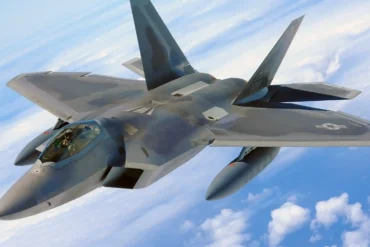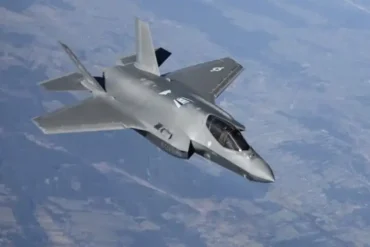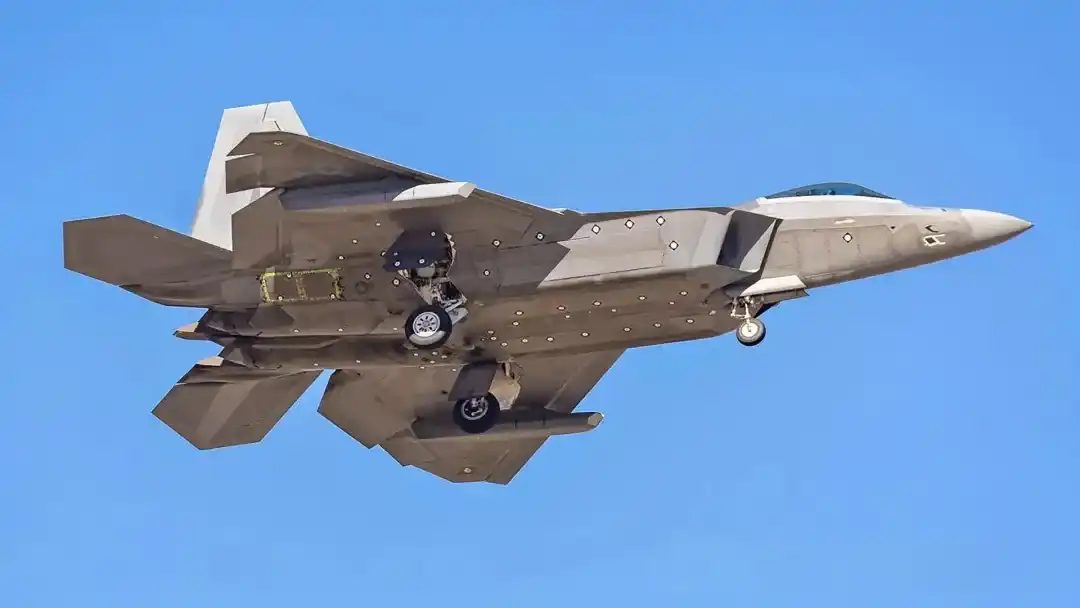
The F-22 Raptor remains one of the most advanced and lethal air superiority fighters in the world. Originally introduced by Lockheed Martin in 2005, the aircraft has held its position as the U.S. Air Force’s premier stealth fighter. However, as geopolitical tensions with adversaries such as China and Russia escalate, there is a growing need to ensure that the F-22 continues to perform at the highest level. To meet this demand, the F-22 Upgrade Program has been set into motion, significantly modernizing the fleet to maintain its edge over increasingly advanced threats. This article delves into the key components of this upgrade, the strategic drivers behind it, and the challenges it faces as the program unfolds.
Core Components of the F-22 Upgrade Program
The F-22 Upgrade Program encompasses several critical components designed to enhance the aircraft’s range, stealth, sensors, avionics, and weapons systems. These upgrades not only boost the fighter’s existing capabilities but also ensure it remains relevant in the face of modern threats.
Enhanced Range and Fuel Efficiency
A primary limitation of the F-22 has been its relatively short range. The Indo-Pacific theater, with its vast distances and complex operating environment, highlights this shortcoming. To counter this, the F-22’s range is being significantly improved through the integration of Low-Drag Stealth Tanks (LDTP).
Low-Drag Stealth Tanks: These new 600-gallon external fuel tanks are specifically designed to reduce aerodynamic drag and improve supersonic flight capabilities. As a result, the F-22’s combat radius is expected to double, from approximately 1,000 km to over 2,000 km. This enhancement allows the F-22 to operate more effectively in regions like the South China Sea or the vast expanses of the Pacific Ocean, where long-range engagements are crucial.
Smart Pylon Technology: The introduction of smart pylons further augments the stealth performance of the F-22. These pylons integrate fuel tanks and missile racks in such a way that the aircraft’s radar cross-section (RCS) is minimized. When jettisoned, the pylons ensure that stealth is maintained, offering operational flexibility without compromising the aircraft’s signature.
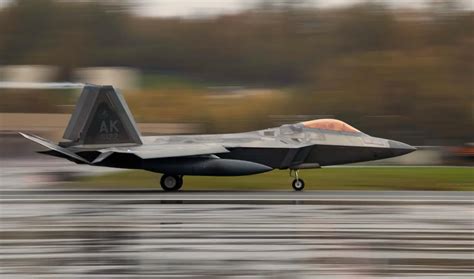
Sensor and Avionics Overhaul
The F-22’s sensor suite is also receiving a substantial overhaul. Modern sensor fusion and advanced avionics are crucial for maintaining air superiority, especially as adversaries like the Chinese J-20 and the Russian Su-57 field advanced systems designed to counter existing capabilities.
IRST (Infrared Search and Track): The introduction of external pod-mounted IRST sensors is a game-changer for the F-22. These sensors allow the aircraft to detect and track enemy targets passively, without emitting radar signals. This capability is especially important for countering threats from stealth fighters, such as the J-20, which rely on radar-evading designs.
Link-16 Data Link: To enhance interoperability with other allied and fourth-generation aircraft, the F-22 is being equipped with Link-16 communication systems. This ensures real-time data exchange with F-15 and F-16 fighters, as well as NATO aircraft, significantly improving coordination in joint missions.
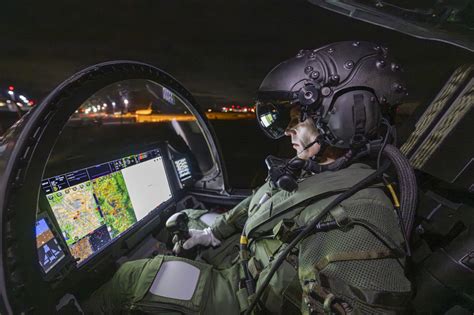
Helmet-Mounted Display (NGFWH): A notable upgrade in situational awareness comes in the form of Next Generation Forward Helmet-Worn Displays. These helmets offer a 360-degree view of the battlefield and integrate seamlessly with off-boresight weapons, ensuring that the pilot can engage targets from virtually any direction, further enhancing the F-22’s effectiveness in combat.
Software and Weapon Systems
In addition to hardware upgrades, the F-22’s software and weapon systems are being modernized to keep pace with evolving threats and ensure compatibility with cutting-edge technologies.
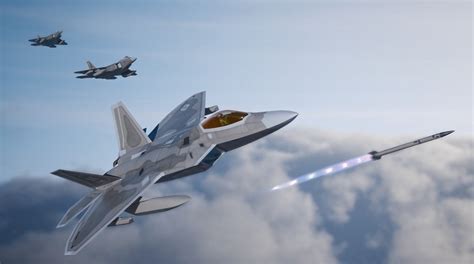
Release 4 Software Baseline: The new software release, Release 4, includes improvements that enable third-party app integration, advanced radar electronic protection, and compatibility with next-generation weapons like the AIM-260 missile. This missile is expected to have a range of over 180 km, making it an effective counter to long-range adversaries and expanding the F-22’s strike capability.
Mode 5 IFF and MIDS-JTRS: Enhanced Identification Friend or Foe (IFF) and Multi-functional Information Distribution System-Joint Tactical Radio System (MIDS-JTRS) upgrades ensure that the F-22 can communicate securely and identify friendly forces accurately, reducing the risk of fratricide and improving overall operational coordination.
Strategic Drivers Behind the F-22 Upgrade
The F-22 Upgrade Program is driven by several strategic imperatives, each reflecting the changing dynamics of modern warfare. The primary goal is to ensure that the F-22 remains a dominant force in air combat, capable of countering next-generation adversaries.
Countering China’s J-20 and Russia’s Su-57
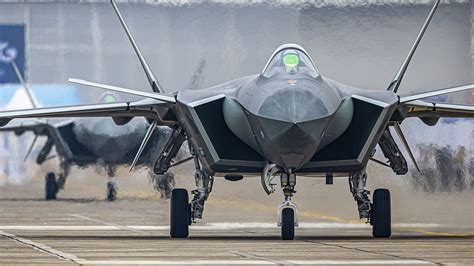
The rise of China’s J-20 and Russia’s Su-57 fifth-generation fighters presents a significant challenge to U.S. air superiority. Both aircraft feature advanced stealth, sensor, and maneuverability technologies that can outmatch older airframes in certain scenarios. The F-22 upgrade directly addresses these challenges by enhancing its range, sensor capabilities, and ability to engage beyond visual range targets, ensuring the Raptor remains a credible countermeasure against these advanced adversaries.
A Testbed for NGAD
The Next-Generation Air Dominance (NGAD) program is the U.S. Air Force’s next major leap in air combat technology, aimed at developing a sixth-generation fighter. Several of the F-22 upgrades, such as the IRST system and open-system architecture, are being tested as part of NGAD’s development. These technologies provide a valuable foundation for the Air Force’s future fighter designs, making the F-22 upgrade a crucial stepping stone in the development of next-gen air combat systems.
Congressional Mandates and Budget Constraints
Despite the push for next-gen capabilities, U.S. lawmakers have made it clear that the F-22 fleet must remain operational for the foreseeable future. In FY2025, Congress allocated $1 billion for the upgrade of 27 F-22s, with a projected per-aircraft cost of $37 million. This funding demonstrates the importance of keeping the F-22 relevant until the NGAD enters service post-2030. Additionally, lawmakers rejected plans to retire 32 Block 20 F-22s, forcing the Air Force to prioritize upgrades over newer platforms.
Timeline and Budget for F-22 Upgrades
The F-22 Upgrade Program follows a detailed timeline, with several milestones set for testing, certification, and full operational deployment.
- Testing and Certification: Key elements of the upgrade, such as the LDTP tanks, have already undergone wind tunnel and ground tests. The operational deployment of these tanks is slated for 2025. Flight trials for the IRST pods and AIM-260 missiles are underway, with full integration expected by 2026.
- Funding and Costs: The $1 billion allocated for FY2025 will cover the upgrade of 27 F-22s, with the remaining aircraft slated for modernization by 2029. This phased approach allows the Air Force to maximize the effectiveness of the upgrade program while managing budget constraints.
Challenges and Trade-offs
Despite its numerous advantages, the F-22 Upgrade Program is not without challenges. These challenges include compromises in stealth, aging airframes, and debates over cost versus capability.
Stealth Compromises
The addition of external pods for IRST sensors and fuel tanks does come at the cost of slightly increased radar cross-section (RCS). While LDTP tanks help mitigate this issue by improving aerodynamics, the external modifications may still make the F-22 marginally more detectable than its earlier configurations. Nevertheless, these enhancements are considered a necessary trade-off to maintain the aircraft’s strategic advantage.
Aging Airframes and High Maintenance Costs
Another challenge is the aging of the F-22’s airframe, which may face higher maintenance costs and structural fatigue over time. Although the upgrade program aims to address many of these issues, some F-22s may require extensive repairs before they can be fully integrated with the latest systems, limiting the feasibility of upgrades in certain aircraft.
Cost vs. Capability
A significant point of contention among critics is the cost of retrofitting the F-22. Some argue that the resources dedicated to upgrading an aging airframe could be better spent on the development of NGAD. However, the U.S. Air Force is committed to keeping the F-22 viable until the next generation of fighters can enter service.
Future Outlook for the F-22
As the F-22 Upgrade Program progresses, the aircraft is expected to remain a central pillar of U.S. air superiority through 2030 and beyond. While the upgrades ensure that the F-22 can meet emerging threats, the Air Force’s long-term focus is on the NGAD program, which will eventually take over the F-22’s role as the premier air superiority fighter.
The F-22’s evolution serves as a reminder of the need to balance innovation with fiscal responsibility, ensuring that the U.S. Air Force retains its technological edge while preparing for the challenges of the future.
FAQ
1. What are the main upgrades in the F-22 Raptor?
The F-22 Upgrade Program focuses on enhancing range with Low-Drag Stealth Tanks, improving sensor capabilities with IRST pods, and upgrading weapon systems such as the AIM-260 missile. Additionally, helmet-mounted displays and Link-16 data links improve situational awareness and interoperability.
2. How will the F-22 upgrades help counter China’s J-20?
The F-22’s upgrades, such as the IRST sensors, allow it to passively track stealth targets like the J-20 without revealing its position. The extended range and improved weapons systems ensure that the F-22 can engage at longer distances, countering the J-20’s capabilities.
3. What is the timeline for the full F-22 upgrade?
The F-22 Upgrade Program is scheduled to conclude by 2029, with key milestones such as the integration of LDTP tanks in 2025 and IRST pods in 2026. These upgrades will ensure that the F-22 remains operational until the NGAD program takes over after 2030.