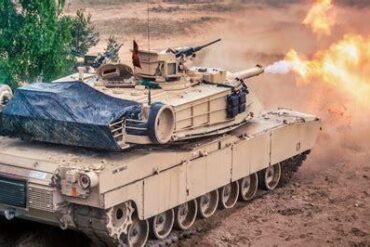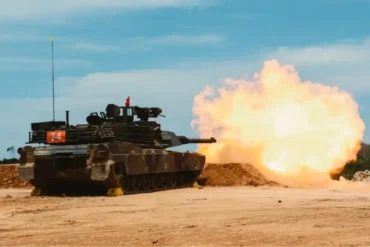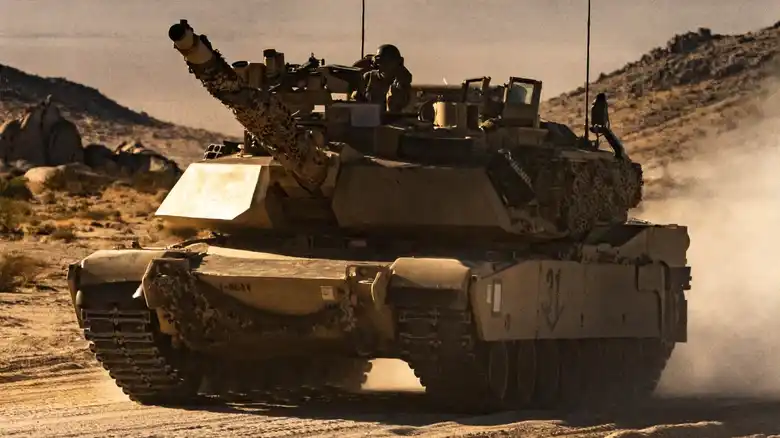
The United States Army has officially taken ownership of the first M1E3 Abrams prototype, marking a bold step forward in the evolution of American armored warfare. This milestone, announced by General Randy George, Chief of Staff of the Army, occurred significantly ahead of schedule. Originally expected in late 2026, the prototype was delivered in December 2025, a full year in advance—underscoring the engineering excellence and urgency driving the next generation of main battle tanks.
Developed by General Dynamics Land Systems (GDLS), the M1E3 Abrams represents a fundamental shift in tank design, rooted in combat learnings and technological advancements that aim to define the battlefield of the 2040s. With its delivery, the U.S. Army signals not just a continuation of the Abrams legacy but a radical modernization aligned with future combat needs.
A Rapid Leap in Military Engineering
The development timeline of the M1E3 is nothing short of remarkable. What typically takes six to seven years was accomplished in under three, demonstrating both the strategic urgency and technological maturity of this ambitious platform. Although official images and detailed specifications remain undisclosed, insiders confirm that the tank is 100% complete in prototype form.
This swift development is a rare feat in the defense industry, where complex systems like main battle tanks traditionally undergo years of R&D, testing, and iteration. The Army’s abrupt cancellation of the M1A2 SEPv4 in September 2023 in favor of the M1E3 now appears prescient. It enabled a clean-sheet design, allowing engineers to rethink everything from mobility and survivability to network integration and sustainability.
Designed for Future Conflicts, Not Yesterday’s Wars
Unlike its predecessors, the M1E3 is not merely a refined version of the M1A2 but a reimagined battle platform intended for multi-domain operations in highly contested environments. The tank has been conceptualized with input from lessons learned during the Russo-Ukrainian War, where modern threats like drones, loitering munitions, and cyber-electronic warfare reshaped armored doctrines.
Key expected features include:
- Hybrid Electric Drive System: A dramatic departure from the traditional gas turbine engine, reducing fuel dependency and enhancing stealth.
- Autoloader System and New Main Gun: Enabling higher firing rates and integration with advanced smart munitions, potentially including gun-launched ATGMs and hypersonic rounds.
- Reduced Signature Profiles: Incorporating thermal and electromagnetic masking technologies to increase battlefield survivability.
- Networked AI and Drone Integration: Allowing real-time data sharing, automated targeting, and coordination with unmanned systems.
The armor has reportedly been reengineered, although the exact materials and configurations remain classified. There is speculation about modular armor suites capable of adapting to different theaters, as well as integrated anti-drone defense mechanisms, a necessity given recent battlefield realities.
Strategic Mobility and Tactical Efficiency
The M1A2 Abrams’ weight had become a logistical liability. At over 70 tons, it required extensive transportation infrastructure and posed limitations in fast-deployment scenarios. The M1E3 addresses this head-on with a projected weight of around 60 tons, thanks in part to a more compact engine and autoloading system.
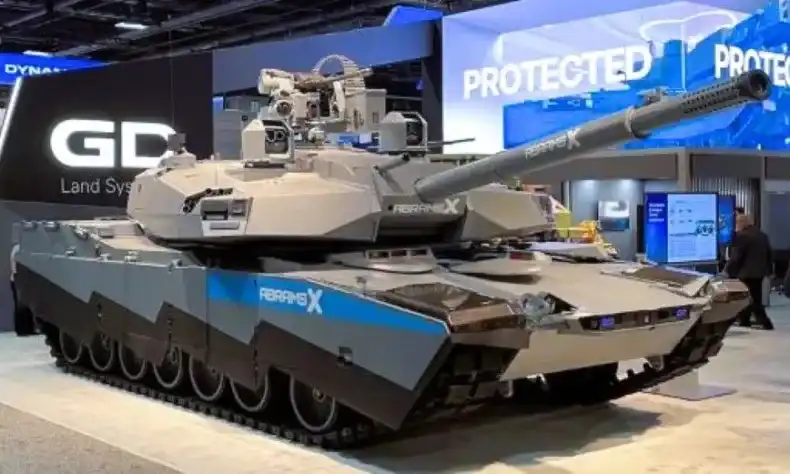
This lighter weight boosts strategic mobility, enabling faster deployment via rail, air, and sea. It also improves maneuverability in urban and confined environments, where traditional heavy tanks often struggle. The weight reduction does not come at the expense of protection, however; the M1E3 is expected to feature cutting-edge active protection systems (APS) and enhanced situational awareness tools to maintain battlefield dominance.
The Abrams Legacy Reimagined
Since its combat debut in 1991 during Operation Desert Storm, the Abrams family has cemented its reputation as a symbol of American military might. But as the threat landscape evolves, so too must the tools of war. The M1E3 isn’t just an upgrade—it’s a redefinition of what a main battle tank must be in a rapidly changing geopolitical climate.
The decision to fast-track the M1E3 prototype and deliver it a year early suggests a broader urgency within U.S. defense strategy. With rising tensions globally and the increasing sophistication of adversarial capabilities, the Army appears determined to maintain technological overmatch through agility, innovation, and readiness.
As more details about the M1E3 become public, expectations are high. What’s already clear is this: the M1E3 is not only the next step for the Abrams—it’s a vision of the future battlefield brought into the present, with lethal precision and strategic foresight.