On January 3, 2026, the skies over Caracas bore silent witness to a decisive moment in military aviation history. Operation Absolute Resolve, the bold U.S. special forces mission that led to the capture of Venezuelan President Nicolás Maduro, was not merely a covert raid—it was a carefully orchestrated demonstration of stealth dominance, spearheaded by the deployment of the U.S. Air Force’s F-22 Raptor.
Strategic Prelude to Stealth Execution
The operation unfolded after months of clandestine planning involving both military and intelligence components. At the heart of this precision campaign was the integration of air dominance platforms, with the F-22 Raptor playing a pivotal role. According to Lt. Gen. Dan Caine, more than 150 U.S. military aircraft were mobilized across various services, forming an air component that included bombers, intelligence platforms, electronic warfare aircraft, and helicopters—all under the protective canopy of Raptor-led air superiority.
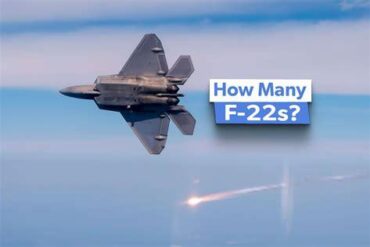
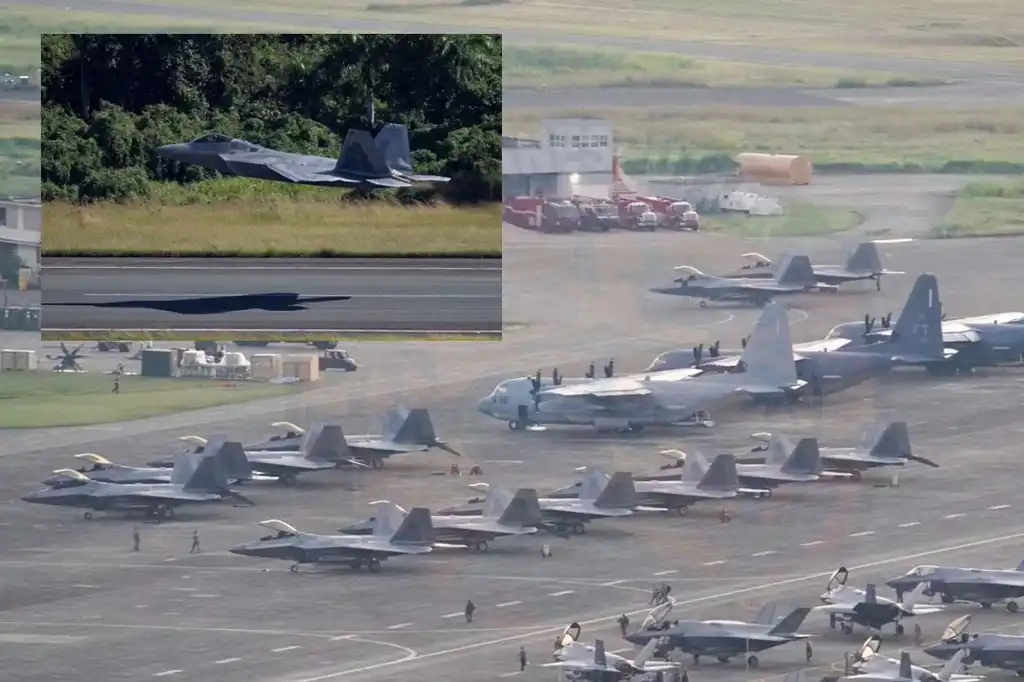
The Roosevelt Roads Naval Station in Puerto Rico became a launchpad for fifth-generation dominance, with satellite and photographic evidence confirming the presence of at least ten F-22 Raptors on the tarmac. While the Pentagon remained cautious about disclosing basing details, the concentration of advanced stealth fighters near Venezuelan airspace revealed the intensity and scale of this military undertaking.
F-22 Raptor: The Apex Predator of Contested Skies
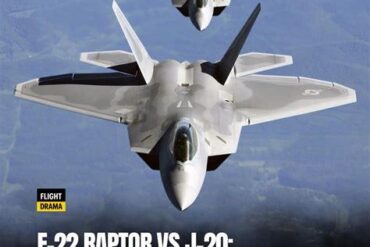
Built to dominate the skies in high-threat environments, the F-22 Raptor is the ultimate embodiment of American air superiority doctrine. Engineered with low observability, supercruise capabilities, and sensor fusion, the Raptor’s stealth design allows it to enter heavily defended airspace undetected.
Its AN/APG-77 AESA radar provides long-range tracking of multiple aerial targets, while its advanced fusion suite seamlessly integrates data from onboard systems and off-board sources, giving pilots unmatched situational awareness. This allows for early threat detection, prioritization, and engagement before adversaries even realize the Raptor is in theater.
Neutralizing the Venezuelan Threat Landscape
As Operation Absolute Resolve commenced, Venezuela’s integrated air defense network posed the greatest potential barrier to mission success. Home to Russian-supplied surface-to-air missile systems and a fleet of Su-30MK2 Flanker fighters, the Venezuelan military fielded capable but ultimately outmatched equipment.
The Su-30s, while competent fourth-generation aircraft, lack the low observability, network integration, and battlespace awareness that define fifth-generation fighters. In a contested engagement, the F-22 would have been able to detect, track, and neutralize these platforms from beyond visual range, well before Venezuelan pilots had tactical awareness.
Beyond air-to-air supremacy, the F-22s also contributed to air defense suppression. Using passive sensor detection and data fusion, they likely played a key role in identifying air-defense emitters, feeding coordinates and threat information to allied platforms for kinetic or electronic neutralization. This cleared the way for rotary-wing assets, including the helicopters that carried U.S. Army special forces into the heart of Caracas.
Air Corridor Security and Stealth Escort Missions
With the airspace cleared and dominance assured, the F-22s were redeployed in stealth overwatch and escort roles. Their presence enabled the safe ingress and egress of ISR (intelligence, surveillance, and reconnaissance) platforms and troop-carrying helicopters, ensuring that no Venezuelan interceptor or radar could threaten the mission’s timeline or personnel.
These Raptors served not only as silent guardians but as invisible eyes and ears over Venezuelan territory, leveraging their sensor suites to maintain complete airspace integrity throughout the operation. The overwhelming presence of stealth fighters reduced any chance of reactive mobilization by Maduro’s air forces to near-zero.
The Tactical Architecture of Air Dominance
The operation’s tactical architecture relied on synchronized layers of capability. The F-22 Raptors established the outer perimeter, denying airspace to any hostile actor. Simultaneously, other specialized platforms executed tasks ranging from signal jamming to target identification. This joint air component formed an impenetrable net that enabled U.S. special operations to strike deep in hostile territory with surgical precision.
Despite their overwhelming power, there is no indication that the F-22s were used for direct strike missions. Instead, their value lay in their ability to shape the battlespace, protect high-value assets, and ensure uninterrupted operational flow—a textbook demonstration of air superiority doctrine applied in real-time.
Capturing Maduro: A Historic Inflection Point
The capture of Nicolás Maduro and his wife marked the successful culmination of Operation Absolute Resolve. U.S. forces reportedly extracted multiple senior figures from Maduro’s inner circle, dismantling the top echelon of Venezuela’s leadership in a matter of hours. No American casualties were reported, underscoring the precision and effectiveness of the operation’s planning and execution.
This event will be recorded as one of the most daring and geopolitically significant special operations in recent memory, not only for its outcome but for the way it showcased the evolving integration of stealth, air dominance, and joint operations in the 21st-century battlespace.
Implications for Modern Warfare
Operation Absolute Resolve signals more than the downfall of a controversial regime. It underlines a strategic doctrine that prioritizes first-entry air dominance, high-resolution ISR integration, and multi-domain coordination to enable short-duration, high-payoff missions.
For adversaries around the world, the F-22’s performance in Venezuela serves as a reminder: airspace is only sovereign if it can be defended. In the era of fifth-generation warfare, dominance is no longer just about numbers—it’s about invisibility, information, and lethality in one seamless package.
The Pentagon, while remaining circumspect on further details, hailed the operation as proof of concept for combined special operations and stealth-enabled air superiority, validating years of investment in platforms like the F-22.
Conclusion: The Stealth Blueprint of Strategic Victory
The successful integration of F-22 Raptors into a joint-force assault deep inside hostile airspace is a stark message to both allies and adversaries. It showcases the United States’ ability to surgically apply force, command the skies, and exit without losses—all while staying largely invisible.
Operation Absolute Resolve is now etched into the annals of military aviation as a benchmark for covert power projection. The F-22 Raptor, once debated for its cost and strategic role, now stands vindicated as the spearhead of air dominance in modern asymmetric warfare.