Modern air warfare has always been a contest between detection and evasion, radar and shadow, signal and silence. In that technological chess match, stealth bombers represent one of the most consequential strategic advantages any nation can possess. Designed to penetrate heavily defended airspace undetected and deliver either conventional or nuclear payloads, these aircraft reshape deterrence theory, long-range strike doctrine, and geopolitical power projection. The question of which country fields the most superior stealth bombers is therefore not merely technical—it is strategic, political, and deeply tied to global military balance.
At present, the answer is remarkably clear. The United States stands alone as the only nation operating stealth bombers in active service, anchored by the legendary B-2 Spirit and soon reinforced by the next-generation B-21 Raider. While other powers—most notably China and Russia—are pursuing their own stealth bomber ambitions, none have yet fielded an operational counterpart that rivals American capabilities in stealth penetration, sensor fusion, and long-range strike integration.
Understanding this superiority requires examining not only the aircraft themselves, but also the industrial ecosystems, doctrinal philosophies, and technological maturity behind them.
The B-2 Spirit: The World’s First Operational Stealth Bomber
The Northrop B-2 Spirit remains one of the most iconic military aircraft ever built—a flying wing shaped by radar equations as much as aerodynamics. Developed during the Cold War to evade Soviet air defenses, the B-2 entered service in 1997, decades after its conceptual roots were planted in classified stealth experiments.
Its design minimizes radar cross-section through smooth contours, edge alignment, radar-absorbent materials, and shielded engine inlets. Unlike conventional bombers with vertical tails and protruding fuselages, the B-2’s blended flying-wing form scatters radar waves away from emitters, drastically reducing detectability.
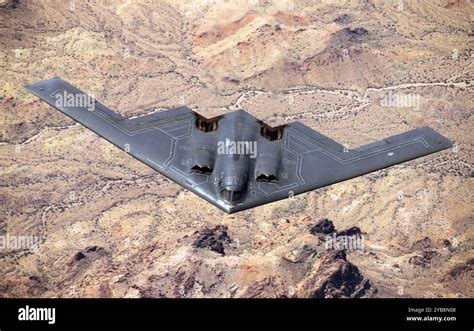
Originally, the U.S. Air Force planned to procure 132 aircraft, envisioning a large stealth strike fleet capable of penetrating Soviet territory. The collapse of the Soviet Union altered strategic calculus and defense budgets, shrinking production to just 21 bombers. Of those, 19 remain operational after two losses in accidents.
Despite the small fleet, the B-2’s impact has been outsized. It has conducted long-range strike missions from Missouri to Kosovo, Afghanistan, Iraq, and Libya—sometimes flying 30+ hour missions with mid-air refueling. Its ability to strike hardened targets anywhere on Earth within hours reshaped the concept of global reach.
Maintaining such capability is extraordinarily expensive. In 2024, the U.S. awarded $7 billion to modernize and sustain the fleet through the decade. That equates to roughly $350 million per aircraft in upgrades—an illustration of both the bomber’s complexity and its strategic value.
Engineering the Invisible: How Stealth Actually Works
Stealth is often misunderstood as invisibility. Reality is subtler and more scientific. A stealth aircraft is not unseen; it is harder to detect, track, and target within useful engagement windows.
Key principles include:
- Radar cross-section reduction through shaping and materials
- Infrared signature suppression via shielded exhaust
- Electronic warfare integration to jam or deceive sensors
- Internal weapons bays to avoid radar reflections from external stores
Detection remains possible under certain frequencies, geometries, or sensor networks. The advantage lies in compressing enemy reaction time—turning robust air defense systems into delayed responders.
The B-21 Raider: America’s Next-Generation Shadow
If the B-2 is the pioneer, the B-21 Raider is the evolutionary leap. Developed by Northrop Grumman, the Raider first flew in 2023 and is currently in low-rate initial production, with operational service expected around 2027.
Visually, it resembles a smaller, sleeker B-2—but the similarities mask profound technological differences. Advances in materials science, computing, sensor fusion, and digital engineering have enabled a bomber designed from inception for 21st-century contested environments.
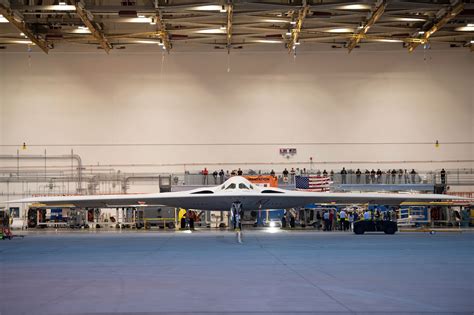
Unlike its predecessor, the B-21 is built for affordability and scalability. The U.S. Air Force plans to acquire around 100 aircraft, creating a stealth bomber force large enough to sustain high-tempo operations.
Its capabilities extend beyond traditional bombing:
- Networked battlefield integration
- Advanced ISR (intelligence, surveillance, reconnaissance)
- Electronic warfare operations
- Command of loyal wingman drones
Northrop Grumman has even described the Raider as the world’s first “sixth-generation aircraft,” a term usually reserved for fighters. The designation reflects its software-centric architecture, autonomous teaming potential, and multi-domain connectivity.
Perhaps most transformative is its optionally manned design. Certain missions may be flown without onboard crew, blurring the line between bomber and high-end combat drone.
Legacy Stealth Platforms Expanding U.S. Capability
While the B-2 and B-21 dominate the strategic bomber category, American stealth strike capability extends further.
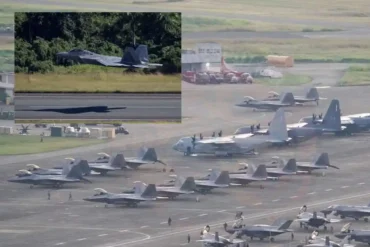
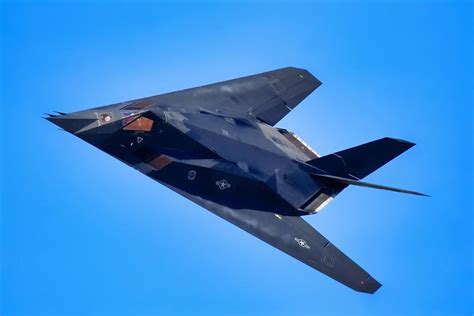
The F-117 Nighthawk, introduced in 1982, was the world’s first operational stealth combat aircraft. Though officially retired, some airframes continue flying in limited roles, underscoring the durability of its pioneering low-observable design.
Modern fifth-generation fighters also contribute to stealth strike missions:
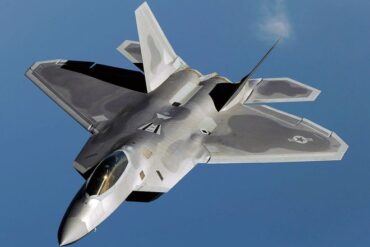
- F-22 Raptor – Primarily air superiority, limited bombing role
- F-35 Lightning II – Multirole stealth strike fighter
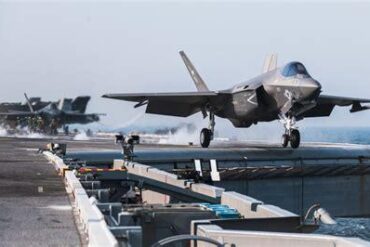
The F-35, in particular, has demonstrated real-world stealth strike application. Its sensor fusion, data-link networking, and precision strike capacity allow it to conduct bombing missions in contested environments once reserved for larger bombers.
Beyond crewed aircraft, the U.S. operates highly classified stealth drones such as the RQ-170 Sentinel and the rumored RQ-180, platforms believed to conduct deep reconnaissance and potentially strike missions.
China’s Stealth Bomber Ambitions: The Xi’an H-20
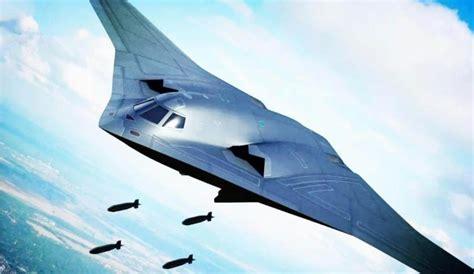
China represents the most serious challenger to U.S. stealth bomber dominance. Its long-anticipated Xi’an H-20 program aims to field a strategic stealth bomber comparable in role to the B-2 and B-21.
First publicly acknowledged in 2016, the H-20 is believed to feature a flying-wing configuration optimized for long-range penetration and nuclear delivery. However, concrete data—range, payload, stealth metrics—remains undisclosed.
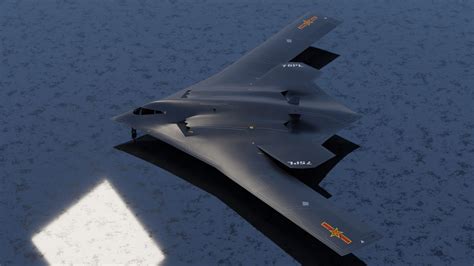
Chinese state media has periodically hinted at an impending reveal, yet no confirmed flight imagery or operational status has emerged publicly. This opacity is consistent with China’s broader military development posture: selective disclosure paired with strategic ambiguity.
What is visible, however, is China’s rapid progress in stealth aviation more broadly.
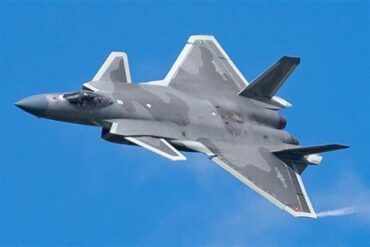
The J-20 “Mighty Dragon” is now in serial production, serving as China’s frontline fifth-generation fighter. Complementing it are emerging platforms such as the J-35 and reports of a next-generation tailless fighter—sometimes referred to as the J-36—suggesting a widening stealth ecosystem.
China is also investing heavily in loyal wingman drones and stealth UAVs, indicating that its future bomber force may operate within a networked unmanned strike architecture rather than as a standalone platform.
Russia’s Position: Legacy Bombers and Uncertain Stealth Futures
Russia fields a formidable bomber force—but not a stealth one.
Its strategic aviation triad relies on upgraded Cold War designs:
- Tu-95 Bear – Turboprop long-range bomber
- Tu-22M Backfire – Supersonic strike bomber
- Tu-160 Blackjack – Supersonic heavy bomber
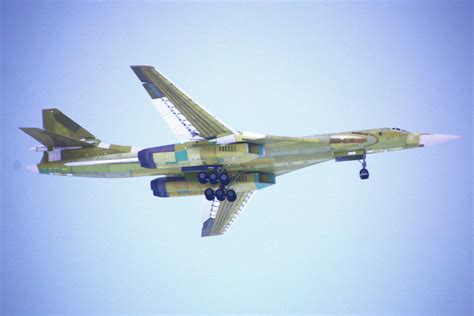
The Tu-160, the most modern of the trio, has reentered limited production. However, it lacks stealth shaping and relies on speed and stand-off weapons rather than penetration survivability.
Russia’s stealth bomber project—the PAK DA—aims to produce a flying-wing strategic bomber analogous to American designs. Announcements have suggested progress, but timelines remain fluid and skepticism persists regarding funding, industrial capacity, and technological hurdles.
Compounding challenges include sanctions, supply chain constraints, and the financial burden of ongoing military operations.
Russia does operate stealth aircraft in other categories. The Su-57 Felon fighter has entered service in small numbers, though analysts note continued reliance on legacy engines and limited production rates.
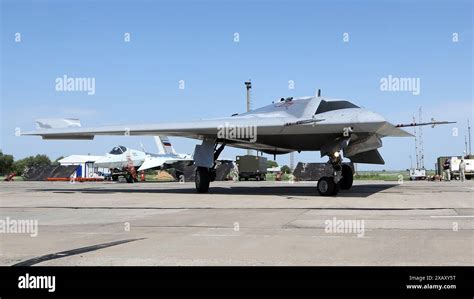
Additionally, Russia is developing the S-70 Okhotnik-B stealth drone, a large flying-wing UAV believed capable of strike missions. Its role may foreshadow a future unmanned bomber adjunct—but it does not yet constitute a strategic stealth bomber capability.
Industrial Power and the Economics of Stealth
Stealth bombers are among the most expensive machines ever built—not simply due to materials, but because of the ecosystems behind them.
They require:
- Advanced composites manufacturing
- Precision radar-absorbent coatings
- Secure software architecture
- Specialized maintenance infrastructure
- Stealth-preserving hangars and logistics
The United States benefits from decades of uninterrupted stealth R&D, supported by defense giants like Northrop Grumman and Lockheed Martin, as well as a vast classified test infrastructure.
China is rapidly scaling similar capabilities, but institutional experience and combat integration take time to mature. Russia, facing economic constraints, has struggled to sustain equivalent stealth industrialization.
Do Stealth Fighters Replace Stealth Bombers?
An emerging debate in airpower theory asks whether advanced stealth fighters and drones could render strategic bombers obsolete.
Fighters like the F-35 can deliver precision munitions stealthily. Loyal wingman drones can extend reach and reduce pilot risk. Hypersonic missiles can strike from outside defended zones.
Yet bombers retain unique advantages:
- Massive payload capacity
- Intercontinental range
- Flexible weapons mix
- Persistent loiter capability
- Nuclear deterrence roles
The B-21, in particular, is designed to integrate fighters, drones, cyber warfare, and space-based targeting into a unified strike web—suggesting bombers are evolving rather than fading.
The Blurring Line Between Bomber and Drone
One of the most intriguing shifts is conceptual rather than mechanical.
Future stealth bombers may operate:
- Optionally manned
- As drone motherships
- In AI-assisted strike coordination roles
- Within multi-domain command networks
The distinction between a “strategic bomber” and a “large stealth combat drone” is already softening. Aircraft like the B-21 are designed with this convergence in mind.
Global Stealth Bomber Ranking: Present Reality
Evaluating superiority requires focusing on operational capability—not prototypes or concept art.
United States
- Operational stealth bomber: B-2 Spirit
- Next-gen in production: B-21 Raider
- Deep stealth ecosystem: fighters + drones
China
- Stealth bomber: H-20 in development
- Operational stealth fighters: Yes
- Rapid technological trajectory
Russia
- No operational stealth bomber
- PAK DA uncertain
- Limited stealth fighter and drone programs
The gap is therefore not marginal—it is structural.
Why the United States Still Leads
Several reinforcing factors sustain U.S. dominance:
- First-mover advantage – Stealth bomber experience since the 1980s
- Operational combat testing – Real wartime deployment
- Industrial scale – Ability to produce 100+ next-gen bombers
- Network integration – Satellites, drones, cyber warfare
- Budgetary depth – Sustained trillion-dollar defense frameworks
Stealth bombers are not isolated machines; they are nodes in a vast technological lattice. The U.S. lattice remains the densest on Earth.
The Future Balance of Stealth Power
The coming decades will likely narrow—but not erase—the gap.
China’s H-20 could enter service in the 2030s, granting Beijing its first true stealth bomber. Russia may yet field the PAK DA, though timelines remain uncertain.
Meanwhile, the U.S. will be operating:
- A mature B-21 fleet
- Upgraded B-2s (near term)
- Advanced stealth drones
- Sixth-generation fighters
Technological momentum favors continuity.
Conclusion: The Current King of Stealth Bombers
So which country possesses the most superior stealth bombers?
Today, the answer is unequivocal: the United States.
It is the only nation operating operational stealth bombers, the only one fielding a next-generation stealth bomber in production, and the only one with decades of combat, industrial, and doctrinal experience integrating stealth into global strike strategy.
China is the rising contender, building the technological scaffolding for eventual parity. Russia remains constrained, maintaining powerful but non-stealth bomber forces while pursuing uncertain next-generation projects.
Stealth, however, is not a static crown. It is a moving frontier shaped by materials science, sensor evolution, AI, and space-based detection. The advantage belongs not just to whoever builds the quietest aircraft—but to whoever best integrates invisibility into the wider architecture of modern war.
For now, the shadow in the sky still flies under an American flag.