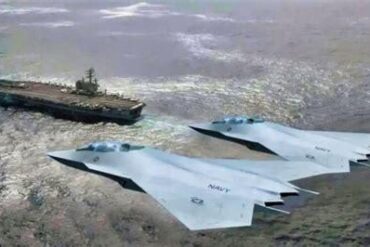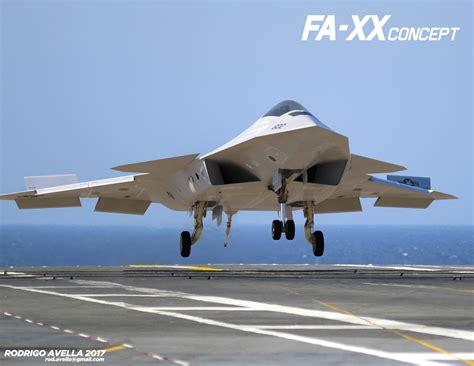
The future of the U.S. Navy’s F/A-XX sixth-generation fighter program remains under intense scrutiny, as a widening gap emerges between congressional support and the Pentagon’s shifting fiscal priorities. At the heart of the debate is whether America’s naval air power can maintain its competitive edge amid growing threats from peer adversaries—chiefly China’s rapidly advancing stealth capabilities—while grappling with industrial limitations and competing defense initiatives.
Congressional Momentum Clashes with Budgetary Austerity
The Pentagon’s fiscal year 2026 budget proposal marks a dramatic pivot away from its previous commitment to the F/A-XX program. In FY2025, Congress allocated $454 million for the development of the next-generation carrier-based fighter. Yet, the Department of Defense has proposed slashing this figure to just $74 million in FY2026—a cut exceeding 80%. The discrepancy has sparked bipartisan concerns on Capitol Hill.
Representative Rob Wittman (R-Va.), a vocal proponent of robust naval modernization, articulated the broader unease during a recent House Armed Services Committee (HASC) hearing. “We’d be a little surprised if the support for this fell off, especially since we’re looking at the requirements and not seeing any change there,” he remarked, reinforcing the view that the strategic rationale for F/A-XX remains intact despite fiscal turbulence.
Joint Chiefs Chairman Reaffirms Validity of F/A-XX Requirements
In response to Wittman’s questioning, Gen. Dan Caine, Chairman of the Joint Chiefs of Staff, affirmed that the operational demands shaping the F/A-XX’s development have not diminished.
“As we look at the threat picture out in the Pacific, the requirements themselves I think are still valid,” Caine stated. He emphasized that while the industrial base’s ability to support concurrent sixth-generation fighter programs is a challenge, the need for a mobile, battlefield-dominating capability remains critical. “Whether it’s F/A-XX or others, we need platforms that enable us to win,” he said.
A Fighter for the Indo-Pacific Theater
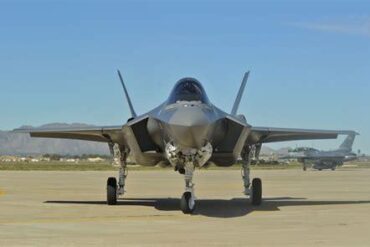
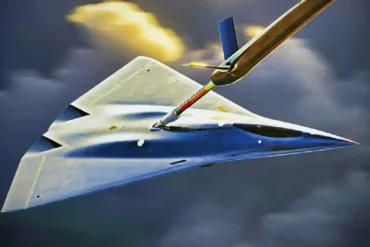
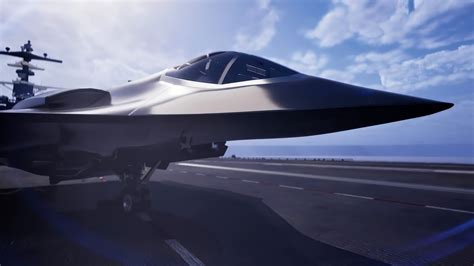
The F/A-XX is envisioned as the Navy’s answer to a highly contested Indo-Pacific battlespace, especially in the event of a high-intensity conflict with China. The platform is expected to offer capabilities far beyond the existing F/A-18 Super Hornet fleet, boasting:
- Advanced stealth features for survivability in contested environments
- Extended operational range to suit vast Pacific distances
- Integration with artificial intelligence for superior battle management
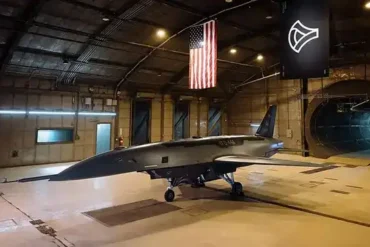
- Seamless teaming with unmanned systems, such as Collaborative Combat Aircraft (CCA)

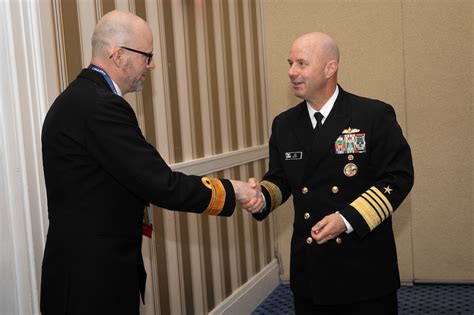
These elements are crucial for next-generation air dominance, according to Rear Adm. Michael “Buzz” Donnelly, who explained at the Navy League’s Sea-Air-Space conference that the F/A-XX will shift from “man in the loop” to “man on the loop”—a reference to more autonomous and responsive systems architecture. “This will allow us to have fully integrated architecture with our unmanned systems,” Donnelly said.
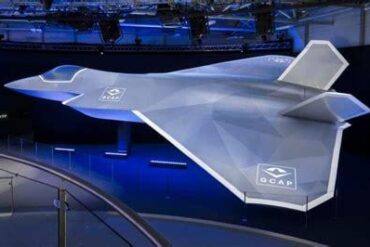
Interservice Dynamics and the Sixth-Gen Race
The Pentagon’s hesitation, as outlined in its 2026 proposal, stems partly from concerns over two parallel sixth-generation development efforts—the Navy’s F/A-XX and the Air Force’s NGAD (Next-Generation Air Dominance), codenamed F-47. With $3.5 billion earmarked for the F-47 in FY2026, it is clear that the Air Force’s program has won priority status.
Yet Adm. James Kilby, acting Chief of Naval Operations, warned against assuming the Air Force’s capabilities can substitute for the Navy’s unique operational requirements. “We need F/A-XX in the United States Navy,” Kilby said. “We’re talking about a fight in the Pacific. We fight together as a joint force, so having that capability is very important for us.”
This assertion reinforces a growing consensus that sea-based aviation must not rely solely on land-based assets. The F/A-XX will form the cornerstone of the Navy’s future carrier air wings, ensuring that carriers remain strategically relevant in the 2040s and beyond.
Industrial Base Friction and Strategic Hesitation
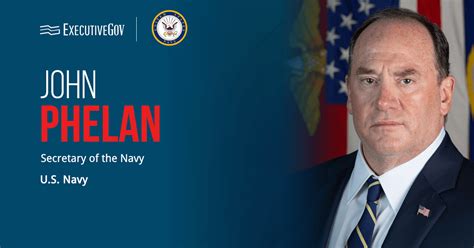
While the strategic rationale for F/A-XX is strong, Secretary of the Navy John Phelan revealed more sobering considerations to lawmakers. “I do not have a lot of confidence,” he admitted, referring to the broader defense industrial base. “All of our programs are in trouble. We have number of companies that are not performing. We’ve got to get those done.”
Phelan’s remarks hint at systemic challenges in U.S. defense manufacturing, including supply chain fragility, workforce shortages, and lagging innovation. These issues cast doubt on the feasibility of launching two massive, technologically demanding fighter programs simultaneously.
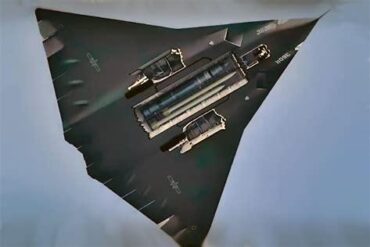
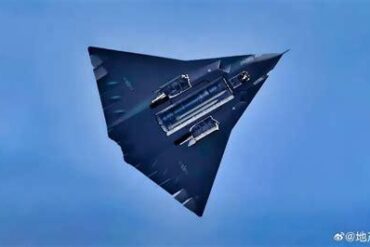
Still, lawmakers such as Rep. Jen Kiggans (R-Va.) are skeptical of budget cutbacks. Citing China’s rapid progress on sixth-generation platforms—such as the J-50 and J-36, reportedly in flight testing—Kiggans warned, “The Navy, to be competitive with that, has got to make that investment.” Her statement underscores the geostrategic implications of deprioritizing F/A-XX at this stage.
Defense Department in a Holding Pattern
Secretary of Defense Pete Hegseth, while appearing alongside Gen. Caine, attempted to strike a balance. He confirmed that the 2026 request does, in fact, fund the complete design of the F/A-XX. “We’re certainly reviewing it — working with the Joint Staff, working with the combatant commands — at its application around the globe,” he said.
His remarks signal that F/A-XX is not off the table but remains under review. The DOD is wrestling with a difficult trade-off: fast-track one sixth-gen fighter and risk operational asymmetries across services, or stretch limited resources and risk program delays and cost overruns.
Broader Strategic Implications for Carrier Aviation
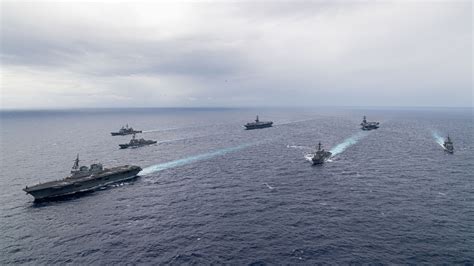
At a deeper level, the debate over F/A-XX is a referendum on the future of naval aviation itself. Carriers and their air wings have long formed the backbone of American global presence. Yet, emerging anti-access/area denial (A2/AD) threats, notably in the South China Sea, are forcing military planners to rethink how carriers can remain survivable and lethal.
The F/A-XX is envisioned not only as a stealthy strike platform but also as a digital-era command node, coordinating data flows between manned and unmanned assets in real time. Its open-architecture systems and advanced sensors are expected to enable high survivability and integration with both sea- and space-based assets.
This makes the decision to delay or defund its development particularly consequential. A missed step in the next few years could ripple through the 2030s, leaving U.S. forces reliant on aging airframes like the Super Hornet while competitors field their own sixth-gen capabilities.
Looking Ahead: Congressional Overrides or Long-Term Reassessment?
With the Trump administration yet to submit a complete FY2026 budget request, the F/A-XX still has room to recover. Congress could override the Pentagon’s budget plan, just as it has in previous years. The path forward will likely depend on a combination of:
- The degree of bipartisan pressure lawmakers are willing to exert
- The industrial base’s ability to scale up for dual-service sixth-gen production
- Continued evidence of adversary advancement, especially from China
In the final analysis, the stakes are not merely financial. The F/A-XX represents the Navy’s strategic bet on the future of its carrier-based power projection in a multipolar, AI-driven military landscape. Whether that bet is hedged, delayed, or doubled down on will shape U.S. naval dominance for decades to come.