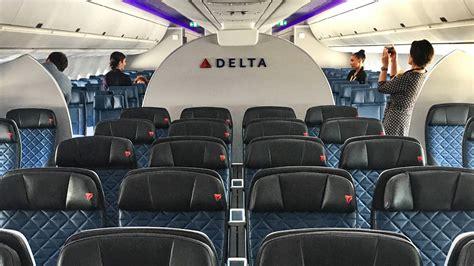
Delta Air Lines’ Premium Select sits in a carefully chosen position between standard economy and Delta One, giving travelers more space, a wider seat, upgraded dining, and a more premium long-haul experience without the cost structure of a lie-flat business-class ticket. But on Delta’s longest international routes, that middle ground can become surprisingly expensive.
The price is especially noticeable on routes where passengers spend more than 12 or even 14 hours in the air. Delta’s longest Premium Select services include flights from Atlanta to Johannesburg and Cape Town, along with long transpacific services from Los Angeles to Melbourne, Sydney, and Hong Kong. These flights put the cabin’s pricing strategy into particularly sharp focus because the value of additional space becomes more apparent as flight times increase.
Unlike traditional airline pricing systems based on fixed fare buckets, Delta Air Lines uses dynamic pricing for both cash tickets and SkyMiles awards. That means there is no single price for Premium Select on any of these routes. The amount can change substantially depending on demand, remaining inventory, travel dates, and the direction of travel.
For passengers deciding whether Premium Select is worth paying for, the biggest question is therefore not simply how much the cabin costs. It is how much extra comfort Delta is charging on a particular long-haul flight, and whether that premium remains reasonable compared with economy or Delta One.
What Delta Premium Select Includes on Long-Haul Flights
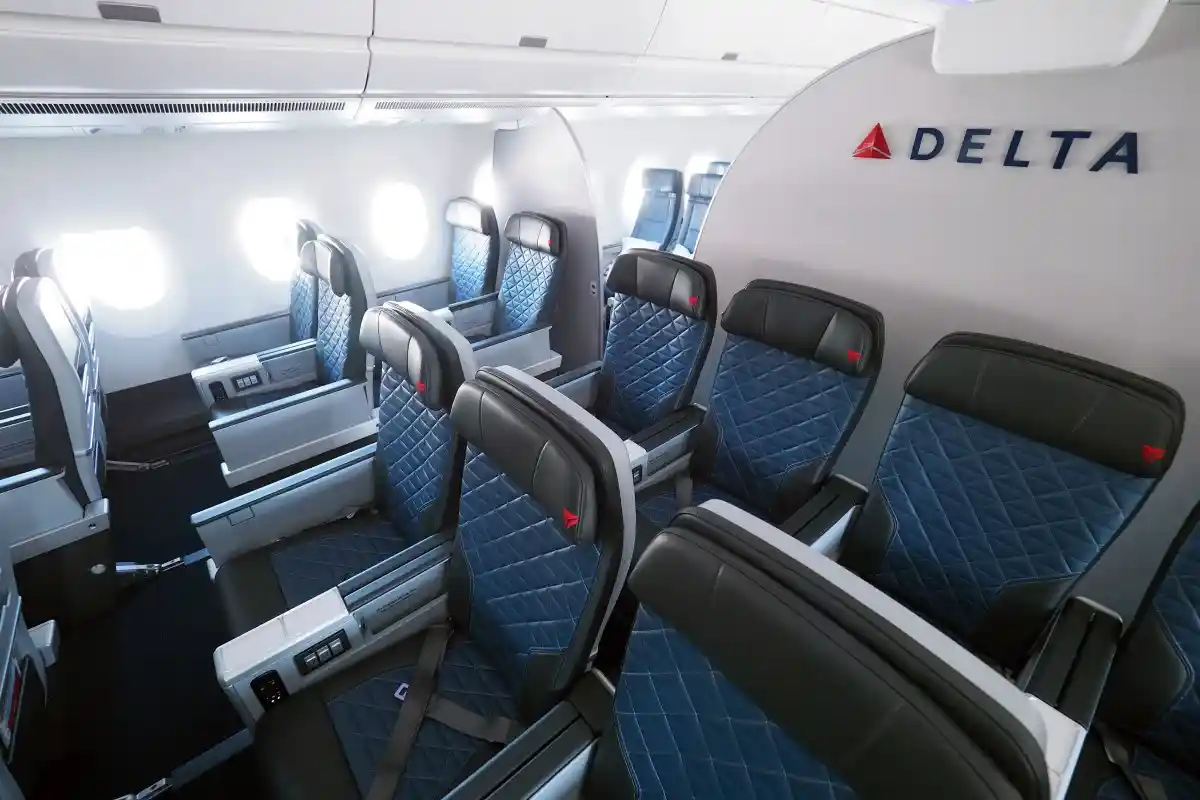
Delta Premium Select is Delta’s premium economy product, positioned above Delta Comfort and below Delta One. The cabin is now available across most of the airline’s widebody fleet, including the Airbus A330 family, Airbus A350, Boeing 767-400ER, and most Boeing 767-300ER aircraft.
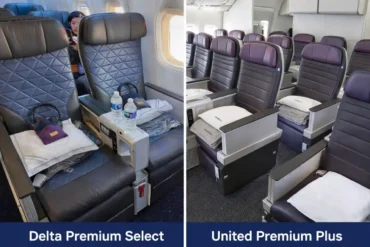
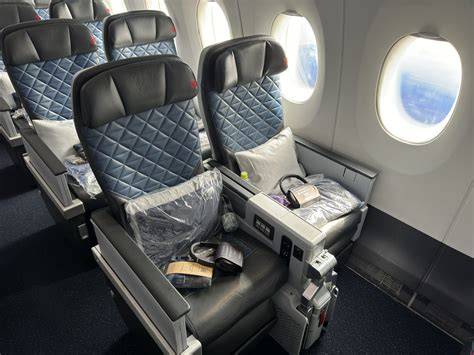
The product is designed around a 38-inch seat pitch, giving passengers substantially more legroom than the standard economy cabin. Delta also uses wider seats with additional recline, adjustable leg and foot support, larger entertainment screens on applicable aircraft, upgraded meals, and other amenities intended to make long flights more comfortable.
The cabin configuration varies depending on the aircraft. Delta places seven Premium Select seats across each row on its A330 aircraft, eight on the A350, and six on its Boeing 767 aircraft. The airline uses Collins Aerospace MiQ seats throughout its current widebody Premium Select fleet, while its planned three-class Airbus A321neo aircraft will use Recaro CL4710 seats.
That difference in cabin size is important because Delta does not have a uniform number of Premium Select seats across its aircraft. The Boeing 767-300ER has 18 seats, while the 767-400ER has 20. The A330-200 and A330-300 each have 21, while the A330-900 has 28. Some A350-900 configurations contain either 40 or 48 Premium Select seats.
The larger A350 cabins have historically given Delta substantial Premium Select capacity, although the airline has been moving toward configurations with more Delta One seating. That shift matters because Premium Select inventory is relatively limited, particularly compared with economy. When demand rises on an ultra-long-haul flight, there are fewer premium economy seats available to absorb that demand.
Delta’s Longest Premium Select Routes
Delta’s longest routes provide a useful snapshot of how the airline prices Premium Select when flight duration and premium demand are both high.
| Route | Approx. distance | Aircraft |
|---|---|---|
| Atlanta–Johannesburg | 7,334 NM / 13,582 km | Airbus A350-900 |
| Atlanta–Cape Town | 7,064 NM / 13,083 km | Airbus A350-900 |
| Los Angeles–Melbourne | 6,883 NM / 12,748 km | Airbus A350-900 |
| Los Angeles–Sydney | 6,507 NM / 12,051 km | Airbus A350-900 |
| Los Angeles–Hong Kong | 6,309 NM / 11,684 km | Airbus A350-900 |
The distances alone explain why Premium Select can become particularly attractive on these services. Spending six hours in a premium economy seat is one thing. Spending roughly 14 or 15 hours crossing an ocean or continent makes additional legroom, better recline, and a more spacious seating environment considerably more meaningful.
The Atlanta–Johannesburg route is particularly notable. At approximately 7,334 nautical miles, it is Delta’s longest route and one of the longest scheduled services in the airline’s network. Atlanta–Cape Town follows closely behind, while Los Angeles–Melbourne and Los Angeles–Sydney represent two of Delta’s most important long-haul services to Australia.
How Much Does Delta Premium Select Cost to Johannesburg and Cape Town?
Delta’s South Africa routes are among the most expensive places to buy Premium Select.
A one-way Premium Select ticket from Atlanta to Johannesburg can typically fall in the $3,400 to more than $5,100 range, although actual fares vary according to the date, demand, and point of origin. Atlanta–Cape Town can produce similarly high prices.
The pricing becomes even more interesting when the direction is reversed. Premium Select fares from Johannesburg to Atlanta can peak around $4,700, but some dates can produce fares as low as approximately $1,490 one way.
That enormous range demonstrates why quoting a single “Delta Premium Select price” can be misleading. Two passengers sitting in the same cabin on the same route can potentially pay dramatically different amounts depending on when they purchase and when they travel.
The South Africa routes also illustrate Delta’s strong position in the market. Atlanta is Delta’s largest hub, and the airline has a substantial network feeding passengers into the airport. That gives Delta considerable access to connecting traffic traveling between the United States and Southern Africa.
For travelers originating in smaller US cities, the final fare can also depend on whether the ticket begins at Atlanta or includes a connecting domestic segment. The pricing system evaluates the entire itinerary rather than simply assigning a fixed premium to the transatlantic or transcontinental segment.

Australia Routes Can Be Much Cheaper
Delta’s Los Angeles services to Australia tell a different story.
Premium Select fares on Los Angeles–Melbourne and Los Angeles–Sydney can generally be found below the levels seen on the South Africa routes. One-way fares can sometimes fall to around $1,200, while they rarely rise above approximately $3,000 under the pricing ranges described in the reference data.
That is a substantial difference considering that both Australian routes are still ultra-long-haul flights. Los Angeles–Melbourne covers approximately 6,883 nautical miles, while Los Angeles–Sydney covers around 6,507 nautical miles.
The lower pricing reflects more than flight distance. The Los Angeles market is highly competitive, with multiple airlines serving Australia and substantial competition for premium passengers. Delta therefore has less ability to sustain the same fare levels it can command on certain Atlanta-origin international markets.
For a traveler considering Premium Select primarily for comfort rather than status, this distinction can be important. A roughly $1,200 one-way fare on a flight lasting well over 14 hours presents a very different proposition from a $5,000 fare on another long-haul route.
The cabin itself does not suddenly become more comfortable because the fare is higher. The seat pitch, basic cabin configuration, and onboard product remain broadly tied to the aircraft and service. What changes is the price Delta believes the market will support.
Delta Premium Select Prices to Hong Kong
Los Angeles–Hong Kong is another example of Delta using market conditions to shape Premium Select pricing.
One-way fares can start at around $1,200, with prices rising toward $3,000 depending on the travel date and direction. Passengers departing Hong Kong can sometimes find fares slightly above $1,000, while other dates can approach the upper end of that range.
The route is also strategically different from Atlanta–Johannesburg. Delta is competing in a major international market from Los Angeles rather than relying primarily on the strength of its largest hub. Competition from other carriers puts pressure on Delta to maintain more attractive pricing.
This is one reason Premium Select fares cannot be judged purely by mileage. A shorter flight in a highly competitive market can be more affordable than a longer flight where an airline has greater pricing power.
How Many SkyMiles Does Delta Charge for Premium Select?
Cash fares are only part of the equation. Delta also prices Premium Select dynamically when passengers redeem SkyMiles.
The airline has not used a traditional published award chart for more than a decade. Instead, award pricing is closely tied to supply and demand, meaning the mileage requirement can change significantly between flights.
On the South Africa routes, Premium Select awards can routinely exceed 300,000 SkyMiles one way. In some cases, that brings Premium Select surprisingly close to Delta One award pricing, which can exceed 400,000 miles.
Australia generally provides a different range. Premium Select awards can often fall between approximately 120,000 and 300,000 SkyMiles one way, while Los Angeles–Hong Kong can sometimes be priced below 200,000 miles.
This makes the difference between cash and award pricing particularly important. A mileage fare that looks enormous in absolute terms may still produce a reasonable redemption value if the equivalent cash fare is exceptionally high. Conversely, using hundreds of thousands of SkyMiles for a relatively inexpensive cash ticket can produce a weak redemption.
Are Delta SkyMiles Good Value for Premium Select?
The traditional way to evaluate an airline award is through cents per mile, or CPM. Delta SkyMiles are often valued around 1.1 to 1.2 cents per mile, although the actual value varies significantly between individual redemptions.
Premium Select on ultra-long-haul routes can occasionally produce more than two cents per mile, particularly when cash fares are unusually high. However, not every expensive-looking award is necessarily a good redemption.
Consider a hypothetical Premium Select fare costing $4,500. If Delta asks 200,000 SkyMiles, the simple redemption value would be about 2.25 cents per mile before considering taxes and fees. But if the cash price falls to $1,500 while the award remains at 200,000 miles, the effective value drops to 0.75 cents per mile.
The lesson is straightforward: the number of miles alone does not determine whether an award is attractive. The cash fare on the same flight needs to be considered at the same time.
Why Delta Premium Select Can Get So Expensive
Delta’s pricing reflects both demand and limited supply. Premium economy has become increasingly popular as travelers look for something between conventional economy and expensive business class, but airlines have generally kept these cabins relatively small.
That creates an unusual situation. Premium Select is much more comfortable than economy for an overnight or ultra-long-haul flight, but its price can sometimes approach business-class territory. Once the premium economy fare gets too close to Delta One, the economic calculation becomes much more complicated because Delta One provides a fundamentally different product, including a lie-flat seat on long-haul aircraft.
Delta has also adjusted some A350 configurations to accommodate more Delta One seats and fewer Premium Select seats. Reducing Premium Select capacity can put additional pressure on the remaining seats when demand is strong.
This is particularly relevant on routes where corporate travelers and affluent leisure passengers compete for limited premium inventory. Delta can raise fares when enough customers are willing to pay the higher price, even if the physical difference between one Premium Select seat and another remains unchanged.
Is Premium Select Worth the Price on Delta’s Longest Flights?
The value of Premium Select depends heavily on the fare rather than simply the route.
On a flight from Los Angeles to Sydney or Melbourne, a fare around $1,200 one way represents a substantially different proposition from a $4,000-plus fare on an Atlanta–Johannesburg itinerary. The longer flight may increase the practical benefit of the cabin, but it does not automatically justify a much higher price.
Premium Select makes particular sense for passengers who place a high value on personal space but do not want to pay the full price of Delta One. On a flight lasting more than 14 hours, the additional pitch, leg support, wider seat, improved recline, and upgraded service can become much more meaningful than they would on a shorter international flight.
At the same time, passengers should watch the relationship between Premium Select and Delta One. If the premium economy fare rises close to the business-class fare, the price difference between the two cabins becomes more important than the absolute Premium Select price.
For SkyMiles users, the same principle applies. Dynamic pricing means there is no universal sweet spot, and the best opportunity can disappear quickly when demand changes.
Delta’s Longest Routes Reveal Its Premium Pricing Strategy
Delta Premium Select demonstrates how airline pricing has moved beyond simple distance-based calculations. Atlanta–Johannesburg is longer than Los Angeles–Sydney, yet the Australian routes can be considerably cheaper. Hong Kong can also offer lower Premium Select fares despite being another exceptionally long flight.
The difference comes from market structure, competition, hub strength, demand, and available capacity. Delta has a particularly strong position at Atlanta, while Los Angeles exposes the airline to intense competition across the Pacific.
For passengers, that means the most important number is not necessarily the route distance. It is the actual Premium Select fare available for the specific flight.
On Delta’s longest routes, the cabin can cost anywhere from roughly $1,200 to more than $5,000 one way, while award prices can range from around 120,000 SkyMiles to well beyond 300,000. That extraordinary spread explains why timing and pricing flexibility matter so much.
Premium Select can be an appealing middle ground on the world’s longest flights, but its value depends on keeping the fare far enough below Delta One while remaining meaningfully more comfortable than economy. When Delta’s dynamic pricing pushes those boundaries, the cabin can become surprisingly expensive for a product that still stops short of a lie-flat business-class experience.