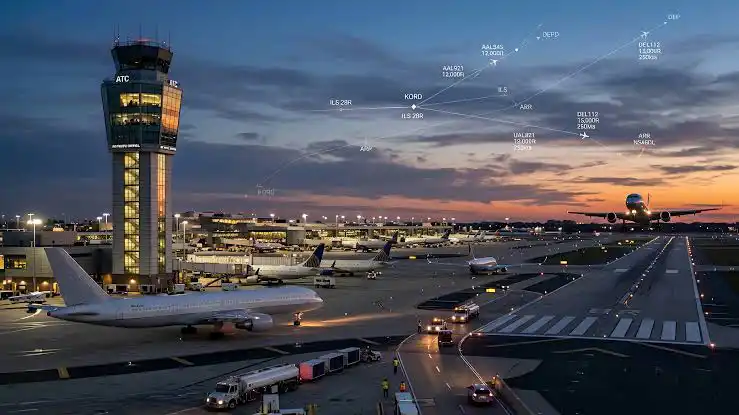
The Federal Aviation Administration (FAA) is preparing to introduce a new artificial intelligence system designed to help manage the increasingly complex U.S. air traffic network, with initial operations expected in the Washington, D.C., area as early as Monday, September 21. The system, known as Strategic Management of Airspace, Routes, and Trajectories (SMART), is intended to identify congestion and potential conflicts before they become operational problems. The FAA describes SMART as a planning layer that works alongside existing air traffic management systems rather than replacing them.
The launch represents an important step in the FAA’s broader effort to modernize an air traffic control infrastructure that still depends on a mixture of newer digital technologies and aging systems. SMART is being developed by Air Space Intelligence (ASI) under a reported $875 million, 12-year contract covering SMART and the companion Flow Management Data and Services system, or FMDS. The FAA says FMDS will become a technological backbone for traffic management, while SMART adds predictive capabilities intended to help officials make decisions before congestion develops.
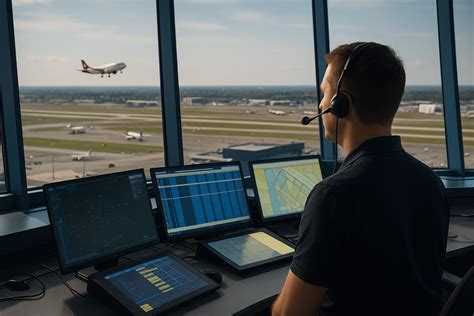
How FAA SMART Will Predict Air Traffic Congestion
SMART is designed to bring together information that can affect how aircraft move through the National Airspace System. According to the FAA, the system will analyze airline schedules, weather, airport capacity, airspace conditions, and operational constraints to predict traffic flows and identify potential conflicts before they occur. Instead of waiting for a weather system, runway limitation, or overloaded airspace sector to create a chain of delays, the technology is intended to give planners more time to respond.
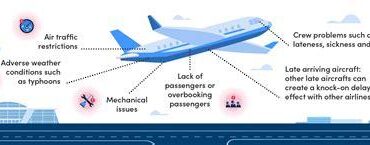
That approach is particularly important because disruptions rarely remain isolated. A thunderstorm can close arrival routes, force aircraft onto alternative paths, increase demand in neighboring sectors, and eventually create delays at airports hundreds of miles away. SMART is intended to examine those relationships collectively and provide a shared picture of developing conditions. The FAA says the system can support adjustments to departure times, routes, and timing at designated points en route, giving traffic managers additional options before problems spread through the network.
SMART Will Advise Controllers, Not Replace Them
Despite the prominent role of artificial intelligence, SMART is not being introduced as an autonomous air traffic controller. The FAA’s own fact sheet explicitly states that air traffic controllers remain responsible for keeping aircraft safely separated. SMART is instead intended to provide predictive information and recommendations that can support human decision-making.
That distinction is important because the system’s initial role is fundamentally different from an AI independently issuing instructions to pilots. During complicated disruptions, SMART can help identify possible solutions and present information through existing FAA systems, while trained personnel remain responsible for operational decisions. Recent reporting indicates that the initial deployment will be limited and will not change existing procedures for controllers or airlines.

Washington, D.C. Will Become the First Major Test Area
The first operational deployment is expected to focus on the Washington, D.C., metropolitan area, rather than immediately activating SMART across the entire country. That limited introduction gives the FAA an opportunity to evaluate how the technology performs in real-world operations while allowing airlines and traffic managers to adapt to the new planning process.
The choice of the Washington area is significant because the region contains some of the country’s most operationally complex airspace and several major airports. The FAA has also been dealing with broader congestion, staffing, and infrastructure challenges across the National Airspace System. Recent airline discussions with FAA leadership have focused on how SMART can be introduced without disrupting existing scheduling and traffic-management practices.
A $875 Million Investment in Air Traffic Modernization
The SMART program is only one component of a much larger modernization effort. The FAA awarded ASI the 12-year contract in June 2026, covering both FMDS and SMART. The agency says the combined technologies are intended to improve traffic flow, reduce delays, increase the effective use of existing airspace capacity, and provide controllers with better data.
The FAA ultimately plans to expand SMART beyond its initial deployment. The agency’s fact sheet says initial operations are scheduled for fall 2026, with the system designed to support more informed planning, improve recovery from weather and congestion events, and help accommodate continued growth in aviation.
For passengers, the significance of SMART may eventually be felt less through visible changes in the cockpit or control tower and more through what does not happen: fewer cascading delays, better recovery after weather disruptions, and more predictable flight operations. Those outcomes remain goals rather than guaranteed results, but the FAA is now moving from planning toward operational testing of a system intended to make U.S. air traffic management more predictive, coordinated, and data-driven.